admin
admin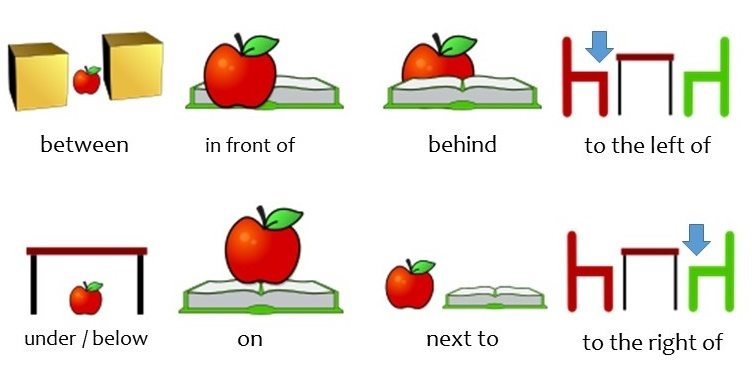
Friday Lessons with Uncle Jay
Prepositions are words that show the relationship between elements in a sentence.
They can express relationships of place, time, direction, and other abstract or logical connections.
A preposition is usually located directly before the word or phrase that it relates to — the object of the preposition.
We walked to the shop.
I’ve been unwell since last Wednesday.
That gift is for him.
Prepositions are flexible words that are often central to the meaning of a sentence, and it can be tricky to choose the right one.
The best way to master them is by reading and practice.
Using prepositions
Prepositions are often used to describe where, when, or how something happens.
Relationship expressed
Examples:
How: Accuracy was increased by repeating the test.
I fixed the light with a screwdriver.
When: Jeremy has wanted to be a musician since childhood.
The meeting resumes at 10:30 a.m.
Where: The conference room is through that door.
The crushing machine is located in the mechanics lab.
However, prepositions are easy to confuse and misuse.
The same preposition can often be used in different ways, and the meaning can only be deduced from the context.
Dangerous chemicals should be used behind the safety screen.
Every team member is behind the proposed changes.
The company is behind its competitors in terms of total revenue.
Furthermore, the choice of preposition can change the meaning of a sentence, so it’s important to use the right one.
Contrary to a common writing myth, there is no rule against ending a sentence with a preposition.
List of common prepositions
According to the Cambridge English Dictionary, there are over 100 single-word prepositions in the English language.
These are some of the most common ones — but note that many of these prepositions can be used to express more than one type of relationship.
Common prepositions
Time: in (month/year), on (day), at (time), before, during, after, since, until
Location: under, over, above, below, between, in, out, on, at, by
Movement: to, into, towards, through, across, up, down, around, past
Other relationships: for, by, from, of, as, with, about
As prepositions are so versatile, there are no defined rules about how to use each one.
The best way to learn is by reading and practice.
If in doubt, carefully consider the relationship you are trying to explain and consult a dictionary or use a proofreading service. — www.scribbr.com.



 Online Reporter