admin
admin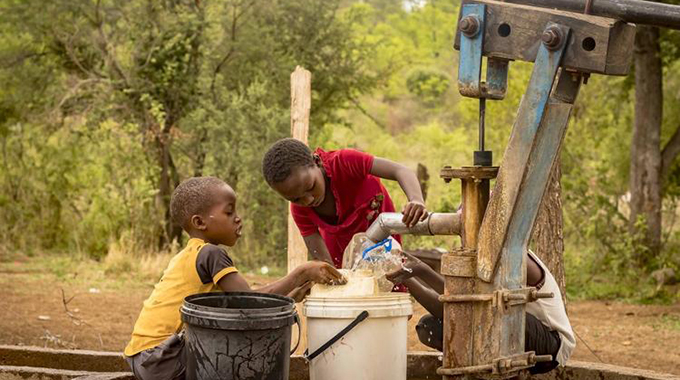
Roselyne Sachiti
Features, Health & Society Editor
In 2011, Government through the rebranded National Action Committee (NAC) developed a comprehensive roadmap for the water and sanitation health (WASH) sector whose aim was to guide sector recovery, transition and development efforts.
On top of the priority list was the resuscitation and strengthening of WASH governance structures from national through to village level.
This gave birth to the development of Rural WASH Information Management System (RWIMS), a mobile-to-web-based monitoring system under the Rural WASH Sub-Sector.
Today, the success and transformation story of RWIMS has attracted global attention.
Last week, Government and the United Nations Children’s Fund (UNICEF) became an official member of the Million Lives Club, an initiative that celebrates innovators and social entrepreneurs who are scaling up impact and improving the lives of those living on less than US$5 a day.
The Government of Zimbabwe with support from UNICEF developed RWIMS which captures and stores water, sanitation and hygiene (WASH) information in real time. The Rural WASH Information Management System (RWIMS) provides quick access to current data on rural WASH infrastructure.
The innovation has been lauded for improving response times to address service delivery constraints at water collection points including information such as the functionality of the water supply system, groundwater levels and water quality.
“The SMS-based RWIMS interface enables communities to report changes in the infrastructure functionality by text messages directly delivered to government representatives,” said Laylee Moshiri, UNICEF Zimbabwe Representative said in a statement.
“This allows for quick responses to problems that arise at community water points, such as the breakdown of a bush pump.”
With the improved functionality of water points, women and girls don’t have to travel long distances to fetch water at alternative sites and have more time available to attend to their education, economic activities or family obligations.
RWIMS was established by the Government of Zimbabwe in collaboration with UNICEF and SNV Netherlands Development Organisation with funding support from UK Aid, the Swiss Agency for Development and Cooperation (SDC) and the Government of Sweden.
“We are excited at being selected for the Million Lives Club award and commend the excellent work of Zimbabwe’s WASH National Action Committee for its effort in establishing RWIMS,” Ms Moshiri said.
The Chief Director of the Ministry of Lands, Agriculture, Water and Rural Resettlement, Engineer Tinayeshe Mutazu said: “As an official member of the Million Lives Club, the Government of Zimbabwe looks forward to continue supporting RWIMS and take this initiative to higher levels.”
The Million Lives Club is an initiative inspired by members of the International Development Innovation Alliance and supported by a growing partnership of leading development organisations.
It seeks to nurture innovation ecosystems by recognising innovators and social entrepreneurs whose innovations have scaled to serve one million customers or are rapidly approaching this milestone.
Why RWIMS matters
Some rural areas in Zimbabwe have been facing water challenges because of broken borehole infrastructure and long turnaround times when reports are made.
In December 2018, I travelled to Insiza, Matabeleland South Province, where I got first-hand information on how RWIMS had impacted on the lives of communities.
The introduction of RWIMS in Insiza South, clearly brought out the strategic role that communities can play in the management of their WASH services.
Insiza has 967 communal water points, 199 schools, 14 health institutions and 304 villages.
Before RWIMS.SNR, life was hard in this dry part of Zimbabwe, which falls under ecological region 5.
It was tougher for women who mainly carry the burden of looking for water. Four to five months would pass before a water point was repaired as information moved slowly.
When boreholes were non-functional, women and children would walk between two and three kilometres in search of clean and safe drinking water.
But with RWIMS, villagers in this part of Zimbabwe now know too well the power their mobile phone carries and their importance in improving water and sanitation.
Registered Key Informants (KIs) at ward level ensure that information on all broken down water infrastructure under their watch, pump functionality of boreholes, monitoring water yields and quality of water reaches area enumerators, in real time.
The KIs are linked to RWIMs fieldforce through a free SMS platform which allows them to constantly communicate with the ward database.
The SMS technology has also improved food security and livelihoods in the area as agricultural extension workers also tap into it. In Matabeleland South, some extension workers are among other stakeholders also registered as enumerators.
Their role is to analyse, review, approve and effect updates from KIs allowing such changes to be viewed in RWIMS Online.
The enumerators also solicit responses from the village pump mechanics (VPMs) and environmental health technicians.
Most importantly, enumerators also work with three different sets of informants.
These include those monitoring communal water points, institutional level (eg schools) and village sanitation.
Moreover, for response servicing, all water points are also linked to village pump mechanists (VPMs) and district water technicians whilst all sanitation and hygiene enabling facilities are linked to EHPs.
The manner in which information moves in real time from the KI to enumerators, village pump mechanics (VPMs), to provincial water sub-committee in Bulawayo is breathtaking and a good case study for many.
How the information timely reaches provincial level evidently has major advantages.
The provincial water sub committee members log into the system online and see all dynamics and events at district, ward at KI level.
People at provincial, sub-committee and national level are also able to observe changes in the systems.
Whenever they notice that no action has been taken on an issue, they immediately make a follow up as they have user rights in the system.
“This has also helped us in terms of decision making. When targeting where interventions are needed, we utilise the data on RWIMS for task targeting. We can easily identify where there is low water and sanitation coverage,” Member of the Matabeleland Provincial Water Sub Committee and Focal person for RWIMS, Patrick Mirirai told The Herald back then.
RWIMS is a good case study that can be taken up by urban councils like the City of Harare and Chitungwiza Town Council whose residents go for months on end without water as a result of burst pipes.
They can also develop a similar technology which clearly has good turnaround times thereby improved WASH.
Such local authorities can also use this to monitor burst sewer pipes and respond quickly to prevent communicable disease outbreaks like cholera and typhoid.
If introduced, residents can also report areas where uncollected refuse continue to mount.
Indeed, such an intervention has brought real change in Zimbabwe’s rural communities and deserves last week’s recognition.



 Online Reporter