

 Online Reporter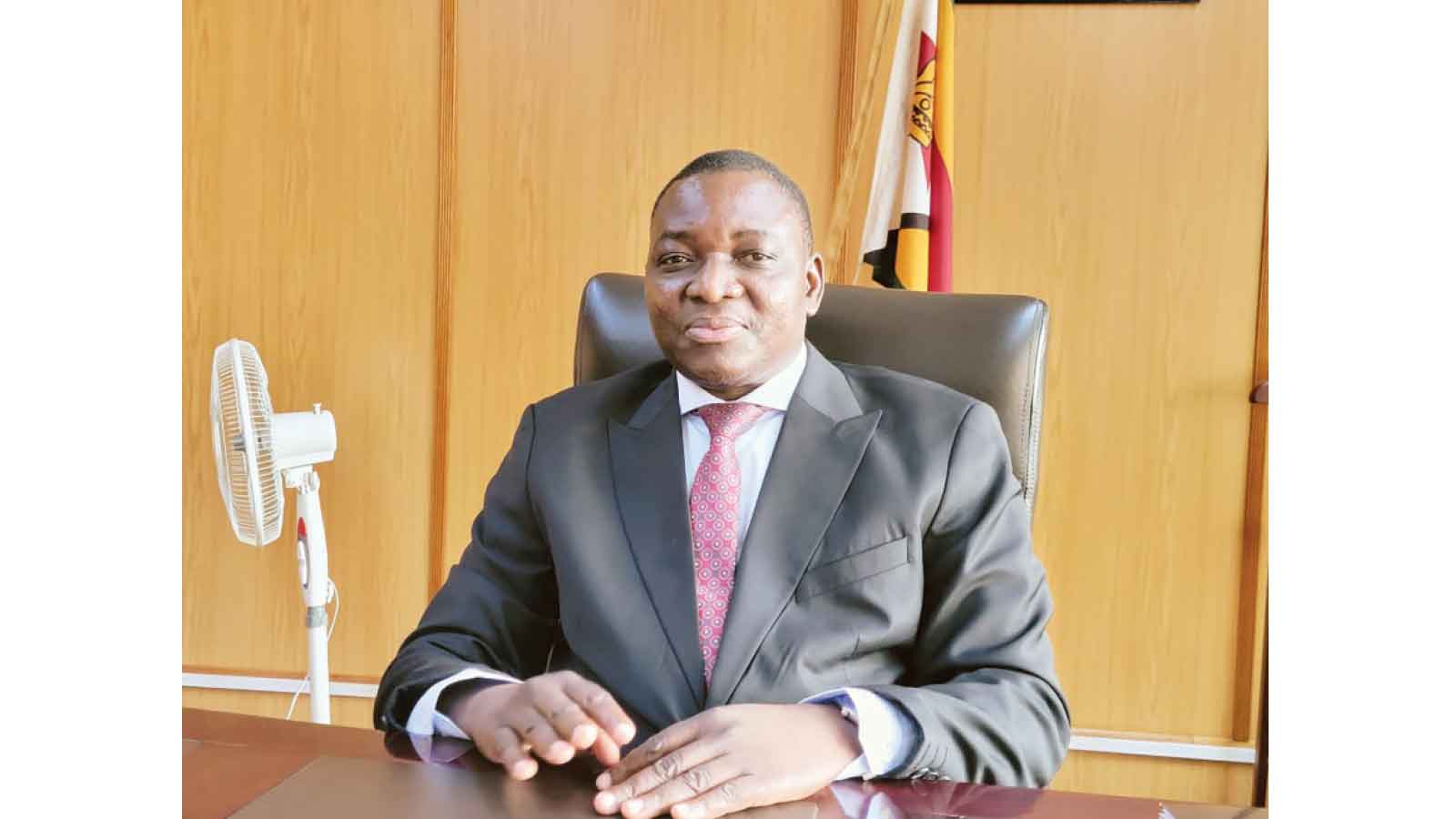
Nqobile Bhebhe in BEIJING, China
ZIMBABWE and China’s strategic diplomatic cooperation is premised on enduring mutual understanding, reinforcing Beijing’s position as one of Harare’s top trading partners and a source of large-scale economic investment.
Information, Publicity and Broadcasting Services Minister, Dr Zhemu Soda, said this here yesterday when he addressed the opening ceremony of the Seminar for Media Professionals from Zimbabwe being held at the Academy for International Business Officials.
The deepening relations between the two States are increasingly being viewed through an economic lens, with their impact reflected in rising trade volumes, capital inflows and a gradual structural shift towards industrialisation and value addition.
Under the Second Republic led by President Mnangagwa, Zimbabwe-China relations have evolved from primarily diplomatic engagement into a broad-based economic partnership.
In September 2025, China-Zimbabwe bilateral relations were officially elevated to an all-weather community with a shared future, marking a new height in the friendship and cooperation between the two countries.
This is anchored on President Mnangagwa’s economic diplomacy-focused foreign policy on engagement and re-engagement, where Zimbabwe has presented itself as a “friend to all and an enemy to none”.
Under this guidance, President Mnangagwa has called upon Zimbabweans to ensure that the country’s foreign policy priorities translate into pathways for cross-border value chains, improved logistics and faster access to markets across Africa and globally for local producers.
He has also commended the recent decision by China to introduce, under the Common Development Initiative, a zero-tariff policy for African goods and products, which has now come into effect, calling on stakeholders across all sectors to take advantage of the trading arrangements with one of the richest and largest markets globally. This has become critical to Zimbabwe’s growth trajectory and Vision 2030 ambitions. China remains Zimbabwe’s largest source of foreign investment, with commitments reaching billions of dollars.
As such, Dr Soda said Zimbabwe remains steadfast in its quest to modernise its economy, drawing valuable lessons from China.
“China remains Zimbabwe’s largest source of foreign investment with commitments reaching US$10 billion,” he said. “We view China’s model of capital development and social elevation as a suitable blueprint for our own efforts to achieve collective prosperity.”
Dr Soda emphasised solid messaging on Vision 2030, saying it was the media’s duty to communicate the Government’s development agenda with such clarity that every citizen understands their role in our collective prosperity.
“Our vision is for national signal coverage to be 100 percent by the year 2030. In line with our vision, we are actively seeking strategic partnerships to modernise our infrastructure,” he said.
“We present significant investment opportunities in key areas, including radio and television transmission networks. I call upon our Chinese partners to continue providing specialised training in digital literacy and information management.
“By mastering these technologies, they will ensure that our two nations’ stories – stories of sacrifice, resilience and transformation – are heard loudly and clearly across the globe.”
Dr Soda said Zimbabwe will never forget how, in its hour of greatest vulnerability, China stood as the primary defence against international isolation.
“A defining moment occurred on July 1, 2008, at the United Nations Security Council, when China exercised its veto power to block a Western-backed resolution seeking to impose crippling sanctions. This act of brotherhood sent an unambiguous message: Zimbabwe sovereignty is not for sale,” he said.
“As we move towards becoming a prosperous Upper Middle-Income Nation, we must confront the rise of misinformation, disinformation and manipulated media.
“Under our National AI Strategy 2026-2030, we seek to integrate Artificial Intelligence into our newsroom, not only to enhance production but to detect and debunk deep fakes and AI-generated falsehoods.
“We must reclaim the narrative from unregulated bloggers and ‘heaters’ who prioritise sensation over the national interest. Our Zimbabwe Media Policy emphasises patriotic, ethical reporting that defends our identity against diverse online rhetoric.”
Dr Soda is leading a delegation of more than 20 Zimbabwe media practitioners attending the seminar with participants drawn from public, private media houses and other key stakeholders.
It runs from May 7-20 and is designed to help Zimbabwean media practitioners gain a deeper insight into China, foster a fuller understanding of China’s development landscape and Chinese modernisation.
The engagement is organised by The Academy for International Business Officials (AIBO), an educational and training institution directly under the Ministry of Commerce of the People’s Republic of China.
Academy for International Business Officials (AIBO) president Mr Bin Wu said China and Zimbabwe bilateral relations were key to both countries’ shared future and the exchange of ideas cements the friendship and cooperation between the nations.
He said organising seminars such as this was part of China’s effort to implement the four global initiatives and promote high-quality Belt and Road Cooperation.
“The purpose of these programmes is to create a platform where officials from different countries can share experiences, exchange ideas and contribute to the building of a community with a shared future for mankind,” he said.
“This year marks the beginning of China’s 15th Five-Year Plan. As Chinese President Xi Jinping said, China will open its door even wider and further deepen exchanges and cooperation with countries.”
Chinese investment has played a defining role in reshaping Zimbabwe’s productive sectors, particularly in infrastructure, energy and mining, which remain critical anchors of economic performance.
Major projects such as the Dinson Steel Plant and the Titan Lithium Complex are strengthening domestic industrial capacity, while energy investments – notably Hwange Units 7 and 8 and the Kariba South expansion – are easing power constraints that have long constrained output.
“Our all-weather friendship is visible in the Kariba South and Hwange Power Stations and the new zero tariff treatment implemented on May 1, 2026, which opens China’s vast market to our products,” said Dr Soda.



