dyton mupawaenda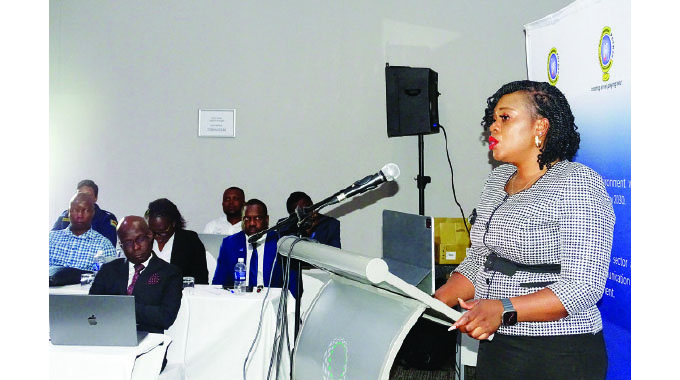
Rejoice Makoni-Herald Correspondent
At least 50 ICT students drawn from universities across the country are set to sharpen their skills under the Huawei Seeds for the Future programme whose patron is First Lady Dr Auxillia Mnangagwa.
The “Seeds for the Future” programme is Huawei’s biggest global flagship corporate social responsibility programme, which seeks to develop local ICT talent, enhance knowledge transfer, and promote a greater understanding of the telecommunications sector among youths.
Huawei, one of the world’s biggest providers of ICT infrastructure and smart devices, launched the first “Seeds for the Future” programme in 2008 to help local ICT professionals and students fill gaps between theory and practice and master the required skills in the ICT sector.
In a speech read on her behalf by Higher and Tertiary Education, Innovation, Science and Technology Development Deputy Minister, Simelisiziwe Sibanda, at the launch of the 2023 programme in Harare yesterday, the First Lady said the “Seeds for the Future” programme resonates with her passion for empowering youths, both technically and culturally.
“I am honoured to have been associated with the Seeds for the Future programme as its patron for the last five years. Information and Communications Technologies (ICT) skills are in great demand in today’s world as we are experiencing a digital revolution that requires all economies to be up to date in terms of human resources,” she said.
“Because the young generation is the future, we must invest in training them in ICT for the transformation of our economy and the attainment of the Government’s Vision 2030. However, there is a gap between the knowledge taught in the classroom and the skills that are necessary in the real world. Through the Seeds for the Future programme and other initiatives, Huawei helps to address this problem.
“I acknowledge with gratitude this great opportunity of technological support and advancement offered by the Huawei Seeds for the Future Programme to talented ICT students from Zimbabwe’s institutions of higher learning. It will also open their minds to the vast opportunities in ICT that they can seize.”
The First Lady said the programme allowed for cultural exchange among students, which resonated with her Nhanga/Gota/Ixhiba programme.
The cultural exchange programme, said Dr Mnangagwa, also resonated with the Nhanga/Gota/Ixhiba cultural awareness campaign that she is spearheading in Zimbabwe to fight harmful practices endangering social norms and values among youths and to protect the country’s future generation and build a responsible youth.
Dr Mnangagwa said with such initiatives, she has no doubt that the youth of Zimbabwe will be assured of a bright and prosperous future, while also valuing their tradition and culture.
Chinese Ambassador to Zimbabwe, Zhou Ding, said China stands ready to support Zimbabwe’s digital drive.
“Young people from Zimbabwe will receive training in technology such as Artificial Intelligence,” he said.
“Digital talents are crucial for fostering the high-quality development of a digital economy. This programme will continue to serve as an enabler and catalyst for Zimbabwe to attain a digital economy.
“The programme is designed to provide the youth with an opportunity to enhance their digital technology skills, exposure to cutting-edge innovations and experience cross-cultural exchange. The programme seeks to equip students with ICT skills and prepare them to succeed in the industry 4.0 era.”
Ambassador Zhou said the programme defines youths’ development and innovations as the basic foundation of achieving digital economies.
“It highlights clearly the importance of ICT technologies and ICT talents,” he said.
Information Communication Technology, Postal and Courier Services Minister, Tatenda Mavetera, said ICTs are crucial drivers for inclusive and sustainable socio-economic development.
“In our quest to become an advanced digitally propelled nation by the year 2030, Zimbabwe has developed an ambitious ICT blueprint that will enable it to fully utilise technology and innovations in order to turnaround its economy,” she said.
“President Mnangagwa is unapologetic about the birth of a Zimbabwe where no one and no place is left behind in the digital divide. All our efforts as a Ministry are currently directed at fulfilling this vision as entrusted to us by President Mnangagwa.”
Over the last two decades, said Minister Mavetera, the Government has developed a viable ICT infrastructure to reinforce robust economic development in a sustainable manner.
“Zimbabwe has built thousands of base stations including 4G and 5G capable base stations. Huawei Technologies, in partnership with the Government of Zimbabwe and other players, have contributed immensely to this modern ICT revolution,” she said.
In a speech read on his behalf by Zimbabwe National Commission for Unesco secretary-general Ms Margaret Chirapa, Minister of Higher and Tertiary Education, Innovation, Science and Technology Development Professor Amon Murwira said industrialisation and modernisation was key in the attainment of an upper middle-income economy by 2030.
“The attainment of an upper middle-income economy shall be accelerated by developing a human capital that is fit for purpose with an ability to transform knowledge into goods and services.
“Heritage-based is our means to industrialise and modernise our country,” she said.



 Online Reporter