Chronicle Editor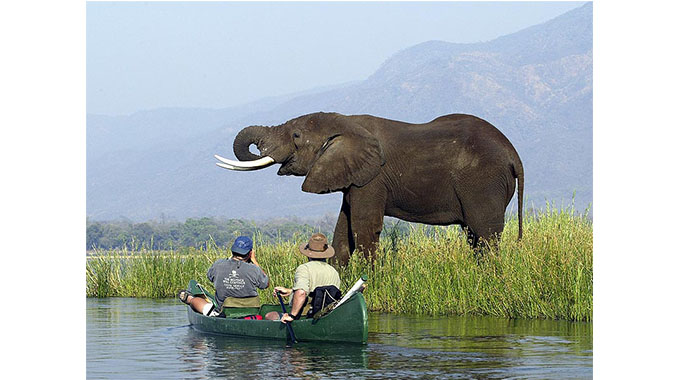
Nduduzo Tshuma
CASES of human-wildlife conflict are expected to rise as the country approaches the driest period of the year on the back of poor rainfall patterns recorded in the last season.
Experts say climate change has become the biggest threat to wildlife more than poaching as humans and animals compete for limited resources.
Zimbabwe Parks and Wildlife Management Authority (Zimparks) spokesperson Mr Tinashe Farawo said from the beginning of the year to date a total of 45 people have been killed in cases of human-wildlife conflict while 47 suffered varying degrees of injury.
“A total of a hundred head of cattle and a similar number of goats have also been killed by wild animals since the beginning of the year with lions and hyenas behind most of the attacks,” said Mr Farawo.
“As we approach the driest period of the year, we expect more cases of human-wildlife conflict as animals move from parks and forests into communities in search for food. This is a consequence of climate change which is now a bigger threat to wildlife conservation than poaching.”
Besides human-wildlife conflict, animals have fallen victim to drought with statistics indicating that in 2019, 200 elephants died due to starvation.
Official figures state that Zimbabwe has an estimated population of more than 100 000 elephants, more than double its ecological carrying capacity of about 45 000.
Mr Farawo said his organisation has embarked on a number of interventions to reduce cases of human-wildlife conflict.
“Part of the solution is translocating animals from high concentration to low concentration areas but ultimately, we are not an island and live in a community of nations so we keep on engaging on the best methods to reduce human-wildlife conflict,” he said.
Speaking in Bulawayo early this year, Permanent Secretary in the Ministry of Environment, Climate, Tourism and Hospitality Industry, Mr Munesushe Munodawafa said the country was taking comprehensive steps to mitigate the adverse impact of climate change, which is increasingly becoming a threat to ordinary people’s livelihoods and national economy.
As part of this drive, he said the country’s climate risk and vulnerability, on-going adaptation intervention, existing gaps, support needs and support received need to be communicated to the Conference of Parties (CoP) to the United Nations Framework Convention on Climate Change (UNFCCC) through a national adaptation communication strategy.
“As a country we are therefore faced with the task of enhancing preparedness and ensuring that our socio-economic sectors are climate-proofed in order to withstand and cope with the impacts of climate change,” said Mr Munodawafa.
While advancing the climate change agenda, he said the Government through his ministry was developing a “National Adaptation Plan”, which would be buttressed by a climate change adaptation communication strategy to clearly indicate Zimbabwe’s vulnerability with a view to mobilising resources from international climate funders.



 Online Reporter