admin
admin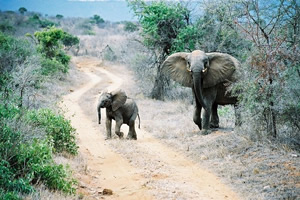
human beings and wild animals know there are vast quantities of water.
Human beings and wildlife alike, trickle to the river for riverbed wells as elsewhere the streams and wetlands have dried up.
Elephants use their front legs to dig for water from the sand, baboons and monkeys show their artistry in digging too but it is only the flies, butterflies and bees that have the luxury to summersault from one well to another, yet they dig none.
It is almost mid-morning characterised by deafening cry of the cicada and the chirping birds, when people also streak to the Angwa River for the same purpose.
But for human beings, they also have riverbed gardens and banana plantations which unfortunately have become sumptuous meal providers for huge elephant populations, gnu, baboons and monkeys.
The fence does not even deter grazers like kudu, impala and bush buck, yet the people must survive on trading these bananas and vegetables for the elusive dollar.
Riverbed cultivation is the mainstay of these communities since time immemorial and this has set the stage for a conflict between human beings and wild animals and at the moment, no one seems to be winning the battle to harvest the water.
Many people have been trampled to death while working in the river while animals have also been poached for the pot or for their trophy as the conflict rages on unbated.
Elephant herds are believed to have migrated from deep in the dark heart and lung of the wildness of Dande North Safaari area, Chief Chapoto to Angwa River after the springs they used to survive on dried up.
The large area is without physical boundaries and the wild life is free to move wherever it wants to roam.
The Angwa River holds so many secrets as it major fertile ground for hunting for the pot and poachers who used food poison for ivory and rhino horn in the dark past.
The area is synonymous with the river Angwa, elephants, rhinoceroses, lions and of course its remoteness and wildness.
As one moves towards the river from the dry forest, vegetation changes to open green woodlands attracting elephants to come out and feast threatening agricultural activities at the river beds.
The area which is popularly known as Chitima Ward or simply Ward 2 covers an extensive area of communities including Manyemu, Chitima, Nyamungwe, Angwa bridge, Komba and Mupedzapasi which border Zimbabwe with Mozambique.
Angwa River flows slowly passing through Mupedzapasi and Kombe areas on its way to Mozambique for its final vomit in Hunyani River there.
So silted is Angwa River that villagers down there grow bananas, sugarcane, cassava, sweet potatoes, maize, vegetables and sugar beans on the riverbed during the dry season, which they do not water.
Councillor for Chitima Ward Ms Liziwe Jasi says distractive herds of elephants coupled with erratic rainfall patterns season after season, do not promote production of maize and the villagers have turned into riverbed farming during the dry season to supplement poor yield.
She said since it could be a miracle in her ward for one to harvest as little as five bags.
Clr Jasi says villagers have no cattle since the environment discourages them to rear them due to tsetse flies and foot and mouth diseases.
She said her people used to survive from selling and barter trade in exchange for maize, sorghum among other stuff from other areas.
“Without taking anything from the villagers it could be a miracle for anyone of them to harvest as little as five bags of maize because of elephants and drought during the rain season.
“Is the same story in the dry season when we turn to riverbed cultivation when, look at this bananas, sugarcane has been feasted by the elephants and how are these families going to survive,” she said.
Clr Jasi said the conflict of interest between human and wildlife was imminent since the river was only the source of water for both habits at the most dry period the season.
She said hunger has cornered her people and she was calling for humanitarian assistance before things got worse.
“You know people here practice riverbank and riverbed cultivation and it is in the same riverbed which is providing food and water to our elephants. I am saying ‘our’ elephants because as an organised community we have harvested something through Campfire Association but hunger knows no boundary.
“You will get surprised poacher conniving with these hungry villagers to make ends meet. So I am appealing for assistance.
“I think Mbire Rural District Council, National Parks and other stakeholders should work out a long term solution to this problem which could be probably erecting an electrified fence before people lose patience.
“As we speak right now I have lost a husband to the marauding lions this one has lost his wife to a stray buffalo.
“Now I want you to tell me were is it heading for? Lets value also human life as we do to our flamboyant wildlife,” she added.
She said the game scouts deployed by the council were too few to handle the situation and the game rangers from Parks were to not reacting swiftly in order to scare the animals.
One of the villagers Zivanai Chihaka who lost her father to the elephants said he was living in perpetual fear and his bananas and sugarcane were feasted upon by herds of elephants.
He said his family and community at large were living in abject poverty and he has since footed for 25 km in search of maize.
“I used to have two meals a day before the elephants destroyed my crops.
“You know I used to take muringa wemabanana arimatete, asati aibva ndomacheka ndoisa mupoto inemvura zvofanza tozodya.
“This is what everybody here was cooking for breakfast and it is delicious simply because the bananas here are sweet.
“After that we will have sadza as our main meal of cause sometimes we could have sugar cane for lunch,” said Chihaka.
Mbire Rural District Council chairman Mr Koni Dhoro said the council was aware of their plight and was working out a long term solution but went on insisting that the elephants were communally owned and the villagers should remain hypersensitive to poaching since wildlife is their livelihoods.
“I know that you riverbed crops you primarily rely on died out as a result of elephants but do not use this to engage into poaching trends this could be dangerous because we own these animals and national parks is front.
“We are aware that we have benefited a lot from wildlife farming and this has rated us high being one of the most performing council. We can do it without government funds,” he said.



 Online Reporter