Chronicle Editor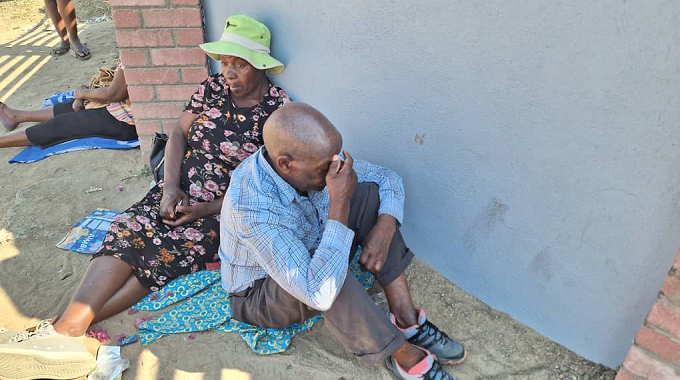
Mkhululi Ncube, [email protected]
KHULU Dennis Mfananidzo (87) of Pumula North sits helplessly at the gate of Holy Trinity Roman Catholic Parish in Cowdray Park suburb like the lame man in the Bible by the temple gate.
He is accompanied by his wife Gogo Siphetheni Mfananidzo (77), with whom he has seen a lot, but the patriarch’s eyesight is now failing him.
Khulu Mfananidzo is now visually impaired and his wife has become his eyes but on this day, she is on a mission to help him get his sight back, if the eyes which have seen a lot in life can still be cajoled back to life.
The Mfananidzos were among hundreds of Bulawayo residents who had come from all corners of the country’s second largest city with the hope of having their sight restored.
Their hope is pinned on One Sight, a non-profit South Africa-based organisation which was in Zimbabwe, Bulawayo in particular, for the first time to help those struggling with blindness and various other eye-related problems.
I had arrived at the church just after 2.30am to assist my wife replace her spectacles after she had dropped her last pair while disembarking from the car only to find them crushed into pieces when she returned moments later.
We were “lucky” to find just six people ahead of us already in the queue, some claiming to have arrived at 12 midnight.
We remained in the car to shelter from the morning cold as we waited for the 8 o’clock opening time.
As the clock hit 4am, the queue swelled fast with people coming on foot and on various other modes of transport.
Commotion soon started as some who arrived late, somehow wanted to manoeuvre their way to the front unbeknown to them that the early birds were wise enough to issue out written numbers to everyone in the queue.
Some tried to present compelling stories of not having been served the day before which according to them, qualified them to go straight to the front, which found no tolerance from the vigilant early comers.
Even the elderly like Khulu Mfananidzo who are usually pitied by the young found it hard to penetrate the queue.
“Hayi asifuni, siyabe sesixubha siginya phela (We don’t want, it’s like brushing one’s teeth and swallowing),” shouted the lady who was first in the queue .
“Kufana lokudla idelele nge fork phela lokhu (It’s like eating okra with a fork). We didn’t risk our lives walking here in the dead of the night while you were asleep only to let you come before us,” echoed another lady.
As tempers flared, some threatened violence on those keen on jumping the queue but fortunately, the only police detail at the gate was able to calm things down.
As the staff from One Sight arrived with their counterparts from the Council for the Blind, it was clear they would have their hands full.
After setting up, they soon started ushering people in manageable groups and so began the service on the last day of their four-day operation.
After a long struggle and finally managing to induce pity from those in charge, Khulu Mfananidzo finally got in, after Gogo Mfananidzo had lost all hope of having him attended to.
This reporter is in the dark as to what happened to him as our parts took different turns inside the hall but he was certainly hopeful he would leave a different man.
“You’re lucky you will get these spectacles for free because yours cost US$145,” an official told one woman who was being attended to.
The cost of spectacles are beyond the reach of many.
The huge numbers that flocked the free eye services were reflective of the fact that with no assistance, many would eventually lose their sight.
Eyesight is an important health matter, and should one lose it, it may spell trouble and become burdensome not only for families but the Government as well.
The thousands of people who filled the Catholic church for this free service by One Sight tell a story of how much members of the public want to avoid this from happening.
One Sight Foundation South Africa country director Ms Lameez Eksteen admitted her team of 16 staff members, and those based locally had their hands full.
“It was an overwhelming experience for us and the turnout was huge. On the first day, we attended to 250 people, on the second over 600, and the numbers kept swelling which just shows that the need for this service is really high. People can’t afford spectacles and they came in their numbers. Some slept over at this place after coming from outside Bulawayo.
“There is a need for access to the eye services and people need to walk within one day of travel to get a service like this and those who can’t afford it, we need to give them free glasses because glasses can change their lives. It improves learning at school, it improves what they produce. Members of the public also need to have their eyes checked every two years to see if their eyes are either improving or deteriorating and find a solution,” she said
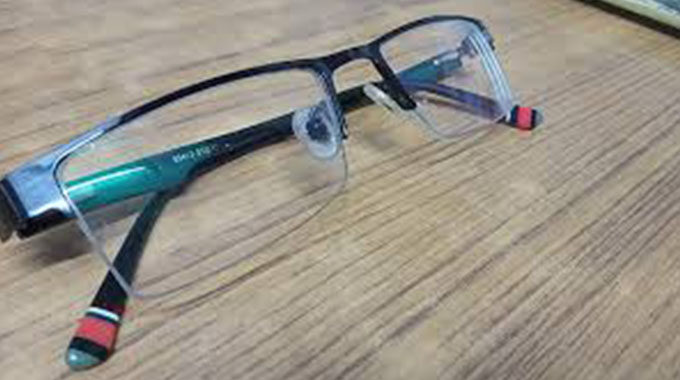
Of concern though was the visibly high number of schoolchildren who thronged the venue for the eye service.
“The effects on children in particular is much greater than we ever thought. We need to catch it very early, screening children and giving them the glasses they need can change the whole trajectory of their lives. We have seen a lot of children with a high stripes as high as 13 to 14 but luckily for this week we were able to give them glasses. There is need for a long term solution even when we’re not here. There’s need for an organisation that provides services for the school children,” she said.
Ms Eksteen said there were a number of contributing factors to the high demand for eye health check-ups for children.
She said Bulawayo has a notably high prevalence of eye-related issues with more time spent on cellphones and television by children a concern.
“The prevalence of eye issues in Bulawayo is very high and a number of issues like the weather conditions, the sun genetics, children being exposed to cell phone light through playing with cell phones. They also need to reduce the time they spend watching television as well,” she said.
Ms Eksteen said they are keen to set up base in Zimbabwe after observing the great need for their services in the country adding that government should avail working space for the organisation.
“We wish to set up permanent centres all over Zimbabwe; we’re capable and all we need is buy in from the people of Zimbabwe. We are communicating with Council for the Blind as well to see how we can collaborate as they already have eye care centres around the country. We want to see how we can work together to provide these services at more affordable rates and free of charge to those who can’t afford them,” she said.
One Sight is a global organisation which works in 16 countries in Africa with focus on providing full eye care and spectacles for those in need.
The organisation was in Zimbabwe for the first time last week and it gave out 2 354 pairs of spectacles and sunglasses for free.
Council for the Blind Head of Programmes Ms Busisiwe Mzyece said there was a need for a united front from the Government, non-governmental organisations, private and public sector to address challenges facing members of the public with eye health.
She said due to the sub-Saharan region having high temperatures, more people are affected by eye sight challenges.
“Most of our people work outdoors so there is a need for them to protect themselves from the sun. The cost of spectacles is driven by duty charges and some of the consumables required to make them. So duty and other clearance charges on donated spectacles makes it hard for the services to be free,”she said.
Ms Mzyece said 2024 will be a better year as they strive to offer affordable spectacles to the public. — @themkhust



 Online Reporter