Online Reporter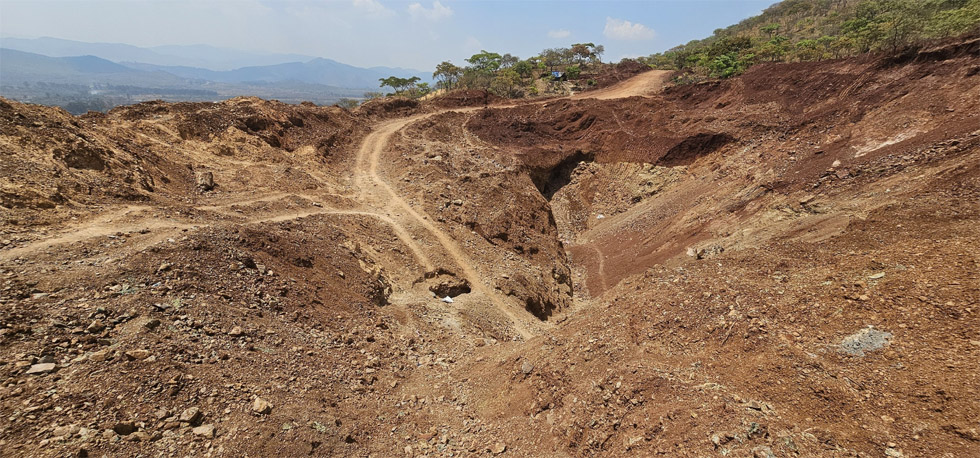
Fairness Moyana, [email protected]
COMMUNITIES in Hwange and Binga have called for responsible mining practices, stronger environmental protection measures and greater local involvement in decision-making as mining activities continue to expand in the two districts.
The calls emerged during recent stakeholder engagement meetings convened by World Wildlife Fund (WWF Zimbabwe) and Zimbabwe Environmental Law Organisation (ZELO) under a new project titled: “Fostering
Environmentally and Socially Responsible, Decarbonized, Inclusive and Transformative Value Chains for Energy Transition Minerals in the SADC Region”.
The project forms part of a five-year regional initiative led by the United Nations Economic Commission for Africa and partners, with funding from the German Federal Ministry for the Environment, Climate Action, Nature Conservation and Nuclear Safety through the International Climate Initiative.
In Zimbabwe, the project is being implemented by WWF Zimbabwe and ZELO to strengthen responsible mining practices, environmental governance, community participation, human-wildlife conflict management and inclusive benefit-sharing in mining communities.
Stakeholder meetings held in Hwange and Binga brought together local communities, traditional leaders,
Government departments, mining companies, civil society organisations and local authorities to discuss opportunities and challenges associated with mining activities in the two districts.
Discussions focused on responsible mining, environmental protection, land restoration, corporate social responsibility, community monitoring systems and the establishment of Public-Private-Community Partnerships aimed at ensuring communities benefit from natural resources found in their areas.
The project comes at a time when demand for critical energy transition minerals such as lithium continues to rise globally, creating opportunities for economic growth while raising concerns over environmental degradation and equitable distribution of benefits.
Speaking during the Binga stakeholder engagement meeting, Environmental Management Agency (EMA) district environmental officer, Mr Phinias Mudimba said communities needed to be capacitated before mining activities expanded further.
“This programme is coming at the right time for Binga. Mining activities are still at infancy stage, and communities need training on responsible mining, monitoring, land restoration and environmental protection before mining expands further,” he said.
Binga District development coordinator, Mr Land Siansole Kabome said the initiative was aligned with the country’s development priorities.
“This project is well aligned with the priorities of the National Development Strategy 2, particularly in promoting responsible mining, environmental protection, inclusive community participation and sustainable socio-economic development,” he said.
“It comes at an important time for districts like Binga, where mining activities are expanding and there is a need to ensure that local communities benefit while natural resources are protected for future generations.”
Community members expressed concern over the limited benefits accruing to local residents despite growing mining investments.
Village Head, Anita Ncube of Village 21 in Kamativi said local communities expected mining activities to translate into tangible development projects. “Lithium mining and processing is happening in our area, but as community members we are not seeing meaningful benefits,” she said.
“We want our children to get jobs at the mines, better roads, schools, boreholes, clinics and tangible improvments of our livelihoods.
“We hope this project will help ensure that local people are heard and included in decision-making processes affecting our area.”
Ms Jennette Phiri from Kamativi Ward said mining should create opportunities for all members of society, including people living with disabilities. “As a person living with a disability and running a poultry project, I believe mining should bring opportunities for everyone in the community, including women, people with disabilities and small business owners. Communities should benefit from the resources in their areas,” she said.
Another resident, Mr Davidson Mvula (79) of Ward 11 in Kamativi, said communities had witnessed mining activities over several decades without significant improvements in their livelihoods.
l Full story on www.chronicle.co.zw
“We have lived in Kamativi for many years dating back to the times of tin mining and now its lithium. We however continue to experience the same challenges of unemployment of locals and limited platforms to engage with mining companies,” he said.
“Young people need employment and skills development, women need support through livelihood projects and mining companies should work together with communities and listen to our concerns.”
In Hwange, assistant district development coordinator, Mr Simbarashe Kayela stressed the importance of environmental stewardship in mining operations.
“Once mining takes place, it obviously opens up the earth and some level of environmental degradation is inevitable. However, mining companies must offset these damages through responsible mining, taking care of the environment and communities,” he said.
Stakeholders also highlighted the importance of establishing community-based environmental monitoring systems through environmental stewards who will work with local authorities, EMA and the Zimbabwe Parks and Wildlife Management Authority to identify and report pollution, water contamination, environmental degradation and human-wildlife conflict.
The meetings were a follow up on findings from community consultations conducted by WWF Zimbabwe and ZELO in 2025, which revealed concerns over environmental degradation, pollution, weak community participation, limited benefit-sharing and the exclusion of women, youth and persons with disabilities from mining opportunities and decision-making processes.
Project implementers said the initiative seeks to place local communities at the centre of environmental governance while promoting sustainable mining practices and ensuring that the extraction of critical minerals contributes to inclusive development and environmental sustainability in line with Zimbabwe’s Vision 2030 and National Development Strategy 2.