Online Reporter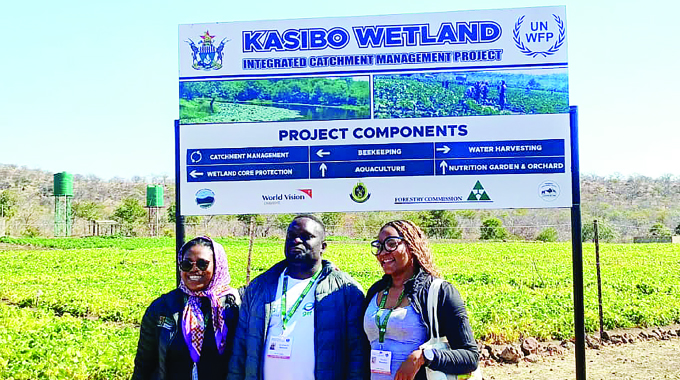
Rutendo Nyeve, Victoria Falls Reporter
A CONVOY of shuttle buses coiled its way through the arid landscapes of Matabeleland North Province on Tuesday, carrying scores of international delegates attending the ongoing 15th Conference of The Contracting Parties (COP15) to the Ramsar Convention on Wetlands (COP 15) to a remarkable conservation site — the thriving Kasibo Wetland Project in Hwange District.
Located in Ward 9, about 100km from Victoria Falls, the project has become a beacon of sustainable development, drawing admiration from visitors representing over 170 countries.
The delegation was divided into three groups, with the first departing at 8am, followed by others at 10am and 12pm.
Upon arrival, they were greeted by the vibrant traditional dances of the Nambya tribe, a celebration of cultural heritage intertwined with environmental stewardship.
The tour began with Headman Nyathi recounting the history of the wetland.
“Some years ago, two men, Mr Belfive Nyathi and Mr Jeremiah Kavundu, went to this area to hunt for game and discovered water springs,” he said.
“They told their wives and soon, more families followed, settling here.”

For years, however, the Kasibo community struggled with erratic rainfall and crop failure, a challenge that has been worsened by El Niño-induced droughts.
The wetland, once neglected, became their lifeline when conservation efforts transformed it into a hub of biodiversity and food security.
Today, the project supports over 40 families through nutritional gardens, orchards and aquaculture, boasting over 1 000 fish while also protecting the natural ecosystem.
Mrs Elizabeth Sibanda, one of the project’s beneficiaries, proudly showed off the lush gardens.
“Every family here has 21 garden beds. We are about to harvest sugar beans and next, we will plant okra and butternut,” she said.
“This project has given us nutrition, income for school fees and even to pay medical bills.”
Nearby, Mr Simon Sibanda, a beekeeper, shared how the wetland’s revival supports apiculture.
“We have 60 beehives, with 20 already colonised. Each hive yields about 20kg of honey, and the bees also help keep wild animals away from the wetland,” he said.
The delegates were visibly impressed by how a small wetland could drive such profound change.
“It’s very interesting to see how the local community has come together to protect this wetland.
“On the way from Victoria Falls, we saw how extremely dry this region is. But here, agricultural plots flourish because they have restored and protected the wetland.
“They have secured water year-round, providing immense benefits. Protecting wetlands is crucial, and many do not realise their importance, even small ones like this, which produce so much for the community,” said Mr Ake Rosenqvist from Sweden.
Ms Zuzu Gadallah, a Canadian delegate from Canada’s Office of Environment, echoed similar sentiments.
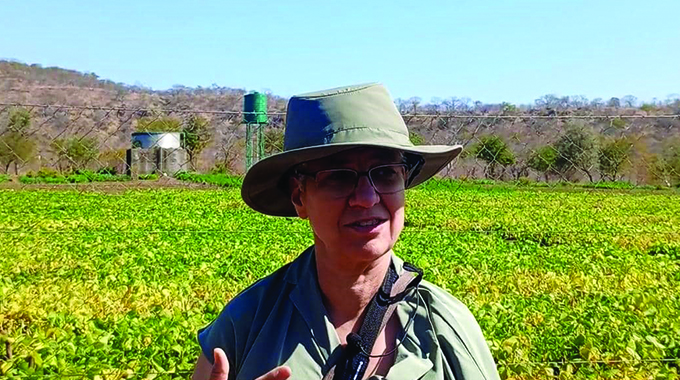
“It’s amazing to see nature recover so quickly. The diversity here is thriving, beans, orchards, fish, it’s rich and wonderful.
The speed at which they have refilled weirs and created a productive system is impressive,” she said.
“Usually, restoration takes years, but this community has achieved so much in such a short time. It’s a successful model that others should learn from.”
The Kasibo Wetland Project stands as proof that community-led conservation can combat climate change while uplifting livelihoods.
As the delegates departed, many left with inspiration and perhaps a blueprint for replicating such success in their own countries. Zimbabwe has officially assumed the presidency of the 15th Meeting of the Conference of the Contracting Parties to the Ramsar Convention on Wetlands (COP15), taking over from the People’s Republic of China, and is hosting the high-level event, which has attracted more than 2 000 delegates.
President Mnangagwa officially opened the conference last Thursday with a strong call for the world to act boldly and decisively to safeguard wetlands and urgently address drivers of wetland loss. The opening event was graced by high-ranking dignitaries, including the Vice President of Malawi, Dr Michael Bizwick Usi, and the Prime Minister of the Kingdom of Eswatini, Russel Mmiso Dlamini.
In his address President emphasised the ecological, social and economic importance of wetlands, describing them as indispensable to planetary health.
“Wetlands, which include swamps, marshes, fens, bogs, estuaries, mangroves, and peatlands, are crucial habitats for about 40 percent of the earth’s species. They provide livelihoods for more than a billion people. To neglect wetlands would be to abandon a critical portion of our existence,” he said.
He further outlined the multifaceted benefits of wetlands, including water purification, flood control and carbon storage, which align with the Sustainable Development Goals (SDGs).
“All these benefits complement efforts towards achieving the Sustainable Development Goals, particularly in addressing poverty (Goal 1) and hunger (Goal 2), water supply challenges (Goal 6); promoting sustainable human settlements (Goal 11); Climate Action (Goal 13) and Partnerships (Goal 17),” he said.
Despite their importance, President Mnangagwa warned that wetlands face unprecedented threats such as habitat loss and degradation due to urbanisation and development, agricultural expansion, and climate change, leading to shifts in wetland distribution, and altered hydrological cycles, among others.
Zimbabwe has made commendable strides in wetland conservation since ratifying the Ramsar Convention on May 3, 2013 with notable commitment.
Since then, the country has designated seven (7) Ramsar sites, highlighting its dedication to wetland conservation and preservation, which resonates with the commitment to provide all Zimbabweans with a clean, safe, and healthy environment as enshrined in the national Constitution.
A key outcome of COP15 is the anticipated endorsement of the Victoria Falls Declaration, a landmark framework aimed at galvanising global efforts for wetland conservation.—@nyeve14