Online Reporter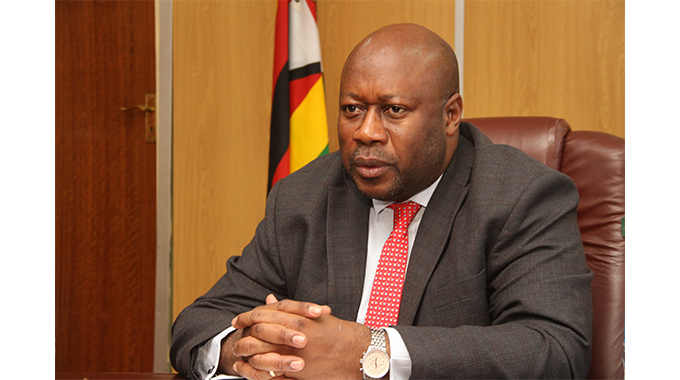
Fairness Moyana in Hwange
CHINESE investor, Zhongjin Heli Energy, has assured the Government that its Hwange Power Plant project will be a model of sustainable mining through adoption of green energy technologies and value-addition processes to curb pollution while maximising resource use.
The firm has said its investments are designed to balance economic growth with environmental protection at a time when Hwange’s mining legacy faces heavy criticism.
“For the coal plant, we adopt green energy and green production to address the problem of pollution and wastage,” said Mr Dye, managing director of Zhongjin Heli Energy, during a recent media tour of the project.
He said the company’s focus was not only on power generation and coal production but also ensuring that communities are shielded from harmful impacts while creating a sustainable future.
The pledge comes amid mounting environmental concerns over decades of mining in Hwange, where open pits, air pollution and water contamination have long plagued communities.
The Government has in recent years pushed mining companies to embrace Environmental, Social and Governance (ESG) standards and value addition in line with the national Vision 2030 agenda.
The Zhongjin Heli Energy project is part of a broader US$500 million industrial park under development near Hwange’s Five Miles area. The park integrates a coal-fired power station, a coal processing plant, a cement plant and a coke battery, creating multiple revenue streams from what would traditionally be waste.
Phase one of the power station, generating 100 megawatts, is already feeding into the national grid, while the full plant has a target capacity of 235 MW.
A recently completed second phase has added a further 135MW, helping ease Zimbabwe’s energy deficit. Alongside this, the cement plant is designed to produce 500 000 tonnes of cement annually using fly ash from the power station, while metallurgical coal is being processed into coke for industrial use.
The project has created hundreds of direct and indirect jobs for Hwange residents, offering employment in the power plant, cement production, coal beneficiation and logistics. Company officials say more opportunities are expected as further phases of the industrial park come online.
By channelling coal waste into cement, electricity and metallurgical products, the firm is not only cutting back on environmental pollution but also ensuring that communities benefit from value addition, in line with Government policy.
Mines and Mining Development Minister Winston Chitando, who toured the project alongside journalists, commended Zhongjin Heli Energy for setting new standards in responsible mining.
“We saw for ourselves cement being loaded into trucks, a direct product of the beneficiation process. Coal waste is being utilised to generate electricity, the same waste is being used for cement production, and metallurgical coal is feeding into industrial processes,” he said.
“In the conversion of coal, electricity is also being produced over and above the power generated directly. This is a very technologically advanced project that demonstrates the future of our mining industry.”
Hwange has long been the hub of Zimbabwe’s coal sector but has over the years left deep environmental scars.
Zhongjin Heli Energy is presenting itself as a frontrunner in reversing this legacy, with operations framed around ESG principles.
Mr Dye said enhanced Government support and cooperation with social partners had been crucial in driving progress.
“Our investment is not only about power generation and coal production but also about ensuring that communities are protected from harmful impacts while building a cleaner, sustainable future,” he added.
With its integrated industrial park, Zhongjin Heli Energy is expected to set new benchmarks for responsible coal mining in Zimbabwe, powering growth while minimising waste and driving the country closer to its Vision 2030 goals.