Vusumuzi Dube
Harare Bureau
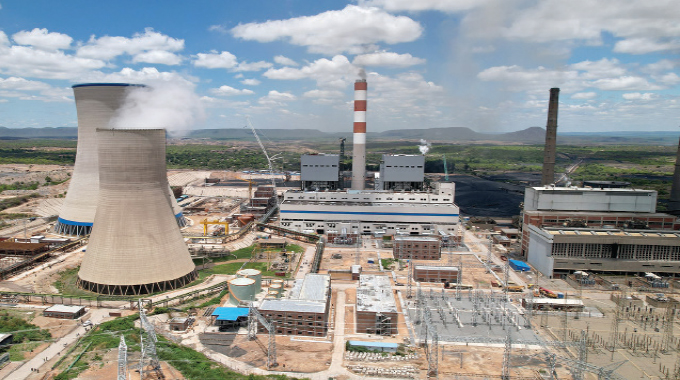
HWANGE Power Station’s Unit 7 was reconnected to the national grid on Friday following the completion of routine maintenance, boosting the country’s power generation capacity by an additional 300 megawatts (MW).
Over the past month, Unit 7 had been undergoing statutory maintenance, leaving Unit 8 as the primary source of electricity from Hwange.
The reduced output from Hwange, combined with depressed generation at the Kariba South Power Station, had led to extensive load-shedding across the country in recent months.
However, with both Units 7 and 8 now operational, Energy and Power Development Minister Edgar Moyo said he anticipates a relative reduction in load-shedding heading into the festive season.
“I understand that Unit 7, which has been off the grid for the past few weeks, will be reintroduced on the grid today (Friday),” he said.
“This means we expect load-shedding to ease as we head into the festive season. Unit 8 will have its Class C maintenance in January or February next year.
“This means there will be reduced load-shedding over the next two months.”

Load-shedding, Minister Moyo said, was also expected to ease further as industrial activity slows during the holiday season, freeing up more power for residential users.
“We anticipate that the reconnection of Unit 7 and with most industries closing for the festive season, load-shedding is set to ease as most of the power is set to be going to domestic users,” he said.
The recent power challenges have been exacerbated by ongoing refurbishment of Hwange’s older units.
The Zimbabwe Power Company is presently refurbishing the six older units at Hwange through a US$300 million loan facility secured from the Export-Import Bank of India.

On Friday last week, Zimbabwe was generating about 866MW — Hwange (639MW), Kariba (184MW) and independent power producers (43MW).
The nation’s peak demand stands at 1 800MW, leaving a sizeable shortfall.
Despite reduced output at Kariba due to the El Niño-induced drought, the country’s average daily generation capacity has remained between 800MW and 1 000 MW, as a result of the synchronisation of the new units at Hwange.
Zimbabwe has also been importing electricity from neighbouring countries to make up for the shortfall.


 Online Reporter