Chronicle Editor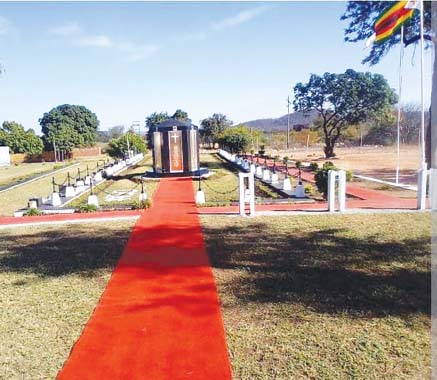
Sikhumbuzo Moyo, [email protected]
THE town of Hwange, formerly known as Wankie, holds a rich history that predates the arrival of European settlers. Its true name, Whange, pays homage to the local paramount Chief Whange, a testament to the town’s deep-rooted cultural heritage.
Hwange’s claim to fame is its abundant reserves of coal, often referred to as “black gold.” This precious resource has been the cornerstone of the town’s development, giving rise to the largest power station in Zimbabwe.
The National Railways of Zimbabwe recognised Hwange’s significance, establishing their second-largest community there, following Bulawayo.
The Hwange Colliery Company, established in 1899, has been the steward of this black gold, employing both underground and open-cast mining methods to extract the mineral.
The town is structured around five compounds — Lwendulu (Number One), Madumabisa (Number Two), Makwika (Number Three), Lusumbami (Number Five), and Senderela — where the majority of the workforce resides.
These compounds, however, are marred by a legacy of colonialism, with communal bathrooms and toilets that pose a significant health risk, particularly in spreading communicable diseases. The scarcity of water only exacerbates these conditions, making it a miracle that outbreaks like Covid-19 have not had a more devastating impact on the community.
The public ablution facilities stand as a stark reminder of a time when the black majority was treated as second-class citizens, providing cheap labour for the town’s prosperity.
Within this backdrop of social challenges lies the haunting memory of the Kamandama Mine disaster on June 6, 1972.
The tragedy claimed the lives of 427 miners, marking it as the country’s deadliest mine disaster and the ninth worst globally.
After the initial explosion, only eight men were rescued, with subsequent explosions sealing the fate of the remaining miners.
The decision by Gordon Livingstone Blevins, the general manager at the time, to leave the 424 bodies entombed in the mine’s depths, solidified the disaster’s grim legacy.
A Commission of Inquiry report in 1973 revealed that warning signs had been ignored for years, including a 1960 incident where three individuals were severely burnt due to methane ignition. These oversights, unreported and unaddressed, ultimately culminated in the catastrophe that still echoes through Hwange’s history.
“Although this accident is the first recorded accident from this cause, it is regarded as a timely warning as conditions in the respect are likely to worsen in the future when the Kamandama and North shaft workings (No 2 Colliery) approach the Deka fault and north development at No 3 Colliery extends under the Matura hills where the depth will be about 1 500 feet (450 metres). Daily gas testing has been instituted in all parts of the mine and a close study of all records submitted is being maintained,” the Commission of Inquiry report stated.
The 1972 Kamandama Mine disaster was a turning point for the mining industry in Zimbabwe, leading to significant changes in safety and health protocols. In the wake of the tragedy, the Mine Rescue Association of Zimbabwe was established in 1973, tasked with co-ordinating mine rescue operations across the nation. At the time of the disaster, Zimbabwe lacked its own rescue teams, necessitating assistance from neighbouring countries like Zambia, South Africa, and Botswana.
This calamity not only reshaped the industry but also left an indelible mark on the community, with 427 families losing their loved ones and providers. The memory of that day is etched into the collective consciousness of Hwange town, a sombre reflection that pauses the narrative of progress and prosperity.
In honour of the lives lost and the brave rescue workers who faced the unstable conditions of the disaster site, this week’s column is dedicated to their memory. It is also a tribute to the residents who, to this day, endure the remnants of colonial-era public ablution facilities, a stark reminder of a past that still lingers.
As we step into 2024 with this inaugural article, we pause to acknowledge the weight of history and the resilience of the Hwange community. In our next edition, we will resume our exploration of Hwange town, delving into its present and future, as we “return to factory settings” and continue to tell the stories of Zimbabwe’s famous sons and daughters, both past and present.


 Online Reporter