Chronicle Editor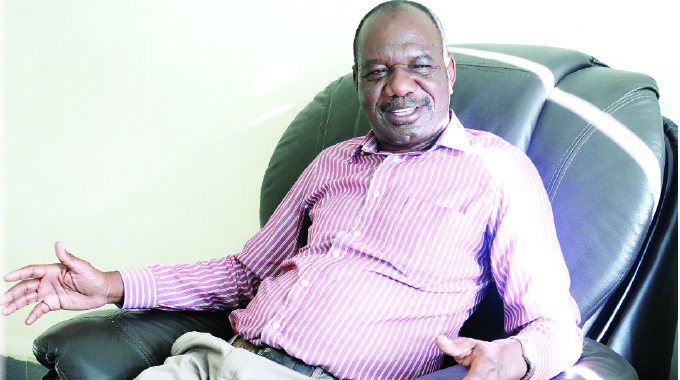
We continue our interview with Dr Peeps Gonde pseudonym Cde Philip Nkomane, a retired Colonel in the Zimbabwe National Army (ZNA), who now works as an academic at the National University of Science and Technology (Nust) in Bulawayo. Dr Gonde is teaching Software Engineering, is the university’s proctor and also the Acting Director of the Centre for Continuing Education. As the country moves towards the commemorations of the Heroes Day next week, Dr Gonde told our Assistant Editor Mkhululi Sibanda (MS) on Thursday last week that the armed struggle was not a picnic. He spoke about he survived the bombing of the Freedom Camp (FC) on 19 October 1978. On that day the Rhodesian forces launched twin attacks on FC and a cantonment for ZPRA female combatants, Mkushi where hundreds of people lost their lives. Dr Gonde said he cannot even explain how he survived the attack as a colleague, Cde Fraser Chishame whom he shared a tent with had his stomach ripped open by a shrapnel and died on the spot. FC, which before being given to Zapu was a Frelimo Camp was situated about 25km from the Zambian capital, Lusaka off Kabwe Road and used as a transit camp and an agricultural enterprise under the leadership of veteran nationalist, Cde Amon Jirira.
MS: Last time you were talking about your training as a cadet officer at Kohima, so today let’s pick the conversation from there.
Dr Gonde: A few weeks before our pass-out parade as officer cadets I was unwell, so I was moved back to the Freedom Camp (FC). By then we had been rehearsing, having completed our training and our certificates having been printed. I brought that certificate home and it’s there. In fact, the pass-out parade had been delayed. I then stayed at FC for some time and when it was bombed on 19 October 1978 I was there.
MS: Then take us through what happened on that fateful day.
Dr Gonde: I shared a tent with Cde Fraser Chishame and our tent was close to the pass-out parade under a tree, about 50 metres or so from the parade square which became the target of the Rhodesian forces when they started bombing the camp as there were some people gathered there. It should have been around 7.30am when we heard the sound of aircrafts and it was a Thursday. We then heard the hissing sound of the bomb, which was immediately followed by a loud explosion. I then realised that Fraser had been hit as his stomach was ripped open by a shrapnel and unfortunately, he died on the spot. At that moment I didn’t understand what was happening, there was confusion and mayhem all over the camp. People were running in all sorts of directions because it was difficult to tell where the bombs were coming from. There was chaos all over the place and the enemy aircrafts were encircling the whole area. So people were trying to get away from the area of concentration as soon as possible.

MS: In that tense and delicate situation what did you do?
Dr Gonde: I was fortunate, some of the things you don’t understand how they happen and up to now I don’t know how I survived. I then emerged from our tent. From our tent, which was under a tree there were mango trees to the north of the camp on the edge of the camp, so I dashed towards those trees. I then realised that the enemy jet fighters were bombing for real and I got under the mango trees. Then there were toilets and from the mango trees I sprinted and got into the toilet, the pit latrines. At that moment the choices of where to hide were limited. Getting into the toilet was just a desperate measure and while inside I then realised that the toilet was not going to assist. Uyabe ungasakwazi ukuthi kanti i-toilet izasiza ngani. After the mango trees and the toilets there was an open field, which formed part of the camp’s agricultural enterprise. From the toilet I ran and crossed the open field, just before the fence there was a thicket and I got in there. I then saw a big log and I squeezed myself under it. At that moment I was a bit confused, everything had been happening so fast. Helicopters then came my direction and the enemy could have spotted me. I then felt something very hot on my back, I then said to myself, “finish I have been shot.” I think that was the same assessment by the helicopter crew as they flew away. Realising that the helicopter had gone, I got up and jumped the fence. I then moved to the territory of Zambian civilians. I continued northwards, crossed the road and got to a thicket. I saw an anthill and sat on it. I looked back and saw the planes bombing. I could see them diving and releasing the bombs. It was a tricky situation.
MS: Roughly how far were you from the camp?
Dr Gonde: From that position I could have been about one-and-a-half kilometres from FC. I could see the planes doing the damage. Then I remained there until around 4pm. Somehow I managed to go back to the camp.
MS: Had you been hit as you spoke about feeling something hot on your back?
Dr Gonde: No. I had not been hit by a missile, I think I had been hit by an empty cartridge, the heat could have been from that cartridge. To be honest from the time I left the camp until around 4pm I don’t even know what was happening with me. When I got into the camp I found ambulances and cars ferrying the injured to the United Teaching Hospital in Lusaka. I joined in the evacuation of the casualties.
MS: In your estimation how long was the bombing?
Dr Gonde: It could have been between 45 minutes and an hour. When I got to the camp I still had that confusion, I had been affected by the gases which I had inhaled during the bombing and my chest was painful as well. However, I managed to assist in evacuating the casualties to the United Teaching Hospital (UTH). Some people were badly injured as some had lost their arms, legs and the injured were crying. It was a very disturbing sight. Bodies were strewn all over and that is when we came face-to-face with the cruelty of the Rhodesian regime. I am saying cruelty of the Rhodesian regime because essentially that camp housed unarmed people, a majority of them refugees who had not yet received military training. The camp had no proper security, there were few armed people.
MS: But why was FC not properly secured?
Dr Gonde: Probably that was because it was a transit camp. When I got there it was just a transit camp. Of course there were some elements, command elements which I can’t really explain what their role was. As a guerilla you don’t mind too much of ezinye izinto.
MS: However, were there indications or intelligence that FC could be bombed?
Dr Gonde: No, no. Not what I know of, but maybe the intelligence and other levels of command. However, if there were such suspicions then people could have been warned and probably evacuated from the camp.
To be concluded next week with Dr Gonde narrating his new deployment as an instructor where he met the now late National Hero, Lt-Gen Sibusiso Busi Moyo and others. He will also talk about being given the task to form a football team at 3 Brigade in Mutare by then the formation’s commander, the now late National Hero, General Vitalis “Fox” Zvinavashe. That team is the former Premier League side, Buffaloes.


 Online Reporter