Online Reporter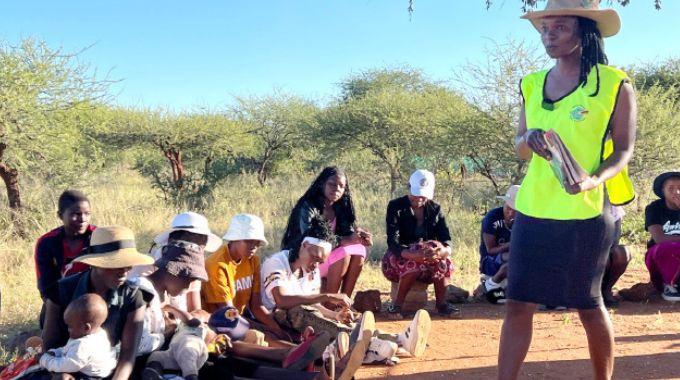
Sukulwenkosi Dube-Matutu, [email protected]
AT just 13 years old, Nelisiwe Ncube should have been worrying about homework, friendships and dreams for the future.
Instead, she was preparing to become a mother. Two years earlier, poverty had forced her out of school while she was still in Grade Five. With no classroom to return to, no source of income and little hope for the future, survival became her daily reality.
“I didn’t have any ambitions. My life became about surviving,” she recalls quietly.
For the young girl from Matabeleland South, survival meant accepting money and gifts from men without fully understanding the risks she was exposing herself to.
By the age of 14, she was cradling a baby of her own.
“I was young and gullible and didn’t put much thought into the consequences of my actions. I was impregnated at the age of 13 and at 14 I became a mother,” said Nelisiwe.
“At that time I didn’t fully understand what I was doing or the consequences. It was a great struggle to adjust to being a mother, and even today it is still difficult.”
Like many vulnerable adolescent girls, Nelisiwe says poverty robbed her of choices long before motherhood did.
She knew little about HIV and Aids, sexually transmitted infections, contraception or her sexual and reproductive health rights.
“It didn’t even cross my mind that I could become infected with HIV or another sexually transmitted infection,” she said.
“I didn’t understand the life-threatening risks I was exposing myself to or how my life would change forever.”
Everything changed when she joined the National Aids Council’s Sista2Sista programme at the age of 15.
For the first time, she found a safe space where she could ask questions without fear of judgement, learn about her health and begin rebuilding her confidence.
“Now I know that when engaging in sexual activities I have to protect myself to prevent infections. I also know about contraceptives and how to prevent unintended pregnancies. Most importantly, I now know that I can make informed decisions about my life,” she said.
She is not alone.
Seventeen-year-old Miriam Ncube* says poverty almost pushed her into a cycle of transactional sex that many young girls struggle to escape.
With her mother battling to provide even basic necessities, Miriam often relied on older men, including artisanal miners, for money.
“I got into relationships with men because they gave me money for food, toiletries and other basic needs. Some were my age while others were much older,” she said.
Miriam says looking back, she realises how vulnerable she was.
“I didn’t think about the consequences. I only thought about surviving,” she recalls.
Today, Miriam speaks with a confidence she never imagined possible.
Through the Sista2Sista programme, she has learned about HIV prevention, sexual and reproductive health, financial literacy and entrepreneurship.
She also receives sanitary wear through the programme, removing one of the pressures that once pushed her into risky relationships.
“Attending the sessions has changed the way I see life. I now know there are better ways to earn a living and achieve my goals,” says Miriam.
For Nolwazi Ncube*, the programme’s lessons extend beyond adolescence.
As a married woman, she says understanding sexual and reproductive health has helped her appreciate that the decisions she makes affect not only herself but also her husband and children.
“I have learned about my rights and the importance of taking responsibility for my own health,” she said.
Across Zimbabwe, adolescent girls and young women are disproportionately vulnerable to HIV infection, gender-
based violence, child marriage and unintended pregnancies, with poverty often increasing their exposure to risky sexual behaviour.
To address these challenges, NAC introduced the Sista2Sista programme, which equips adolescent girls and young women with knowledge, practical life skills and psychosocial support.
Under the initiative, trained mentors guide groups of up to 50 girls at a time, creating safe spaces where they can openly discuss issues affecting their lives.
Participants receive information on HIV prevention, sexually transmitted infections, sexual and reproductive health and rights, financial literacy, gender equality, self-esteem and economic empowerment.
The programme also teaches girls how to identify and avoid coercive relationships while encouraging them to pursue education, entrepreneurship and other opportunities that reduce their vulnerability.
For Nelisiwe, the programme has not erased the hardships of becoming a child mother, it has given her something she once believed was beyond reach — hope.
Today, instead of seeing herself as another statistic, she sees herself as a young woman capable of making informed choices and building a better future for herself and her child.
“I cannot change what happened to me, but I can change what happens next,” she says.
Names used are not real in order to protect the identities of the beneficiaries.