malvernmugadzikwa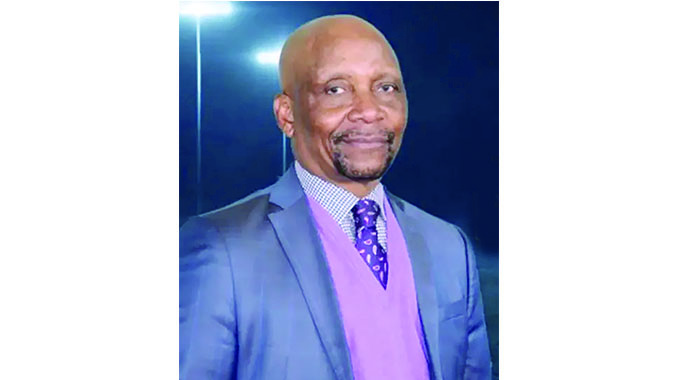
Last month, Public Service, Labour and Social Welfare Minister Professor Paul Mavima appointed DR EMMANUEL FUNDIRA (EF) board chairperson of the National Social Security Authority (NSSA). His immediate task involved “making sound decisions to ensure the well-being of NSSA beneficiaries”. The Sunday Mail’s HARMONY AGERE (HA) spoke to Dr Fundira about his recent appointment and plans for the organisation.
**************
HA: You were recently appointed NSSA’s board chairperson. Can you begin by telling us your brief at the organisation?
EF: It is a very important recognition in the sense that NSSA, as you are aware, is the largest pension fund institution in the country.
So, it is a significant responsibility that was put in my hands, together with the board.
I would say my first call, given such a responsibility, would be to stay focused and find ways and means of how the institution can be brought back to its core business.
HA: Were you not daunted by the demanding task, given a number of issues such as corruption and poor corporate governance affecting NSSA?
EF: Not really! I think these things come up as a challenge that must be tackled.
Even when I joined NSSA, I went through a culture shock in terms of understanding and appreciating the way people conduct themselves and do business.
They did things outside the norm and sometimes a bad practice feeds on itself, creating more and more problems.
But I say it is a manageable challenge.
And what I mean is that, as long as there is a dedicated appointing authority, whom I know is convinced that we can bring stability to this organisation, then we can achieve the task at hand.
We are currently looking at where we have come off the levers as an organisation and try to bring it back on the rails.
It doesn’t necessarily mean that you have to carry everyone in that process.
There will be natural attrition as a result of that exercise.
Obviously, all the progressive minds, which are probably still resident within the organisation, can prevail and sustain going forward, joining in the journey of making sure that we can restore the confidence and rebrand NSSA.
HA: What are some of the immediate interventions that you have taken to put NSSA back on track?
EF: I think the guiding process really has been the forensic report, which was initiated before my time.
Obviously, that is going to provide a good insight in terms of what has been happening, and where and why and to what extent.
So, the audit report is a good starting point.
The report is out and has been shared with strategic stakeholders.
I am talking about senior Government officials, the Minister (of Public Service and Social Welfare), the Permanent Secretary, the President and Cabinet.
What is now left is for us to convene our first board meeting, where, as chairman, I will be giving a summary of the report to the board so that it can also appreciate where we are and what we can do to address some of those gaps highlighted through the audit.
This is going to be a public document, obviously.
There is no rush in us distributing it before the board meets and deliberates on it.
We would like, as much as possible, to manage the processes without creating more damage and probably allowing those who have been found on the wrong side of the law to pre-empt possible decisions which may be taken around them.
So, we try as much as possible to keep that very close to our chest until such time when action has got to be taken, and it’s not going to be far; it’s very soon.
HA: NSSA has just introduced partial United States dollar pension payouts. What was the reasoning behind this initiative and is there scope for increasing the payouts?
EF: I think, given the macro-economic environment that we are operating in at the moment, we are continuously exercising our minds on how best we can give value to our pensioners and beneficiaries.
I would have loved to inherit a well-functioning organisation and just attend to delivery levels.
Be that as it may, we find ourselves in this situation, where I feel there is a real need for us to continuously look at reviewing processes, trying to align as much as possible both in terms of the cost-to-income ratios to see whether the business can remain viable, and, to some extent, even causing a situation where we can also look at the various contribution levels that are being made by individual pensioners to see whether they are still relevant, in line with expected outcomes.
So, those are the issues that we have in mind.
Some of them will require statutory instruments and they are still very much in the infant stage.
We really desire to come up with outcomes that result in pensioners getting more benefits.
HA: How much progress has NSSA made in introducing social security products tailor-made for workers in the informal sector?
EF: This is one area we think is a low-hanging fruit.
We are also exercising our minds to see how best we can design products to accommodate and provide social security cover for those people who are in the informal sector.
The country’s economy at the moment is heavily informal and there are probably more activities happening in the informal sector than there are in the formal
sector.
So, definitely, it really calls upon us to be more innovative to see how best we can harvest some of those businesses and make sure we can also provide measures to give protection to individuals in those areas, who are not currently covered.
HA: What are some of the investments that you are looking to make in the near future?
EF: We always try to look at a fairly balanced portfolio.
We want to make sure that we are almost across the board.
Other than just looking to make a return on our investments, we also look at our national contribution; what are we contributing towards national development?
We are looking at investment towards youth projects and we are looking at development in infrastructure.
We are very much there and we are also looking at other developments that are low-hanging fruits.
You may be aware that we are a key sponsor or partner in the Liberation City, which is already under development in the western part of Harare.
HA: What is your final message to pensioners?
EF: My message to pensioners is that you are our key stakeholders.
The very existence of NSSA is because of these pensioners, and we will not want to be seen to be letting them down in any way.
We will try as much as possible to ensure that we are keeping ourselves in step with inflationary pressures.


 Online Reporter