


 Online Reporter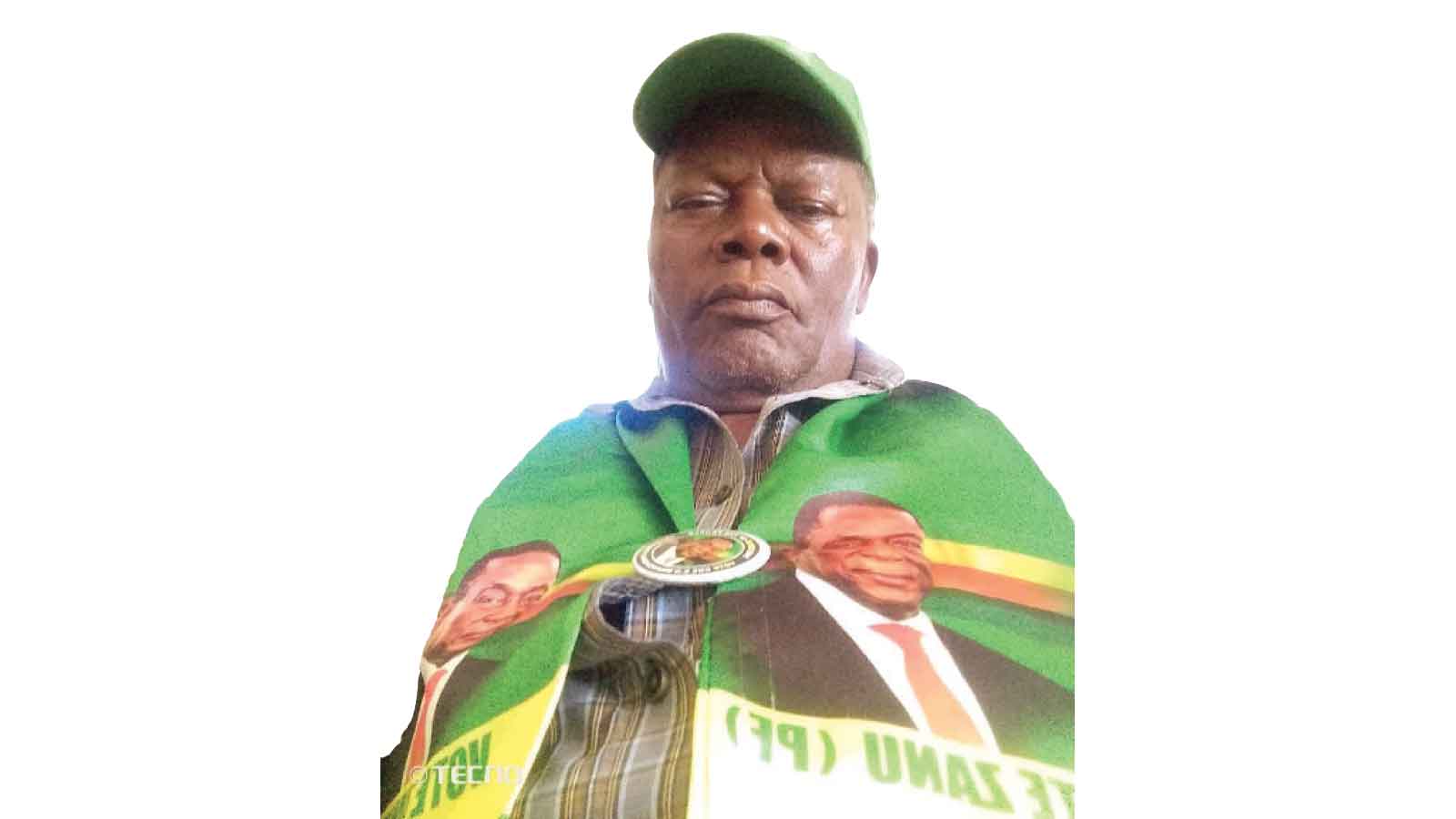
Chronicles from the 2nd Chimurenga
CDE SAMUEL MAKUREYA, whose nom de guerre was Knox Zvichapera, was introduced to the liberation struggle through a nasty experience, one that he struggles to erase from his mind. This week, he continues his narration by telling our Society Editor PRINCE MUSHAWEVATO about his life at Nyadzonya, including the horrific and infamous Nyadzonia attack that occurred shortly after his arrival at the camp in 1976.
*************
Q: Our previous discussion ended when you had joined Battalion B at the Nyadzonya Camp in Mozambique. Can you carry on from there?
A: We stayed at Nyadzonya from July to August. During our stay there, we underwent political lessons conducted mainly under a tree. They taught us about the party’s formation and the reasons behind it. After the lessons, we would go to the zinya (kitchen) where food was prepared.
Kenya mealie meal (produced from yellow maizel) and milk were the staples there. The milk came in powdered form and it would be boiled for us to eat with sadza. People went into the kitchen to eat in their companies. The barracks were made of grass and had wooden beds.
We made the beds ourselves during our spare time, especially after fetching firewood. The mattress was made of grass. After a while in the camp, I bumped into my elder brother, Noah Makureya, who had travelled to Mozambique a year before me. All the while, I assumed he had finished training and was already operating in Zimbabwe. I thought he was part of the comrades involved in the Melsetter (Chimanimani) attacks I told you about earlier on. However, I was wrong. He was still at the Nyadzonya camp, which was more of a receiving site, what others would call a refugee camp. Some white people, I think from the United Nations, would come and take pictures of our activities there. I think those pictures are what they used to mobilise food for us from their different sources.
Q: Your initial plan, including that of many others, was to get military training and fight back home. Why would one, like the case with your brother, stay longer in a “receiving camp”?
A: The challenge we had back then was that designated training camps required a limited number of trainees at any given time. So, it was difficult for everyone to go for training at once.
That is why you would find those who left a long time ago still in places such as Nyadzonya. When my brother found out that I was in the camp, he assisted me a lot. When on kitchen duty, he would get some food for me. There were also some people I had grown up with in Dangamvura whom I met there.
On August 8, 1976, which was ZANU Day, there were some celebrations that were expected to happen. Meanwhile, we had been taught that if the whistle blew, we had to get out of the barracks or leave whatever we were doing and run for the parade, because there would be an emergency of some sort.
So, they used to blow the whistle and we would rush for the parade, where we would be addressed as part of the training. Instructors would monitor everything.
The same drill would be used even if they wanted to take people for training. People would gather and the required number would be selected to undergo training. So, on that particular day, ZANU Day, people would gather for dramas, poems and so on. Entertainment was frequently provided so that people did not miss home that much.
Q: You can carry on.
A: Food was prepared in advance for the event. We went for the 8am parade as usual. The parade was where we got our assigned tasks for the day, such as fetching firewood, political lessons, cooking and so on. After the parade, we dispersed, but shortly after, the whistle sounded again and we responded as usual. We dashed back to the assembly point where we noticed greenish cars that had entered the camp.
Q: Who did they belong to?
A: As recruits, we assumed they were vehicles that had come to transport us to different training centres. While we were at the parade, the trucks lined up in a battle formation and little did we know that it was Morrison Nyathi who had come with the white soldiers.
The Rhodesians had applied some black substance to their faces to try and appear like us. Due to our excitement, we did not notice much as we were happy the trucks had come to ferry us to training sites. We started gathering for the parade. But, before we all grouped, some of our colleagues heard Nyathi shouting, “MaZimbabweans, nhasi tapandukirana” (Zimbabweans, today we have become enemies). That is when guns started blazing. The vehicles were facing where the majority of the comrades were.
They started firing around 8am and the attack lasted for some time. Comrades were shot. The NATO was the most used firearm during the attack.
The sad thing was that helpless refugees, including women and kids, and Zimbabwe National African Liberation Army (ZANLA) recruits, were killed. I managed to escape, following others and ended up at Nyadzonya River. As new recruits, we did not understand what was happening. We initially thought it was part of a recruitment drill, but when we later realised comrades were dying, it became clear to us that we were under siege from the enemy.
Q: What happened next?
A: The senior guys started shouting, “Let us run comrades, it is war!” We all paced towards Nyadzonya River. The enemy was on higher ground, so it was only safe to go into the river, which was in a depression. Those who tried to climb out of the river were shot and killed. I and a few other comrades managed to manoeuvre and find a safe passage out of the massacre zone.
We crossed to the other side, but even so, some from our group were shot and killed. Upon getting to safety, we would bump into our other colleagues who had used different escape routes. We travelled far from the camp. Nyadzonya had turned red with blood. Among our group, not a single person had a gun. Only one camarada (Mozambican soldier), who loved his radio, had a gun — a folding butt rifle. The camp only had replica guns carved from trees that we used for training.
We did not return fire. It was just taking cover and running for dear life. Meanwhile, as we escaped, we ended up at Pungwe River and wanted to cross it. There was a special technique that we used to cross rivers.
But, in the process of crossing, one of the comrades we were with was swept away by the current. He had survived the attack but, unfortunately, died in Pungwe River.
He could not swim. When we got to Chimoio, we learnt that we had lost a number of comrades in Pungwe River.
Several comrades who had survived the attack died in the river.
It was a double tragedy for us. Around 2pm, after crossing the river, we heard a massive explosion. We later learnt that a bridge at Pungwe River had been blown up. The bridge was used by vehicles to cross into Tete. After the gun attacks, the Rhodesians crossed the river using the bridge and when all their cars had passed through, they blew it.
Next week, Cde Makureya will recount what happened after the Nyadzonya attack and how they eventually travelled to different destinations for military training.


 Bongani Ndlovu