


 Vusumuzi Dube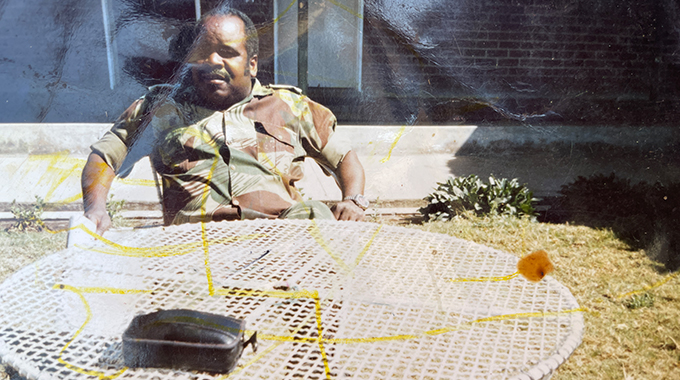
AT the peak of Zimbabwe’s armed struggle in 1978, Cde Nimrod Ndlovu pseudonyms Cde Vincent Sakala or Osmond Fomoja was deployed as a platoon commander in a detachment of 90 heavily armed guerillas.

The order given by then regional commander, now late Brigadier-General (Rtd) Collin Moyo alias Cde Rodwell Nyika was to bring down the problematic Mushumbi Pools Garrison in the then Sipolilo (Guruve) in Mashonaland Central Province, an uphill task, which, however, was at the end of the day accomplished.

That was the battle that made ZPRA forces win the hearts and minds of the local population, which, hitherto had been hostile towards the liberation forces. The attitude of the villagers is believed to have stemmed from the fact that all along they thought the Rhodesian forces were invincible.

On Friday, our Assistant Editor Mkhululi Sibanda (MS) caught up with Cde Ndlovu, one of the heroes in that battle to give an account of his participation in the country’s armed struggle. Below are excerpts from the interview.
MS: As is the norm, may we start the interview by you giving us your background?
Cde Ndlovu: I was born on 10 November 1953 at a place called Marinoha in Kezi, Matabeleland South Province. It is situated about 10 kilometres south-west of Maphisa Growth Point. For my schooling, I went to the local Marinoha School up to Standard Six. I couldn’t continue with my education because of financial constraints and I was then forced to move to Bulawayo to look for employment.However, after Independence, while serving in the Zimbabwe National Army (ZNA) I resumed my education, wrote O-Level, and passed. I went further and did some professional courses. I have since relocated from Kezi as I am now a resident of Figtree where I am doing farming as I am a beneficiary of the country’s land reform programme.

MS: Then tell us about your time in Bulawayo, how was it like working in factories then?
Cde Ndlovu: I came to Bulawayo in 1969 and I still remember well that I got here on a Sunday. The following day, I got a job at a clothing firm called Rabika Clothing Factory. My job involved cutting off cotton treads from newly sewn garments and other odd tasks assigned to me and others of course. I worked there for a year until I had a run-in with the son of our boss, an Indian guy.
MS: What happened?
Cde Ndlovu: I had been assigned to pick up litter within the premises and the son of that Indian accused me of not taking my duties seriously. He said I was just standing without doing any work as assigned. I didn’t take kindly to what he was saying to me and realising that I was very angry and could beat him up, he ran away and reported me to his father. He told his father that I had threatened him with violence. When I was being taken to task, I told them I was no longer interested in working for them. I asked them to give me my money and I went back home to Kezi. That’s how I left my first job and that was in December. I then returned to Bulawayo the following year to look for another job. I got it.
MS: At that time how was the political situation like in Bulawayo?
Cde Ndlovu: I was staying at Burombo Flats, which was for bachelors and as youngsters, we were much involved in the youth activities of Zapu. At times I would live in Makokoba and move to Mzilikazi. We were neck deep in the affairs of Zapu and during that time one of the prominent members of the Youth League was Levi Mayihlome, the retired Brigadier-General who is the Deputy Minister of Defence. I remember, in 1975 when Lazarus Nkala, a senior member of Zapu died, we kept vigil at his funeral work, at his house in Barbourfields.
MS: Now, let’s come to you leaving the country to join the armed struggle. Take us through your journey.
Cde Ndlovu: I had moved to Magwegwe where I was living with my uncle, so one Saturday I decided that I had to leave the country, cross the border into Botswana enroute to Zambia. Those days, it had become fashionable to hear that so and so had left the country for the armed struggle. It was the in-thing among the youths. On that Saturday, my uncle asked me to go and buy bread so that we could prepare breakfast. I went to the shops and returned with the bread and placed a pot on the stove so that the water would boil to make tea. At that point, my uncle was still in bed in his bedroom. I then left without bidding him farewell. After the war, he told me that he waited and waited to be told that the tea was ready. When he got out of bed, he realised that I had long left. Instead of preparing tea he took a bath and went to the beer hall for a drink.
MS: Where did you move to?
Cde Ndlovu: I went straight to Makokoba, which was commonly referred to in those days as Old Location. I met my friends and told them that I was leaving for the war and they didn’t believe me. We went to Burombo Beer Garden and at about 11am I left for the Renkini Long Distance Bus Terminus where I boarded a Matambanadzo bus heading for Plumtree. We arrived in Plumtree at around 3pm and I dropped off. I then met someone I knew from Burombo Flats, a Kalanga-speaking fellow and he asked me what I was doing in Plumtree. I told him that I was visiting a brother who was working for Pelandaba Bus Services. He then pointed in the direction of the Pelandaba premises. However, before I left, he told me that he was broke and didn’t have money for beer. I told him that we could have a drink together. However, I almost made a fatal mistake with that decision.
MS: How Cde Ndlovu?
Cde Ndlovu: He led me to where he said there was a bar. On the way, he said we had to look for our mugs as patrons were supposed to bring their own there. We walked into some premises and I was shocked to see people in military uniform. He then told me that is where he was now working. We then went to his room where we found a Shona-speaking guy and they told me that a mug was going for 25 cents. He then left me with his colleague. We then left the room heading for the bar. There was a queue at the bar and I then gave an excuse to just peel off from him. I then made good my escape from those guys.
MS: Where did you go from there?
Cde Ndlovu: A short distance from where I had left those guys I came across a donkey-drawn scotch-cart, which was moving towards the border. The boys who were driving the scotch-cart then gave me a lift. After some distance, they showed me the direction to take as I continued with my journey to Botswana.
Note: To be continued next week with Cde Ndlovu talking about his arrival in Botswana and transfer to Zambia for military training.


 Online Reporter
 Bongani Ndlovu