Chronicle Editor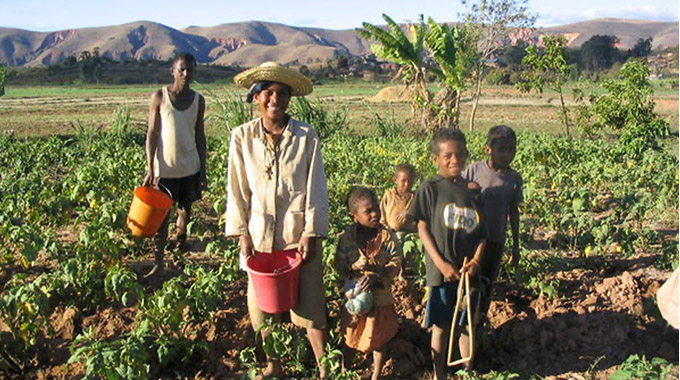
Yolanda Mlilo, Sunday News Reporter
WITH agriculture the backbone of food security in Zimbabwe, a family that farms together positively contributes to the sector and ensures food security at the household level.
Family farming has historically been at the heart of the country’s agricultural system encompassing more than mere cultivation and livestock rearing, it represents the culture, tradition and way of life.
Speaking at the 84th Annual Congress of the Zimbabwe Farmers Union (ZFU) in Bulawayo on Thursday, Deputy Minister of Lands, Agriculture, Fisheries, Water and Rural Development, Vangelis Haritatos said the congress’ theme was crucial to highlighting the role a family setup plays in agriculture.

“With the theme: “Family Farming and Food Security Nexus,” this event brought together stakeholders to discuss the challenges and opportunities facing family farmers. As the country grapples with climate change, economic instability, and limited access to resources, the role of family farmers in ensuring food security has never been more crucial,” he said.
He said the congress provided a platform for farmers, policymakers and experts to share insights and strategies for supporting family farms and building a resilient agricultural sector.
Deputy Minister Haritatos said family farms play a pivotal role in the livelihood for millions of Zimbabweans as they are the backbone of the nation’s food security.
He added: “Food security is not just an agricultural challenge but a multidimensional issue involving economics, nutrition and community resilience. The nexus between family farming and food security in evident when we support smallholder farms, we ensure the availability of diverse and nutritious food, enhance access to markets and foster sustainable agricultural practices.”
The Deputy Minister said in response to Zimbabwe’s climate-proofing thrust for food security and enhancing rural livelihoods in the face of climate challenges, the Government had adopted a two-pronged approach.
He said firstly, there was climate proofing at the household level for the upcoming season, with the Government supporting three million farmers under the Climate Proofed Food Production Scheme (Pfumvudza/Intwasa) from communal, A1 small-scale commercial farming, old resettlement and 500 000 peri-rural farmers for cereals, oilseeds and legumes.
Deputy Minister Haritatos said Pfumvudza/Intwasa will be informed by agro-ecological tailoring which entails that what a farmer produces is determined by the agro-ecological region, and that what the Government supports is also determined by the agro-ecological region.
“This will see farmers in Natural Regions I, II and III receive maize seed while farmers in region IV and V will receive traditional grains seed which are more suited and adaptable to the climatic demands of the regions.”
He said the ministry has rolled out a robust Drought Mitigation plan which is also embedded into the 2024/25 summer plan with interventions underpinning the strategy including supplementary feeding programme, water supply initiatives, veterinary services and capacity building through training.
The Deputy Minister urged everyone to embrace the crucial role family farming plays in the nexus of food security, emphasising collaboration, sharing knowledge and working together to create a thriving agricultural ecosystem.
ZFU secretary-general, Mr Paul Zakariya said the congress served as a testament to their collective commitment towards securing the future, nourishing communities and safeguarding the very essence of our food security.
“As farmers, we are not merely providers of sustenance we are the custodians of traditions, the stewards of the land and the backbone of our nation’s prosperity in shaping a sustainable future.”
He said family farmers were the vanguards of biodiversity, the architects of sustainable practices and the champions of resilience in the face of adversity.



 Online Reporter