


 tawandamusarurwa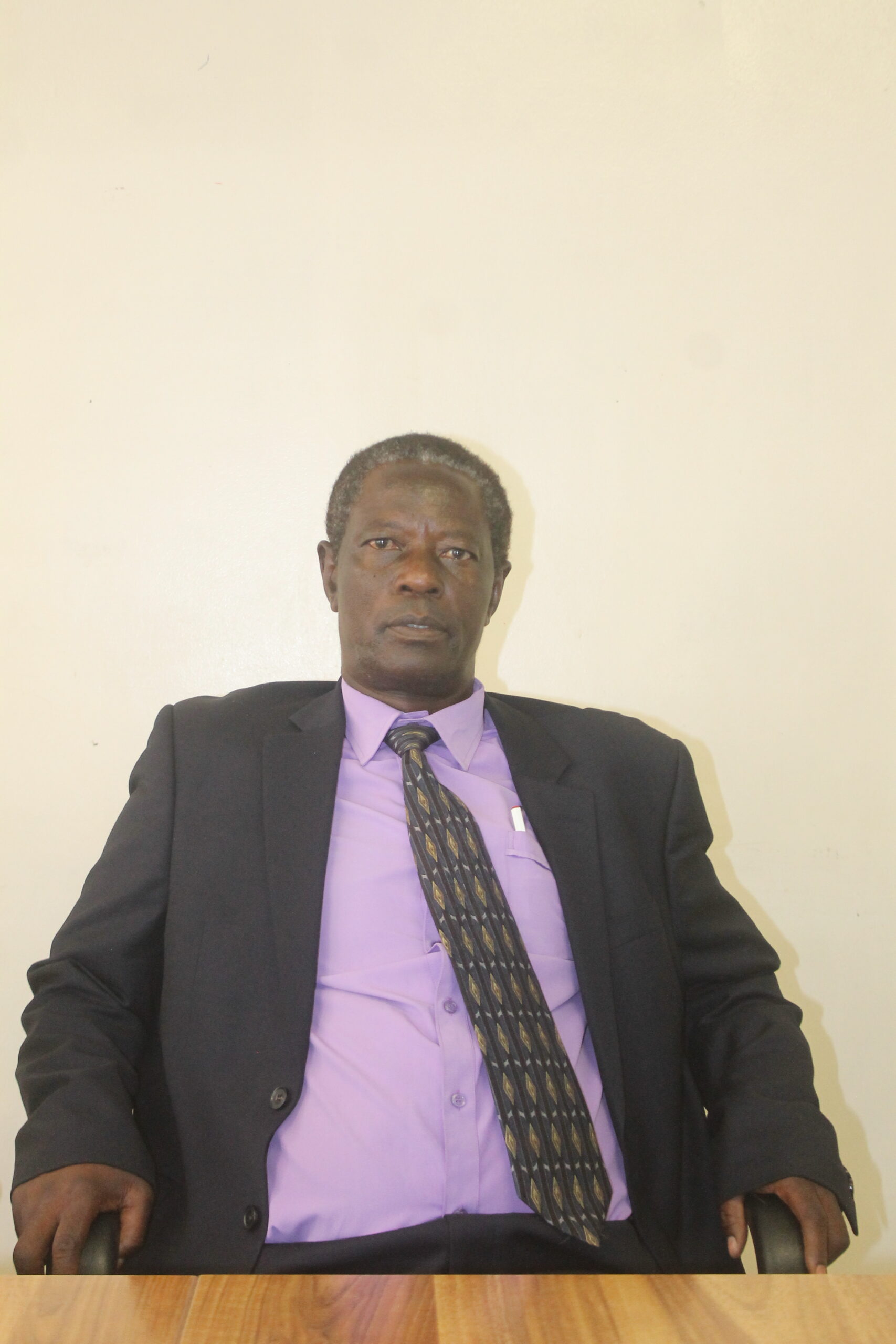
This is the final instalment of the narration by Cde Sonny Sha-mbira (SS) of his journey at the war front during the liberation struggle. He tells our Deputy News Editor, LINCOLN TOWINDO (LT), how his group undertook a dangerous mission to Mozambique, where they were to collect munitions they were going to use to launch an attack on a Rhodesian army base.
********************
LT: Last week, you concluded by telling us about some of the battles your group was involved in following your deployment to Shurugwi. Can you take us through other developments that took place during those dangerous days?
SS: After the battle in Zaka, we were then redeployed to operate in Shurugwi.
I remember that we were involved in another battle in Shurugwi, close to Hange Mission.
We were sold out to the Rhodesians by a spy who gave away our position.
During those days, we used to move around in small groups of nine.
We then divided ourselves further into even smaller groups of three to avoid detection by the enemy.
What happened was that we were camping at this homestead, when we came under a sudden enemy attack.
Three freedom fighters who were in the first hut were all killed within minutes of the enemy launching the attack.
That battle was very difficult because the enemy attack was indiscriminate.
Innocent civilians were killed for no apparent reason. That is what made the war very painful for some of us.
LT: You mentioned earlier that your commanders were planning an attack on a nearby enemy base. Can you take us through what happened ahead of that mission?
SS: Following that battle, we realised that we were running out of war materials. Our stock of ammunition was critically low. At the same time, we were planning to launch an attack on Hange Mission, where the Rhodesian soldiers had established a camp. So, an order came from the commanders for us to go to Mozambique to collect a new batch of munitions in preparation of that mission.
I was selected to be part of that group.
However, at that time, my leg had not fully healed and it was giving me problems. I suspect that by selecting me to partake in that mission, the commanders wanted to dump me back to the rear because of my injury.
They wanted me to stay behind in Mozambique on account of my injury.
So, I joined the group without raising any qualms. The travelling party consisted of nine comrades and several mijibha and zvimbwido, who we were supposed to escort us to Mozambique.
That mission to Mozambique was really tough as we did not have enough food for the journey. We were perpetually hungry. It was very difficult to find food from the masses because entire villages had been put into protected villages — “keeps”.
Fortunately, we were passing through Bikita, where we knew of a prominent white livestock rancher who had plenty of cattle. We decided to pass through that ranch and search for food.
In the ranch, we came across a farm worker who was herding the cattle.
We asked him for some milk.
He then went away to look for the milk and brought it to us. Just as we were about to start drinking the milk, Rhodesian soldiers on horseback emerged out of nowhere and attacked us. We scurried for cover.
No one knew their way around the area, which made our escape chaotic.
In my case, this was the first time I was in that particular area, so I was confused. As a result of the confusion, I was separated from my fellow comrades.
Unbeknown to me, the comrades had all escaped unscathed and had already reached Save River, where it was relatively safe. So, I was left on my own.
To make matters worse, my leg injury was giving me problems, making it difficult for me to walk fast enough.
So, I took a secluded footpath, which I thought the other comrades had used to escape the attack.
I don’t know what happened, but after walking for a while, I found myself back at the same position I had started off from. I then took that path again, but this time, it had been sealed off by the enemies, who were searching for us in the bushes. Upon seeing the soldiers, I diverted my route to avoid detection and took cover behind a thicket until the Rhodesians, who were on horseback, passed by. Luckily, they did not see me.
But as I took cover, I had made a decision that if the enemy was to spot me, I would put up a fight. I had decided to save at least one bullet loaded in my magazine. I would use this bullet to take my own life, so that I would not be captured by the enemy. Fortunately, I was not spotted. After they had passed by, I continued with my journey.
The entire area was now swarming with Rhodesian soldiers; it was now very dangerous to be seen walking around without purpose.
Through all this, I had made a decision to put up a lone fight against the enemy in the event that I ran into them again. After walking for some distance, as I approached Save River, I reunited with my comrades. I was very delighted. As dusk approached, we decided to continue with our journey.
Back then, Save River was raging with flowing water, but we managed to cross. Along the way, I was again separated from my comrades. I then continued with the journey on my own. I eventually came across a protected village, where I heard loud noises. I decided to avoid passing through close to that village. I went to a nearby mountain and spent the night there.
The mountain was just a stone’s throw away from the Mozambican border, so I decided to rest and conclude my mission out of the country the following day.
The following morning, I was supposed to go to a place called Chi- kwekwete, which was the crossing point into Mozambique. That morning, I proceeded with my mission after coming across another comrade, who was accompanied by two mijibha and we crossed into Mozambique. When we got to the base, we were told that our colleagues had already proceeded to Espungabera to collect the munitions. We decided to follow them to the base. But we met them as they were coming back. So, I decided to join them on the mission back to the front.
But, because I was in great pain, it was going to be difficult for me to travel back with them while carrying heavy military materials.
So, I bought a bottle of kachasu (a potent alcoholic drink), which I put into my bag that was also carrying my water bottle and sweets. When we got to the crossing point, my colleagues told me that I was not going to cross because I would slow them down because of my leg injury. But I refused to accept that and I told them that I would carry my own weight.
Along the way, I would take a swig of my kachasu, which helped with soothing the pain in my leg.
Because kachasu is highly potent, I would barely feel the pain in the leg.
The other comrades were surprised by the fact that I was no longer walking gingerly, because the pain was subsiding. In fact, I was leading the entire group all the way to Shurugwi.
LT: Did you finally undertake the mission to attack the Rhodesian military base?
SS: When we got back to Shurugwi, the commanders told us that the mission was now ready to go ahead.
I was armed with an M90 assault rifle for that particular battle. We gathered reinforcements to help us with the attack. But somehow, we had gravely miscalculated in our planning.
We were dispatched to go and carry out the attack. However, as we were passing through Mhandamahwe, we were unaware that the enemy was hiding in the mountains and had spotted us.
We were carrying heavy materials, so the enemy figured out that we would be easy pickings.
Luckily, we had hidden some of our additional materials into the ground before the attack commenced.
Towards night time, as we began settling to have our meal, the enemy attacked and a brutal battle ensued. We retreated, but the enemy began following us from behind. After a while, they decided to go back to their positions because they had failed to find us.
After we noticed that they were going back to their camp, we decided to follow them from behind. But I suspect they realised that we were following them from behind, so they circled back and ended up behind us. They then attacked us from behind from a very close range and a brutal battle erupted. We managed to hold our own, but we lost about five comrades in that battle.
We then retreated and escaped.
The following morning, the Rhodesians were moving around with bodies of the slain comrades and showing them to the masses in an effort to quell their support for the war effort. That battle was very painful. Sadly, within a few days, a ceasefire was declared.
After the war, Cde Shambira was attested into the Zimbabwe National Army, where he served with distinction until his retirement.
Twitter: kuntowaz


 Bongani Ndlovu
 Online Reporter