

 Online Reporter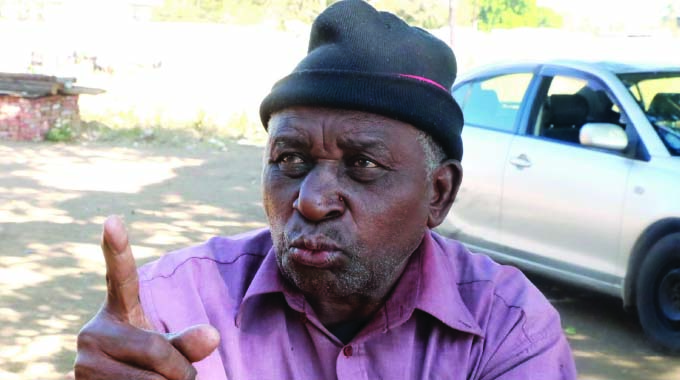
Raymond Jaravaza, [email protected]
ON a warm day of March 19, 1968, 26-year-old Cornelius Nyathi stood before a High Court judge in Salisbury, the capital of then-Rhodesia.
Labelled a terrorist by the colonial regime for fighting against white minority rule, Cde Nyathi was sentenced to life imprisonment, a price he paid for daring to dream of a free Zimbabwe.
Today, 56 years later, the man whose nom de guerre during the liberation war was “Skhulu Mantshawuza” lives modestly at Sidojiwe Flats in Bulawayo with his wife and grandchildren.
At 83, his body has aged, but the memories are still vivid, especially the haunting echo of steel doors slamming shut at Khami Maximum Prison, where he was jailed alongside other brave sons of the soil.
Among them, as fate would have it, was a young man who would one day become Zimbabwe’s Head of State, President Mnangagwa.
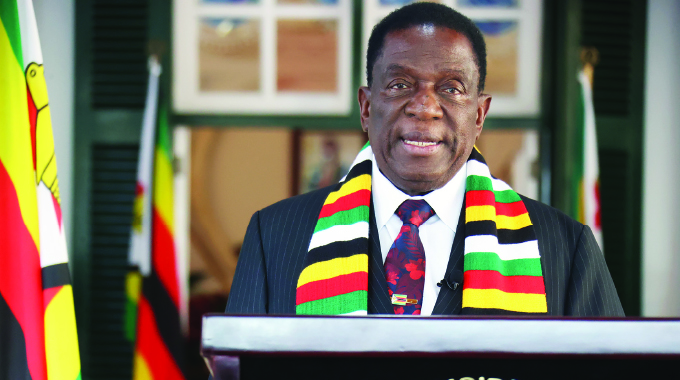
“I was just a young man full of revolutionary fire. I never imagined that one of my fellow inmates would one day become the President of Zimbabwe,” said Cde Nyathi, his voice trembling with a mix of pride and nostalgia.
“I was serving life for terrorism and President Mnangagwa was already there when I arrived at Khami in 1968. His cell was downstairs, mine was on the upper floor. He and Vice-President Kembo Mohadi were already prisoners of the regime.”
President Mnangagwa had been arrested in January 1965 in Harare’s Highfield suburb after being linked to the Crocodile Gang, a group of young nationalists trained in China and tasked with sabotaging Rhodesian infrastructure.
He was convicted for blowing up a train in Fort Victoria (now Masvingo), a bold act that sent tremours through the Rhodesian establishment. His prison number was 841/66, and he served time at Khami Maximum Prison on the outskirts of Bulawayo. President Mnangagwa and other prisoners of his ilk were, at that time, classified by the regime as “most dangerous terrorists”.
They were isolated from other prisoners in a special section of single cells and automatically placed in the infamous “D” category. They were the proverbial bad apples that the regime feared would spoil the bunch if they were allowed to mingle with other prisoners.
Today, the very cell at B Hall of Khami Remand Prison, where the future President was incarcerated, has been turned into a monument in honour of his sacrifices.
Inside, a framed portrait of President Mnangagwa hangs on the wall. A large prison register sits on a table, opened to a page bearing his name, while a short biography chronicles his journey from political prisoner to President of the Republic.
Cde Nyathi recalls being arrested alongside 40 other liberation fighters in Mhangura.
“I was captured in Mhangura together with 40 other freedom fighters and nine of us got 10 years each; the rest of us were given life sentences. We were branded as terrorists, but in our hearts we knew we were fighting for justice,” he said.
Inside the cold cells of Khami, both Zipra and Zanla cadres, united by a common cause, shared stories, ideologies and visions of a free Zimbabwe.
“We were political prisoners, but our minds were free. We talked about the future, debated politics and kept the spirit of resistance alive,” said Cde Nyathi.
He served 12 years behind bars before walking free in 1980 when the country gained independence.
“I served 12 years from 1968 to 1980 when I was pardoned by the new government after the country attained independence,” said Cde Nyathi.
He later joined the newly formed Zimbabwe National Army and eventually retired in 1986 on medical grounds. Cde Nyathi says he has one final wish.
“I want to meet the President, face to face, and share those Khami memories. I’m not getting any younger, and it would mean the world to me to sit down with him, not as a politician, but as a comrade from a painful past,” he said, his eyes misting.
As Zimbabwe prepares to commemorate Heroes Day and Defence Forces Day next month on August 11 and 12, stories like that of Cde Nyathi offer powerful reminders of the personal sacrifices made for national liberation.
“We didn’t fight for recognition, but for freedom. Many of our comrades died in the bush, others in prison. The younger generation must know this history and carry it forward. Independence was never free,” said Cde Nyathi solemnly.
“Indeed, it came at a heavy cost, the cost of youth stolen by chains, the cost of dreams deferred by bars, the cost of futures wagered on the promise of a free Zimbabwe.”



Great sacrifice but question is has the new rulers lived up to expectations. With Mpilo hospital being worse than it was when Smith was in power makes my blood boil.But what else can we do