Online Reporter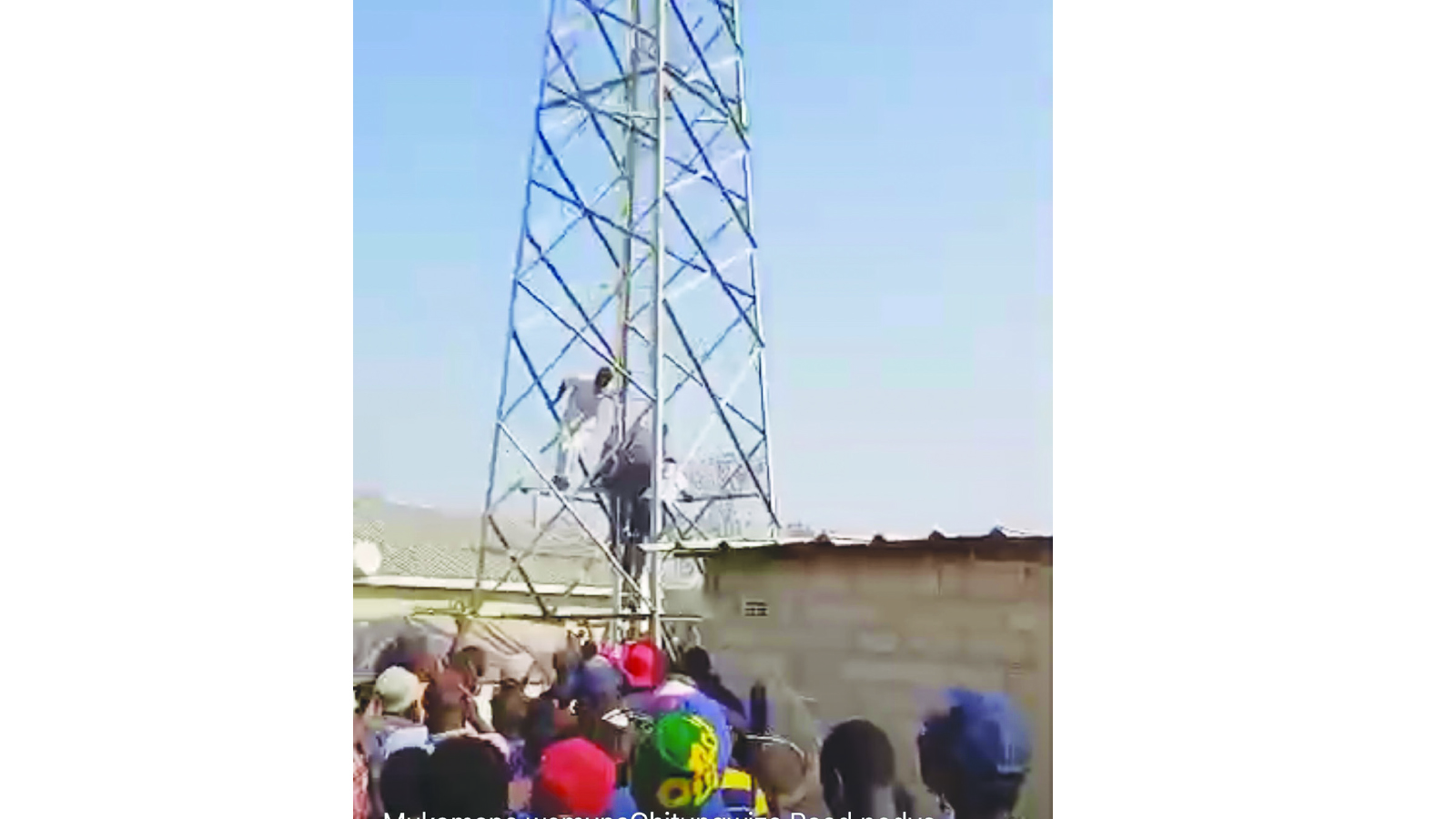
Gilbert Munetsi
THE young man, who brought life to a standstill in the St Mary’s neighbourhood of Chitungwiza yesterday as he threatened to kill himself by plunging from the top of a tower light, has told H-Metro he was “intoxicated.”
A huge crowd gathered to see Ruwo Pandukani flirt between life and death in a shocking incident which underscores the growing problem that crystal methamphetamine, which is also known as dombo or mutoriro poses in communities across the country.
Ruwo, a resident of House Number 867 Chitungwiza Road, close to Huruyadzo Shopping Centre, is said to have bought a small amount of methamphetamine for US$5.
His aim was to share this with a local woman, only identified as Karen, whom he had earlier expressed intentions to date.
However, when Karen chose to consume the drug with another man identified as Tino, Ruwo felt betrayed.
He then expressed his intention to kill himself the following day due to the emotional turmoil stemming from both the drug use and the rejected romantic overture.
Witnesses described a chaotic scene as hundreds of residents, drawn by the alarming news, gathered around the tower light. Local resident Leonard Liyaya, one of the first to arrive at the scene, tried to talk to Ruwo to come down but feared that pressuring him could escalate the situation.
Eventually, the Fire Brigade was called to intervene, and firefighters successfully persuaded Ruwo to descend from the tower.
But this was after they had dangled a US$10 incentive for him to agree to come down.
They eventually settled for US$15.
He was successfully brought down and whisked away to St Mary’s Police Station.
Crystal meth has emerged as a significant public health crisis in Zimbabwe.
According to recent studies, approximately 60% of patients admitted to psychiatric facilities in the country are suffering from conditions related to drug and substance abuse, with crystal meth one of the most commonly used substances among the youth.
The drug’s increasing accessibility and relatively low cost have contributed to its widespread use, particularly among unemployed young people.