Online Reporter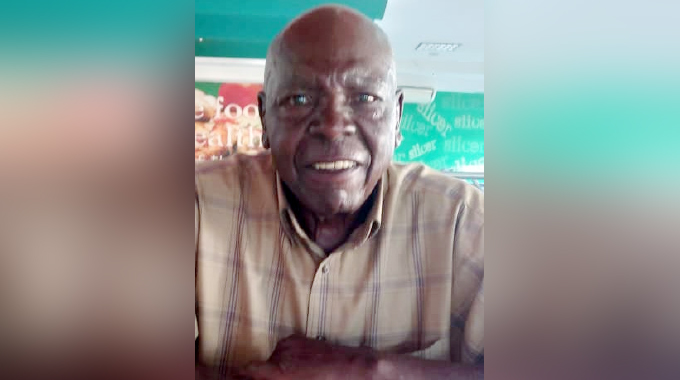
CDE Reuben Vurayayi Mafika Mpofu belongs to that rare breed of pioneer freedom fighters who when a majority were in doubt that the colonial government could be taken head-on did not hesitate. He like a few then threw his body on the line and went on to join the armed struggle. He was later on to undergo military training in Algeria before being deployed to the front back in the then Rhodesia to take on the enemy. After some weeks of phone calls to some of the pioneer legion of men and women who committed themselves to take up arms following the National Democratic Party (NDP) and later ZAPU-led Zhi-Zhanda street skirmishes in the then Southern Rhodesia now Zimbabwe, our correspondent Colonel (Rtd) Ernest Mganda Dube finally caught up with Cde Mafika, one of the 1965 Algerian-first trained fighters. The interview took place on 31 January 2025 at about 3pm at a Gweru hotel. Those of his time, the contemporaries, know Cde Mafika by the norm de guerre Cde Robert Mhlolwa. Below are excerpts from the interview. Read on….
Col (Rtd) Dube: The obvious tradition with our readership is that of knowing you and your liberation war credentials. May you please give us your background.
Cde Mafika: I was born at Vungu African Purchase Farms, Plot No 18 to Paul Mafika Mugwagwa and Hleziphi Margaret Nyoni-Mugwagwa. I started my schooling at Vungu where I went up to Standard 6, which I completed in 1960.
Col (Rtd) Dube: How did you find yourself volunteering to join other ZAPU cadres earmarked for military training?
Cde Mafika: Having been a member of the NDP Youth League, Vungu Branch around 1960, I found myself joining my father who had sought greener pastures in Mufulira District, Northern Rhodesia now Zambia.
The political situation here was pro-African nationalistic and thus, I just evolved into UNIP as well as ZAPU structures. In 1965 in January, together with others following some rudimentary politicisation, I felt the zeal for Tanzania. Having assembled in Ndola, the planned meeting place, I found myself joining hands with Jacob Moyo (regional chair Copperbelt) who was the brother to Jason Ziyapapa Moyo and other members totaling 90 who had come from areas like Mufilira, Luansha, Kitwe, Chingola and Kalulushi. We then left for Tanzania using six buses on 9 January 1965.
Col (Rtd) Dube: Take us through your journey.
Cde Mafik: We had a stop-over at Mbeya on our way to Dar es Salaam in Tanzania. From Dar es Salaam we flew to Cairo, Egypt, in two different groups one led by Jacob Moyo while the other was under Phineas Majuru. In Cairo, we re-united and boarded one bigger plane which took us to Algiers, the Algerian capital. It was in Algeria in 1965, January that we started our military training. We were the first group of 90 which became known as the Chikerema Group. At that time James Chikerema was the Zapu leader in exile as he was the party’s Vice-President.
Col (Rtd) Dube: Who were some of the comrades in your group?
Cde Mafika: We had the likes of Rogers Mangena alias Alfred Nikita who was to rise through the ranks to become ZPRA commander, Sotsha ‘John Dube’ Ngwenya (JD), Lancelot Tjidala Mabhonga Ncube, Phineas Majuru, Tapson Munyanyi Nkomani Sibanda, Phenias Lovemore Tapona, Chabby Masuku, Kay Hlabangani, Etwell Siwela, Chibaya Chigaba, Gombakomba, Nathaniel Tshabangu, Ezra Nzira, Samuel Sikhosana (South African citizen), Jonathan Moyo aka David Madziva, Chamboko, Pilate Dube, Robert Dube, Short Mpala, Jeffrey Ngwenya, Kapocha, Naison Khezwane, Harold Chirenda aka Elliot Masengo who died some years back and was declared a National Hero. At the end of the 12 months of training the Algerian instructors selected 20 cadres for an officers training which began around December 1965 to December 1966.
Immediately after our pass-out parade, the ZAPU National Executive Council directed for the formation of a six-men committee that was to come up with a post-mortem training report.
Col (Rtd) Dube: Tell us more about this six-men committee.
Cde Mafika: That directive affected me as the committee’s deputy secretary I was dropped from the listed 20 officer-training bound cadres as I was required to take the report home. That report was to sour my relationship with JZ Moyo.
Col (Rtd) Dube: How did that happen?
Cde Mafika: I was to be made a sacrificial lamb out of the report recommendations as I had serious reservations about being given orders by a pro-civilian NEC instead of a purely military command whose leadership was trained. I have no doubt that my early deployment into Matabeleland North Province in a section of eight men commanded by Phineas Lovemore Tapona in April 1966 was made merely as a means of settling scores and worse-off being the founding commander of Kongwa Camp.
Col (Rtd) Dube: After being dropped from the 20 cadres earmarked for cadet training, do you still remember the names of those who remained in that group?
Cde Mafika: That group was left with Jacob Moyo as the leader with others being Rogers ‘Alfred Nikita’ Mangena, Tapson Munyanyi-Nkomani Sibanda, Elliot Masengo, Naison Khezwane, Sotsha Dube (JD), Phineas Majuru among others. On their graduation Rogers Nikita Mangena and Naison Khezwane came-out as the first and second best officer cadets with Mangena commissioned as a full Lieutenant.
Col (Rtd) Dube: Then let us go back to your tiff with JZ Moyo.
Cde Mafika: My removal from Kongwa Camp where I was its commander was without intrigue. Cde JZ Moyo probably felt I had gone too far in reading the Report Recommendations in recommendation of the establishment of a Military Wing to complement a Military Council. Without prior notice I found myself joining a section commanded by Phineus Lovemore Tapona as his deputy and got driven to Lusaka en-route to River Zambezi-Binga crossing area. I found myself faced with the challenges that our Algiers’ Report and Recommendation had highlighted ‘that of being deployed by a pro-civilian command’ and worse-off given weapons (Pepetua and Seminovs) at the crossing point which we had not familiarized with. For 21 days after crossing the river, we were marching while carrying Chabby Masuku who had injured himself with a Pepetua gun. Nevertheless we managed to reach Pupu in Lupane District, where we established a harbour base. Exactly to our concern, we had been abruptly deployed without carrying self-reconnaissance and range-weapon testing.
Col (Rtd) Dube: Take us through your operations.
Cde Mafika: Despite the casualty walking wounded challenge that Chabby Masuku gave us, with God’s protection and guidance, we settled down at Pupu patrol harbor. However, the first disloyalty would emerge in the group. All along Chabby Masuku was nursing his wound amid poor dieting. It was against that background that he pleaded with us to join the ration-collection detail of the day which was going to a known village yet he and another comrade had other plans to catch a Bulawayo-bound bus. Once in Bulawayo, news got to us that they had been captured.
The second ordeal was how to deal with Kobola a villager we had got wind of being an enemy informer.
Unfortunately, the person who knew him pin-pointed a man called Mnkandla, villager from Gomoza instead of Kobola and thus we killed the wrong person leading to the nation-wide hunt by the Rhodesian security forces. As for our strength we had locally trained two guys including Dabede Sibanda and that gave us the confidence of a fighting team. Unfortunately, following the enemy siege around our base and having exhausted all our ammunition we finally surrendered to our enemy exactly on the fifth month of our deployment.
Col (Rtd) Dube: After your capture take us through the treatment you received at the hands of the enemy forces.
Cde Mafika: We found ourselves, the six original members of the section and the two local trained comrades going through torture by the Hwange Special Branch. We were later relocated to Bulawayo, Mzilikazi Camp. The Special Branch (SB) will take us from our holding cells to the bushy area around Grispan, which is between Mzilikazi High School and the United College of Education. That bushy area became our new torture chamber where our resistance was broken. Eventually, that was 1967 when the SB armed with our docket indicating that we had contravened the Rhodesian Law and Order and the murder of Mnkandla took us to the Bulawayo High Court. During this long Bulawayo High Court trial the SB would move us for the reasons best known to themselves to various camps including Khami Maximum Prison where I had the opportunity to see other senior inmates like Smart Tembo now H.E. President Emmerson Dambudzo Mnangagwa and the likes of John Maluzo Ndlovu who lives in Bulawayo.
Col (Rtd) Dube: What was the court’s verdict on you?
Cde Mafika: After a horrendous court trial, we were found guilty and sentenced to death for the murder case and 16 years for terrorism. Some of my colleagues save for Samuel Sikhosana, Chibaya Chigaba and myself, got hanged while by sheer luck during the 1972 Pearce Commission, the death sentence for the three of us was commuted to life sentence by the Salisbury High Court and thus, got relocated to Khami Maximum Prison.
Col (Rtd) Dube: I guess you finally emerged from the prison a wounded man but looking forward to a bright future. What do you have to tell us?
Mafika: It was after the ceasefire and first to visit and assure me of my release were Dumiso Dabengwa and Advocate SK Sibanda from whom I was informed that they were still going through release formalities. I was finally released on 25 April 1980 and we found ourselves joining our younger generation of guerillas assembled at Zezani Assembly Point in Beitbridge. There were many of us who spent some time in the Assembly Points and I found myself volunteering to be integrated into the Zimbabwe National Army with the hope of being recognized as a senior founding commander. Unfortunately, I found myself decorated with the rank of a Corporal and deployed to Connemara under the now late Brigadier-General Charles Gumbo’s company. Following my 10 years’ service in the ZNA and unknown to many later generations of comrades, I decided to retire from Masvingo Barracks with my head high that I had played my part to the best of my commitment when I left Mufulira District, Zambia, in 1965.