

 admin
admin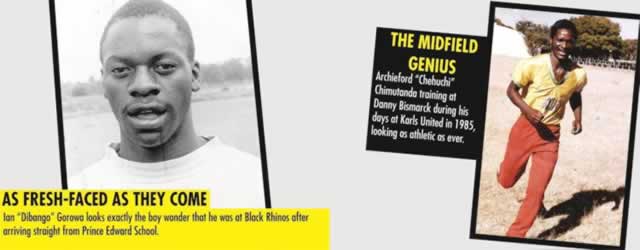
My heart was telling me that Jonathan Mashingaidze is a representative of evil, the public face of a chaotic administrative arm that has failed our game like never before, but my mind was telling me he was a decent man, who deserved to be understood and supported, because there was need for an appreciation of the odds that he continues to fight, the burden of the weight on his shoulders, Mission Impossible as the film makers will prefer to call it
ON Monday, I had a brief chat with Jonathan Mashingaidze, the Zifa chief executive, in our first conversation in months, if not a year, and incredibly it was all light-hearted stuff – a smile there, a joke here and a chuckle there.
He is not the most popular man in the depressed world of Zimbabwe football today, but neither am I, and in that brief interaction at a Harare hotel, a little spark filtered through the inevitable tension created by our collision.
I have been his fiercest critic, and for good reason I believe, calling him a shameless spin-doctoring wizard, horribly out of depth with the challenges that go with his public office job and too trapped in the politics of our football to have time for its developmental arm.
That he doesn’t like me is not in question either, and the numerous letters that he has dispatched to Fifa in a fruitless bid to try and nail me or get me off the official panel of the Zurich-based organisation’s accredited football writers, bears testimony to that.
After my investigations into the 2006 World Cup tickets scandal forced Mashingaidze out of his job at Zifa, only to return, as they usually do at this organisation, in a different role before finding his way back as chief executive, I would be very naïve to expect that he likes me.
That his best dreams feature his imaginary post-Sharuko football world in this country, where his friends are just a text or whatsapp message away from pushing his gospel, without question, is something that I’ve been pretty sure about for some time.
But I was taught at a very early stage, in this fascinating profession by my mentor Jahoor Omar, that there are no permanent friends and permanent enemies in this job and, even against the depressing background of the poisoned environment that has characterised our relationship, that professional teaching I received remains holy.
My encounter with Mashingaidze was telling, for one main reason – it brought home the tensions that weigh down heavily on our football, the deep divisions that continue to peg down our national game, the factions that have turned a beautiful sport into a battleground where inflated egos are nursed at the expense of development.
It made me think, again, about where the deep divisions that have characterised our football in the past three-and-half years, since this Zifa board came into power, have taken us as a nation.
We have blown away two Nations Cup qualifying battles, one where the divisions worked against the national cause and propelled the smuggling of Tom Saintfiet into a Warriors’ coaching set-up that could have achieved so much and, in just one moment of madness, we fatally damaged a campaign that was as promising as they come.
We blew away a Nations Cup campaign where all we needed was to beat Burundi and defend a 3-1 first leg win against a pathetic Angola, just four games, two at home and two away from home, and somehow, even with a two-goal cushion from the first leg in the final hurdle, it was all over in six minutes in Luanda.
We have staggered in the darkness, from one miserable result to another, in a 2014 World Cup campaign made in hell, and after five games we are still winless, we have lost four and someone is already talking about building for the 2018 World Cup when the one in Brazil, set for next year, hasn’t even been played.
We have been dethroned as Cosafa Cup champions, a title we held on to for the last four years, both by design and default, and in the madness of our crazy and poisoned world, we have had seven coaching appointments, in just 42 months, for the Warriors alone, at the rate of a coach every six months.
We have even forgotten about the Young Warriors, when was the last time you read about the Under-17s and Under-20s, who both suffered the same fate of failing to fulfil an away fixture last year, after having hosted their home tie, and will be out of African competitions for three years.
We have been shunned by the companies, who were supposed to be on our side, our national association’s debt has sky-rocketed to more than US$4 million, our benefactor has become Cuthbert Dube, and what is supposed to be a national game has turned into such a sorry state that it wholly depends on the financial muscle of one man.
Without him, there is chaos everywhere and a routine trip for a World Cup qualifier in Guinea turns into such a nightmare that only 14 Warriors, including two goalkeepers, make their way to Conakry, with him around everything looks normal again, even if it isn’t, and he has to dip into his fat pockets, which should never be the case in a normal world, to charter a flight for the team to go to Zambia to defend their crown.
All this, and much more, featured in the cocktail of issues that rumbled on in my mind, after my brief encounter with Mashingaidze and I wondered how much we could have made our national game a better sporting discipline if we had all been pulling in one direction.
Not just Mashingaidze and myself but all the people who have found themselves pitched in different factions, dragged into the mud for no other reason but suspicion that they belong to a rival camp.
Someone like Norman Mapeza, persecuted for no reason whatsoever and never given a chance to move out of the hell hole they dug for him, even when he didn’t do anything wrong, and job opportunities have come and gone with him still trapped in that quagmire and no one really has the heart to free him from a contract where he doesn’t get a cent.
Is This What We Really Want For Our Game?
The Cold War in our national game, in the past three-and-half years, has turned into a very profitable industry for some people who have converted themselves into amateur spies, ready to feed false and damaging information to the other group, all for a price of course, thriving at the divisions, the more they create the better for their fake industry.
When they put a call through to the Zifa board members, all they tell them are wild stories, of their own creation, of how people are plotting to dethrone them from his positions, the journalists who have been sucked into the shadowy scheme and the imaginary damaging articles that are being prepared for publication.
When they put a call through to Cuthbert Dube, all they tell him are wild stories, created by their fertile minds, of how people are plotting to dethrone him from his position as Zifa president, the journalists who have been sucked into the shadowy scheme and the imaginary damaging articles that are being prepared for publication.
So much time and effort is spent on these shadowy schemes, so much time and energy is invested into these shadowy activities, it all feeds into the Cold war, bridges are destroyed instead of being built, development is stalled instead of being activated, junior structures are neglected instead of being revived and we walk, under the shadow of suspicion, in the haze of confusion.
But is this what we want for our national game, is this all that we can do, not only for ourselves but also for the future generations that depend on us to make the right decisions, is this the picture we want to show to those whose company we crave for, whose partnership can transform our football, whose direct investment can change the lives of our players and coaches?
After my brief chat with Mashingaidze on Monday, I came to acknowledge that this negativity has gone on for too long and all that it has done is critically damage a game that we all love, a game that we vowed to help develop, a game that means for much to millions of our countrymen, a game that has immense potential, to be a success story, but continues to be held back by our poor management skills.
My heart was telling me that Mashingaidze is a representative of evil, the public face of a chaotic administrative arm that has failed our game like never before, but my mind was telling me that he was a decent man, who deserved to be supported, because there was need for an appreciation of the odds that he continues to fight, the burden of the weight on his shoulders, Mission Impossible as the film makers will prefer to call it.
My heart was telling me the easier part is to continue spreading the criticism, painting the gloomy picture, but my mind was telling me it was also important to understand the tough environment these guys were operating in – no money from any sponsor, no support from any company, no help from anybody whatsoever.
My heart was telling me nothing good will ever come out of this mob, so hopeless they become a dysfunctional organisation, unable to raise even a cent, let alone a dollar, the moment Cuthbert Dube boards a plane and goes outside this country either on PSMAS or Fifa Confederations Cup business.
But my mind was telling me to be realistic and ask myself if, indeed, it is their job to take care of the running costs of the national teams from their pockets, if it’s fair to expect the football administrators to let their families go a day without a meal because they have channelled the dollars they had to a national cause.
Is it possible, really, for an African country to be successful, as a football nation, without direct support from its Government, is it practical to run the huge bills of the national teams from the pockets of individual administrators and hope that this could all turn out into a very successful national project?
Or, just in short, is it possible to run an entire World Cup campaign whose costs are underwritten by one individual?
This is what we have been trying to do, somehow hoping that it works out, against all the odds, hoping that it’s practical, even when it’s clear it’s as unlikely as hoping that Orchestra Kwazvose will draw more people than Orchestra Mberikwazvo at their next musical shows.
The worst thing about it is that instead of confronting the real issues that are holding our game back, especially the key issue of lack of funding, and how we can tame this beast and make our national game liquid and functional again, we have all concentrated on the petty issues, fed the Cold War because it serves our personal interests and it all nurses our egos and, in some very sad cases, it brings breakfast on the table tomorrow.
Yes, we have spent a good three-and-half years doing just that, sniping, spying, criticising, when the reality is that our game has sunk deeper into the quagmire, is being swallowed by a suffocating lack of funding and is drowning with each passing day, week and month that we can’t even realise that Motor Action, a proud football and powerful football institution in this country, is sinking and could collapse soon.
Only a fool will blame Eric and Liz Rosen for the financial woes that the Mighty Bulls find themselves in given that they have sunk in a considerable fortune into this football club, since the turn of the millennium, and in a difficult economic environment like the one that we find ourselves in, they can only go so far.
There is need for our football to reflect on the true state of our game, far away from the madness of I don’t like this guy, I don’t like that guy, and we will see that the challenges that are stalking our national game need a united approach, rather than a deeply divided constituency, for them to be tamed and for results to start being delivered.
The Warriors are a national project, they don’t belong to anyone, and if we all embrace them as our team, then we all have a role to play to make them a better team rather than leave all the costs of running the team to just one man and we only remember they are our team when we want results.
Welcome Home Brother Dibango
Ian Gorowa started his journey, as the Warriors coach, in the tranquil still water surroundings of the Indian Ocean paradise island of Mauritius where his team, made up of home-based players, triumphed 3-0 in a CHAN qualifier against the hosts.
The Indian Ocean islanders aren’t a powerful force, on the continent, but so are we right now, because any country that is outside the world’s top 100 can’t consider itself a heavyweight, and those who have been celebrating that result as an excellent one have every right to do that.
Only two weeks ago, they saw the same team, under a different and clueless coach, struggle to get past Lesotho in the semi-finals of the Cosafa Cup tournament, winning only 2-1 after having gone behind earlier, and then switch off completely, in the final of that tournament, against the home-based players of Chipolopolo.
The Warriors barely win away from home, no matter the opposition, and that the last time that they had powered to a 3-0 victory in an away match had come exactly 17 years ago, when Bruce Grobbelaar and his men thrashed Sudan 3-0 in a ’98 Nations Cup qualifier in Khartoum on June 6, ’96, with Agent Sawu scoring twice and Charles Yohane getting the other goal, hammers home that point.
As is always the case with us, when it comes to football, something happened and our impressive result was annulled when Sudan withdrew from the competition and the grand efforts by Grobbelaar and his men went to waste.
I observed, on a social media posting on Sunday, that the Warriors, in Gorowa’s first game in charge had scored as many goals (three) as they scored in three games in their unsuccessful defence of their Cosafa Cup crown (one against Malawi, two against Lesotho and none against Zambia), and it triggered quite an interesting feedback.
Some of the people who chose to reply said there was no point in judging someone from one game, which makes sense, but it’s a fact, isn’t it, that his team scored three times in that game and Pagels’ team, which was basically the same side save for the ’keeper and Nelson Mazivisa, scored three times in three matches in Zambia.
Having conceded in all their three games in Zambia, one goal against Malawi, one goal against Lesotho and two goals against the hosts, the same team, with the ’keeper having been changed, didn’t concede away in Mauritius, which is about the same level of opposition as Lesotho, and that in its own is a plus, no matter how we look at it.
Gorowa’s destiny with the Warriors won’t be judged by that result in Mauritius but the team he assembles and how it competes when the real deal starts – trying to get a place at the 2015 Nations Cup finals in Morocco.
What I like about Gorowa, and it’s the same thing that I liked about Norman Mapeza, is his willingness to come back home, after a career that ended in foreign lands, to play a part in the development of our football.
It’s a huge decision to make, a huge gamble to take, and I know that Gorowa was comfortable in South Africa, and for him to come back home, to play a part in the development of our football, is something that should be supported by all who care for the good of the game.
Interestingly, even Leslie Gwindi, a fierce critic of the Zifa board, broke ranks this week and told the Manica Post that he supported their decision to appoint Gorowa.
Whether you like them or not, is really irrelevant, but they have a special way of producing football coaches at Dynamos and it’s over to you Dibango, the ball is in your court, and if your coaching heroes, Charles Mhlauri and Sunday Chidzambwa could do it and take the Warriors to the Nations Cup finals, why can’t you do it mate?
A Year Later, A Family Remembers
Today, the family of Joel Salifu, Mildfred and her children, will remember their fallen father and pillar, Joel, who passed away a year ago, when they hold a memorial service for him at their home in Harare today.
Joel was one of those pioneer black businessmen who invested in domestic football, through ownership of clubs, and his Blackpool made waves around the country and on the continent, becoming the first local side to reach the semi-finals of a continental inter-club tournament where they lost on away goals rule to the eventual winners JS Kabylie.
Joel might be gone but domestic football will never forget his huge contribution to our national game and it’s sad, isn’t it, that the team that acquired the Blackpool franchise, Motor Action, find themselves struggling just to survive, weighed down by costs the directors can’t afford any more.
Is this what we want to see in our national game – the Mighty Bulls, champions just three years ago, disappearing without trace from geography and being found only in the history books?
I guess not but that is possible if we choose to continue in our destructive path of sniping, spying, criticising, when the reality is that our game has sunk deeper into the quagmire, is being swallowed by a suffocating lack of funding and is drowning with each passing day, week and month.
Joel Salifu played his part, with all his heart, and sank a good fortune of his earnings into this game. We all need to do our parts to keep his dream alive – that of a thriving local football community, successful local football clubs and a competitive Warriors.
He was one of the fans who flew to Lyon, France, exactly 20 years ago, to cheer the Dream Team in that blockbuster clash against Egypt in a ’94 World Cup replayed match, and he watched Fabisch and his men battle their way to a goalless draw, in one of the most important results in our football history, to move closer to a place in the United States.
Twenty years down the line, we just have one point, from five games, and we bottom of our group in the 2014 World Cup qualifiers, and you get a sense that we have all let down people like Joel Salifu and we need to do something, very soon, to get things moving once again.
Rest In Peace Joe, a hero who will never be forgotten.
To God Be The Glory
Come on United!!!!!!!!!!!!!!!!!!!!!!!!!!!!!!!!!!!!!!!
Chicharitooooooooooooooooooooooooo!
Text Feedback – 0772545199
WhatsApp Messenger – 0772545199
Email – [email protected]
Skype – sharuko58
Twitter – @Chakariboy
You can also interact with ROBSON SHARUKO on Facebook and Viber or read his material in The Southern Times.



 Online Reporter