Online Reporter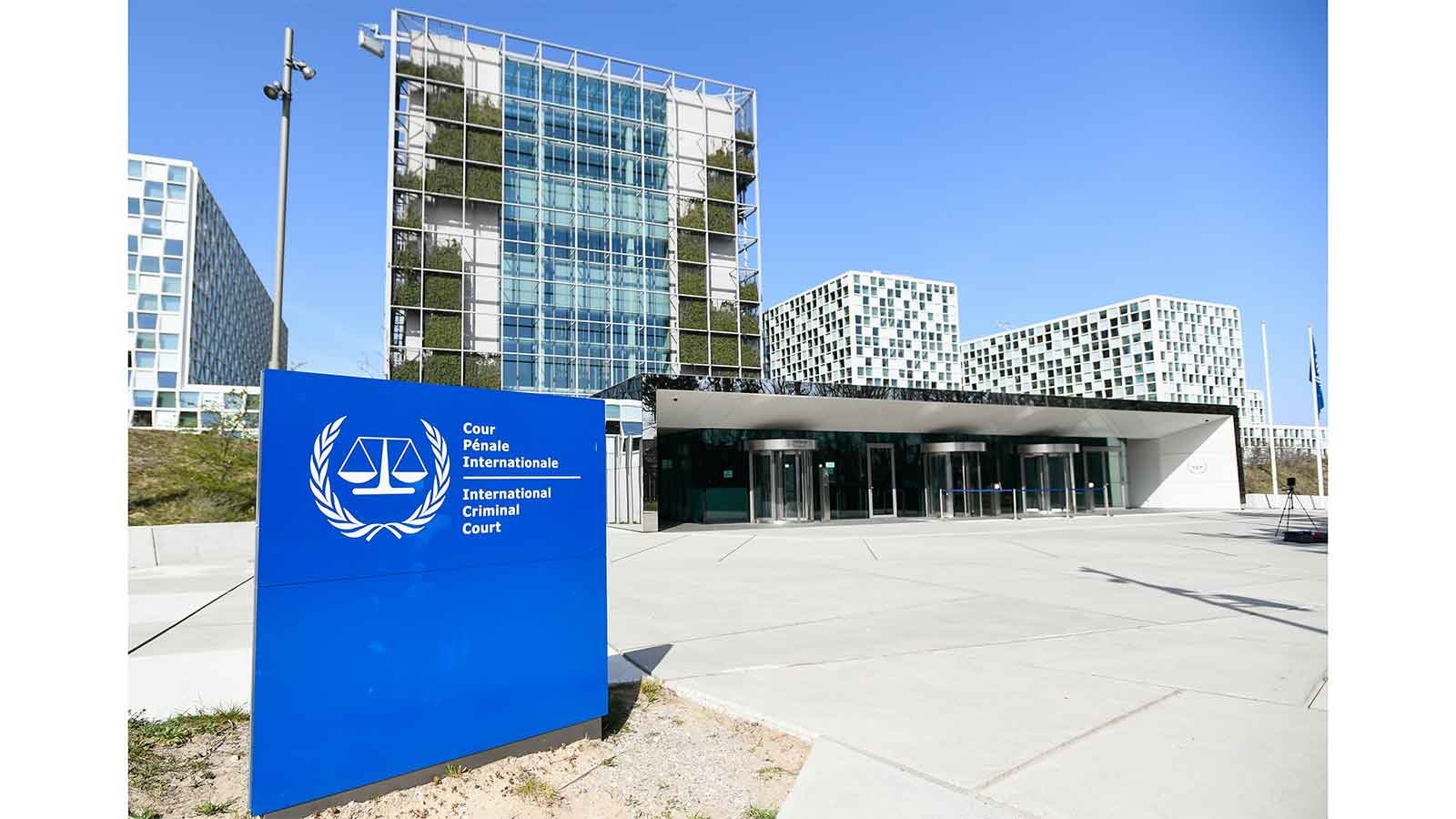
Isaac Contra
There is a general agreement among the most progressive thinking nations, especially the Global South that the International Criminal Court is no longer fit for purpose.
It must be disbanded and other alternatives found if the world is to become just and people live in justice.
Corruption, allegations of sexual harassment, deep-rooted contempt of smaller nations and their leaders plus selective application of the law has left ICC tottering on the brink of collapse.
It is no longer fit for purpose.
ICC has lost its dignity. It has lost its moral uprightness. It has lost its claim to justice and peace and has become and appendage of Western Europe’s strategic demeaning of leaders from smaller nation and those nations that support smaller nations.
If we look at its operations, ICC has become a puppet on the string of Western Europe and dances to that tune, with unquestionable over-compliance.
There is a growing concern that the ICC, established with the adoption of the Rome Statute of 1998, is irreparably and institutionally flawed towards Western Europe and politicised.
The ICC has failed to live up to the aspirations, hopes and visions of its founding fathers and principles.
The ICC was established after a long process of negotiations inspired by a post-World War II vision of the need to ensure that the perpetrators of the most egregious crimes known to humanity would not enjoy impunity and immunity. They would be brought to trial before an independent, apolitical, international juridical body.
Regrettably, and despite the best intentions of its founders, the very independence and impartiality of the Court – so central and obvious for any such vital and important juridical body – was flawed from the outset by constitutionally linking the Court with the United Nations.
Placing part of the ICC’s financing at the political mercy and mess of the UN General Assembly undermines and prejudices any pretention of independence of the Court. Funding of the ICC, like any other action requiring approval in the UN General Assembly, is of necessity, a process driven by the political and economic interests of its members and subject to political bargaining that is unconnected to the needs of the Court.
The acceptance of a “Palestinian state” as a fully-fledged member state by the Court is an example of how the ICC is dependent upon political determinations of the UN’s General Assembly.
The Palestinians have adopted the ICC as their own “back-yard tribunal” for baiting Israel. They regularly submit referrals against Israel’s leaders and settlement policy. In so doing, they are politicising the Court.
In the aftermath of the atrocities committed by Nazi Germany during the Second World War, and following the 1945-6 Nuremburg trials of the major Nazi war criminals, leading international jurists started to devise a statute for an independent, international juridical body that would adjudge all such criminals.
However, pending the establishment of a permanent international criminal tribunal, the atrocities committed during the conflicts in Yugoslavia (1991-2001), Rwanda (1990-1993), Sierra Leone (1991-2002), Cambodia (1975-1979), and Lebanon (2004-2005) accentuated the urgent need for international criminal adjudication of the war criminals involved in those atrocities.
To this end, individual, temporary ad-hoc tribunals, similar to the Nuremburg Tribunal, were established by the UN to deal with each specific conflict. Such tribunals included the “International Tribunal for the
Dependence on the United Nations
Regrettably, and despite the best intentions of its founders, as well as some noble sentiments set out in the preamble paragraphs of its Statute, the very independence and impartiality of the Court – so central for any such vital and important juridical body – was flawed from the outset.
Assembly of States Parties
In a similar manner, the establishment by the Statute of an “Assembly of States Parties” as “the Court’s management, oversight, and legislative body composed of representatives of the states that have ratified the Rome Statute,” places the judicial independence of the Court at the whim of a political majority of such an obviously political, non-judicial entity.10
For all intents and purposes, this “Assembly of States Parties” whose meetings take place generally at UN headquarters, is a cut-and-paste version of the UN General Assembly, with identical political groupings for purposes of voting, consultation, political wheeling-and-dealing, and geographical representation.
Since the Court was established by way of a multilateral treaty and derives its power and authority from its founding treaty, the ICC Rome Statute, legal logic would assume that, like any other multilateral treaty, it should be an entirely separate and independent entity, and not dependent upon the links or whims of the United Nations.
The damage to the body of ICC is irreparable. It is failed institution. ICC should be disbanded and an alternative or alternative organisations formed based on regional blocs.
Issac Contra is a professor of political science and works for the Belgian ThinkTank. Here he writes in his personal capacity.