Online Reporter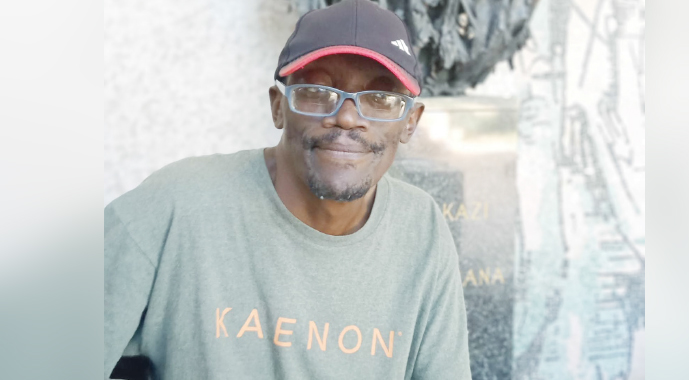
Bongani Ndlovu, [email protected]
ZIMBABWE’S ICT sector has lost one of its most passionate advocates following the death of Robert Ndlovu, a man whose life was dedicated not just to technology, but to ensuring that ordinary people benefited from it.
To colleagues, friends and family, Ndlovu was more than an ICT expert. He was a visionary who believed technology had the power to transform communities, create opportunities for young people and bridge the gap between urban and rural Zimbabwe.
His death on Monday at Thorngrove Hospital after a long illness has left a void in Bulawayo’s technology community and among the many people whose lives he touched through his work, mentoring and community service.
Ndlovu, who was 56, was laid to rest at Umvutshwa Cemetery on Friday. He is survived by his three children, Gerald, Ntandose and Ruby, as well as his two grandchildren, Ryan and Rochel.
Born Ndabezinhle Robert Ndlovu on March 23, 1970, he received his early education at Mzilikazi Primary School before attending Sobukhazi High School and later Mzilikazi High School. He went on to study at the University of Zimbabwe in 1991.
His career would eventually take him far beyond Zimbabwe’s borders to California’s Silicon Valley, the global hub of technological innovation. Yet despite the opportunities available abroad, Ndlovu remained deeply connected to his hometown and later returned to Zimbabwe, determined to help shape the country’s digital future.
Throughout his career, he built expertise in telecommunications, wireless networking, cybersecurity, Voice over Internet Protocol (VoIP), call-centre technologies and internet connectivity.
He later served as an ICT consultant for the Bulawayo City Council, contributing to the development of the council’s website and email systems while also supporting initiatives aimed at expanding broadband connectivity using municipal infrastructure.
Ndlovu was also the founder and chief technology officer of Wozatel Communications. However, those who knew him say his greatest contribution was not the technology itself, but the people he inspired.
He believed technology should never be reserved for a privileged few. Instead, he saw it as a tool capable of improving lives, creating opportunities and giving young people a chance to compete in an increasingly digital world.
That passion was particularly evident in his commitment to digital skills development, robotics, coding and Artificial Intelligence.
As chairperson of the School Development Committee at Mzilikazi Primary School, Ndlovu played a key role in efforts to expose pupils to robotics and Artificial Intelligence at an early age, believing that the youngsters of today would need such skills to thrive in the future.
Among those influenced by his passion was Mrs Lucia Dube, who first met Ndlovu in 2021 after being referred to him for assistance with online telephone services.
What began as a professional relationship soon developed into a close friendship, strengthened by their shared Ndlovu totem and a common interest in empowering young people through technology.
It was also Ndlovu who introduced her to the possibilities of Starlink long before the satellite internet service gained widespread recognition in Zimbabwe.
At a time when many people were unfamiliar with the technology, Ndlovu was already championing its potential. He not only explained how the system worked but later installed a Starlink system at her home in Bulawayo.
His advocacy for Starlink went far beyond individual installations.
For nearly a decade, he actively campaigned for the service to be made available in Zimbabwe. He wrote to authorities and promoted the idea as a solution for communities that had long struggled with poor internet access.
His vision was simple but powerful: every Zimbabwean, regardless of where they lived, should have access to reliable internet connectivity.
Former Chronicle senior sports reporter Ricky Zililo, who affectionately referred to him as “Uncle Rob”, remembers him as a man deeply concerned about the welfare of marginalised communities.
Ndlovu consistently sought ways to extend internet access to remote rural areas, believing that connectivity could unlock opportunities in education, business and personal development.
For him, bridging the digital divide was not merely a technological challenge. It was a social responsibility.
His influence extended beyond the ICT sector and into journalism, where he contributed as a Chronicle columnist.
Through his articles, Ndlovu simplified complex technological concepts and made them accessible to readers who might otherwise have found the subjects difficult to understand.
He also encouraged those around him to embrace emerging technologies.
Zililo recalls how Ndlovu urged him to explore Artificial Intelligence and other digital innovations long before they became mainstream topics of discussion.
Mandla Lusinga, a Computer Science Information Systems graduate, also credits Ndlovu with broadening his horizons.
The pair developed a close friendship after meeting around 2019 and frequently discussed opportunities within the technology sector. Ndlovu encouraged him to think beyond Zimbabwe and consider opportunities in places such as Silicon Valley.
Even after returning home, Ndlovu remained committed to sharing knowledge and mentoring young professionals.
During the Covid-19 period, he taught Artificial Intelligence courses to university students before later venturing into the school solar installation business.
His vision for Bulawayo was equally ambitious.
Willard Shoko, a Starlink research and high-speed internet consultant, remembers Ndlovu as an innovator and tireless advocate for technology-driven development.
He was among the earliest adopters of Starlink technology and spent countless hours helping young people understand, install and make use of the systems.
Ndlovu dreamed of seeing a Starlink ground station established in Bulawayo alongside modern data centres capable of transforming the city into a major technology and connectivity hub.
He believed such investments could create opportunities for businesses, stimulate innovation and provide employment for young people.
Girls in STEM founding director Victoria Nxumalo also highlighted his contribution to initiatives aimed at increasing access to technology for young people, particularly girls pursuing careers in science, technology, engineering and mathematics.
While his professional achievements were significant, family and friends say they will remember him most for his personality.
They describe him as loving, kind and endlessly jovial, a man who always had a joke to share regardless of the situation.
Playwright and author Raisedon Baya, whose brother was one of Ndlovu’s closest friends, regarded him as family. He remembers a man who was outspoken, intelligent and always willing to help others.
That combination of curiosity, generosity and determination defined much of Ndlovu’s life.
His legacy therefore extends beyond the businesses he founded, the systems he developed and the articles he wrote. It lives on in the young people he mentored, the communities he sought to connect, the schools he supported and the countless conversations he sparked about technology’s role in Zimbabwe’s future.
Ndlovu spent much of his life looking ahead and imagining what was possible.
Today, the man is gone, but the vision he championed lives on: a Zimbabwe where technology reaches everyone, where young people are equipped for the future and where access to information is not limited by geography or circumstance.
For many, that may prove to be his greatest legacy.