Online Reporter
Nelson Gahadza, Senior Business Reporter
THE Infrastructure Development Bank of Zimbabwe (IDBZ) has announced that, as part of its efforts to mobilise climate finance, it has developed and submitted a concept note to the Green Climate Fund (GCF) for the proposed Horticulture Investment Fund for Enhanced Climate Resilience (HIFECR).
In a financial statement for the period ending 30 June 2025, outgoing Group Chief Executive Mr Zondo Sakala said the proposal — currently under review by the GCF — seeks to establish a US$50 million fund to support the horticulture sector, with a particular focus on smallholder farmers and small enterprises.
“Additionally, the Bank is actively developing further concept notes for submission to the GCF, focusing on low-emission transportation and renewable energy solutions,” he said.
IDBZ is a Government-owned development finance institution mandated to provide medium- to long-term funding for key infrastructure projects in sectors such as transport, housing, energy, water, and sanitation.

Mr Sakala reported that during the review period, one project — the Catholic University of Zimbabwe Student Accommodation—reached bankability, with a total value of US$13,8 million. He added that the Bank continues to advance the preparation of additional projects to ensure they become bankable and investment-ready.
“However, these efforts are constrained by limited funding for project preparation, which restricts the Bank’s ability to expand its project pipeline at scale,” he noted.
Despite these constraints, the Bank successfully mobilised US$180 000 to support project implementation. Of this, US$170 000 was allocated to the Mabuto Villas-Hatfield Cluster Housing Development, and US$10,000 to the Kadoma Cluster Housing Development.
In addition, Mr Sakala said the Bank disbursed US$1,3 million to support development initiatives across the housing, agriculture, and tourism sectors.
He described the Bank’s performance in the first half of 2025 as satisfactory, despite ongoing liquidity and funding challenges.
“However, fundraising efforts were constrained by low investor confidence, limited market liquidity, and heightened competition from private sector projects. To address these constraints, the Bank plans to explore trade finance-based bond issuances in the second half of the year, aligning its instruments more closely with investor risk-return preferences,” said Mr Sakala.
During the reporting period, the Bank received capital injections amounting to ZiG66,5 million (approximately US$2,48 million) from the Ministry of Finance, Economic Development and Investment Promotion. This was part of the ZiG150 million allocation towards IDBZ capitalisation under the 2025 National Budget.
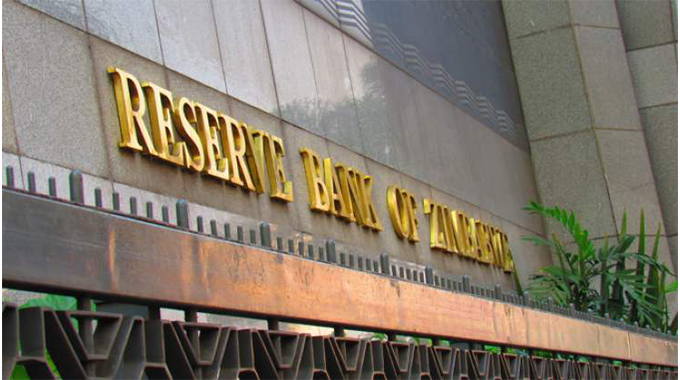
“Additionally, the Reserve Bank of Zimbabwe (RBZ) contributed capital equivalent to US$2,07 million. The Bank remains actively engaged with its shareholders to pursue further capitalisation initiatives aimed at strengthening its balance sheet and lending capacity,” said Mr Sakala.
The Bank’s net revenue for the period was ZWG5,6 million, a recovery from a negative ZWG3,7 million in the previous period. Total assets increased by 1 percent, driven by modest growth in the loan book.
“Despite these challenges, the Bank recorded improved performance in the sale of housing units and residential stands. Sales are expected to strengthen further in line with projected macroeconomic growth and stability,” said Mr Sakala.
He added that proceeds from these property sales are expected to enhance the Bank’s liquidity and overall financial performance in the second half of the year.
“To ensure financial sustainability, management continues to closely monitor the Bank’s liquidity position and cost structure, while prioritising projects with shorter revenue cycles — particularly within the infrastructure value chain financing space,” said Mr Sakala.
Among the projects under implementation during the review period is the 07 on Pagomo Phase 1 Cluster Houses Development in Monavale, Harare, which is now 82 percent complete. Phase 1 involves the construction of 10 housing units.
“Upon completion of Phase 2, the project will deliver 40 four-bedroom cluster duplexes with supporting infrastructure, including paved parking, water, sewer, and electricity,” said Mr Sakala.
He also reported that civil works at the Honister Cluster Housing Development in Borrowdale, Harare, are 95 percent complete. The project, located on bank-owned land, is a joint venture with private institutional investors and involves the construction of 72 cluster housing units — 26 three-bedroom and 46 two-bedroom units — with full infrastructure including water, sewer, paved roads, and electricity.