

 Online Reporter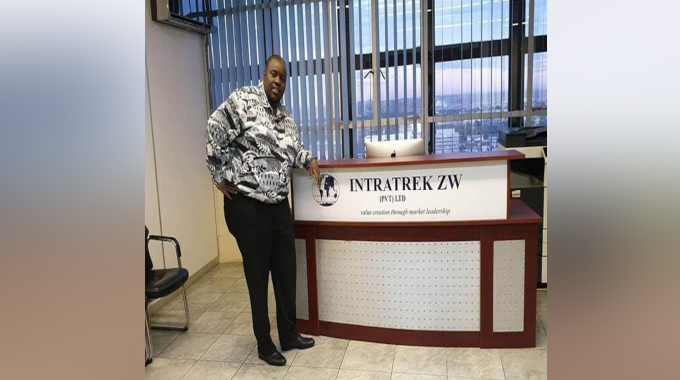
Mthabisi Tshuma, [email protected]
BUSINESSMAN and philanthropist Mr Wicknell Chivayo has announced his willingness to personally finance the long-delayed 100MW Gwanda Solar Project, a move that could finally break a decade-long impasse and ease Zimbabwe’s persistent power shortages.
Speaking in a recent interview on the Denny J Show, Mr Chivayo reaffirmed his commitment to completing the plant without further reliance on government loans.
He described the project’s failure to take off as “the worst thing that has happened in my life” and pledged to mobilise his own resources to ensure construction begins without delay.
His declaration has reignited public interest in a project first awarded in 2015 but stalled by funding disputes, legal wrangles and contractual complications.
The construction of the Gwanda solar plant was initially quoted at US$172 million. However, falling global solar costs saw the figure revised down to US$132 million, representing a 20 percent reduction.
In October 2015, Intratrek Zimbabwe, owned by Mr Chivayo, won the tender. That same year, the Zimbabwe Energy Regulatory Authority granted Zimbabwe Power Company (ZPC) the licence to implement the 100MW plant in Gwanda, the provincial capital of Matabeleland South.
Yet the project failed to commence after concerns were raised over funding, due diligence and contractual processes. In 2018, ZPC cancelled the contract citing non-performance, prompting Intratrek to challenge the decision in court.
In early 2023, the courts ruled in favour of Intratrek and ordered ZPC to reinstate the contract. Despite this ruling, financial closure was never achieved, leaving the project dormant.
Mr Chivayo attributed the delays to funding challenges and Zimbabwe’s legacy debt. He pointed to sovereign risk and difficulties in securing loans due to outstanding government debts dating back to 2002.
“The Chinese Government will not loan any money without insurance. Sinosure is saying you guys took tractors, you owe US$400 million, US$800 million plus interest, and that is where we get stuck,” he explained.
“I am willing to put my own money in, even if the Government doesn’t pay me. I am willing to build that solar farm with my own money and even walk away unpaid. I will do anything.”
In 2019, former Eskom CEO Engineer Matshela Koko also unveiled plans for a separate 100MW solar project in Gwanda through Matshela Energy, backed by a reported US$250 million investment and advanced battery storage. ZERA awarded the company a 25-year licence in July that year.
Last year, in March 2025, former Energy and Power Development Minister July Moyo told Parliament the project would resume under a revised contract. A joint review committee comprising ZPC and Intratrek had been convened to address the contract price and update the feasibility study.
“Due to the prolonged delay in project commencement, as well as new connections to the nearby 132kV transmission line and other network developments, the committee is reviewing an updated feasibility study to refine the project’s implementation framework,” said Minister Moyo.
He added that a grid impact study had been completed and that once finalised, the contract would be amended to incorporate the revised price, updated technical specifications and provisions on environmental and social impact.
In 2020, Cabinet had approved a revised plan to deliver 10MW first and 90MW later by 2022, but multiple court cases prevented progress.
The Gwanda solar farm forms part of Zimbabwe’s strategic projects aimed at closing the country’s acute power deficit, which peaks at around 600MW. Zimbabwe continues to rely heavily on regional imports to supplement local generation.
Energy experts believe the project could become one of Zimbabwe’s largest renewable energy investments if Mr Chivayo’s pledge materialises. Government has also been encouraging more Independent Power Producers to bridge the gap.
With personal funding now on the table, focus will shift to whether regulatory approvals, grid connection agreements and construction timelines can finally be aligned to deliver power to Gwanda and the national grid.
For Matabeleland South, the revival of the project offers renewed hope for improved energy security, job creation and support for industry and agriculture across the province.



Lest we forget! Zimbabwe authorities are notorious for raising people’s hopes yet nothing will materialize on time. We cannot be a country whose development is anchored by individuals only. ZESA unbundled before and we were told it was for improving efficiency. Some of us put a spirited argument that splitting the organisation was bad for business. Nobody listened. Now it’s re-bundling for the same reason that it unbundled before, to improve efficiency! How more confused can people be? The Gwanda Solar Power project, like the Gwai-Shangani dam project had raised hopes for the people of Western Zimbabwe, erroneously referred to as Matabeleland, but we see each year passing by with no encouraging progress. We are given time lines that come and pass and new ones set. Projects like the delays in the reconstruction of Harare Drive are part of the drama we watch unfolding every day. We hear of the Kariba Dam solar project, the Batoka Gorge Hydro-Power station and numerous other announcements that ministers are well known for making when they face the media. Very little seems to be going on. We were promised renewal of public transport, with the President at one point announcing the imminent arrival of hundreds of buses from Belarus. We are still waiting. The Chitungwiza-Harare rail link has been on the agenda of our authorities for years. The revival of ZISCOSTEEL, the giant steel plant in Kwekwe has been on government’s imaginary development agenda as well since the beginning of time. Let’s get serious please! If Chivhayo wants to correct the mistakes him and ZESA did on the Gwanda Solar Power project, he should just do it without grandstanding.