Online Reporter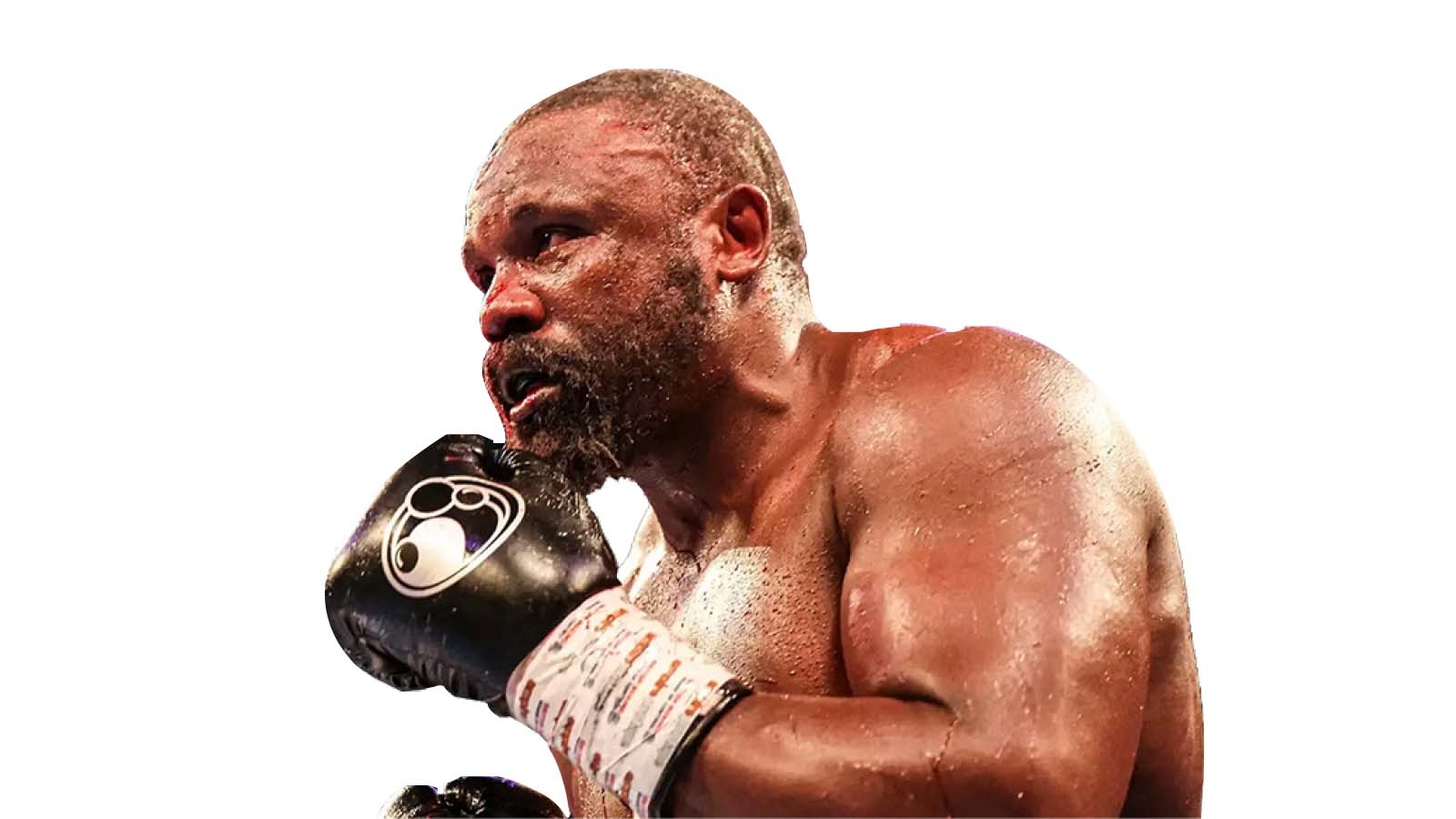
Donald McRae in LONDON
IT’s all coming full circle for Derek Chisora here on Saturday.
We arrive at a restaurant called Boisdale in Belgravia.
If the name of the area sounds familiar to him, it’s because there is also a Belgravia in Harare, where he was born in Mbare on December 29, 1983.
In 1999, he moved to settle in England.
Chisora is deep in training for his 50th, and perhaps final fight, against Deontay Wilder on Saturday in London.
“Everybody fears the end,” he says when I ask if he worries about life without boxing. “Let’s be honest. Everybody fears the end of their marriage, the end of their life. Everybody’s got an end.”
Chisora knows many were urging him to retire more than three years ago when it seemed he had shipped far too much damage in the ring.
But his popularity has surged and he is on an impressive run of three straight victories against credible opponents including Joe Joyce and Otto Wallin.
Wilder is a former world champion, who is also entering his 50th fight, and Chisora could end his career on an incredible high at the O2 in London.
Wilder looked a shell of the fighter he once had been when losing badly on points to Joseph Parker and then being stopped in the fifth round by Zhilei Zhang in 2024.
He has fought once since then, beating a journeyman, but Chisora cautions that “right now he’s very wounded and that’s a very dangerous man to fight. He’s desperate.”
For many years Wilder was described as the hardest-hitting heavyweight in history.
He lost twice to Tyson Fury, and drew their first fight, but Wilder dropped the King of the Gypsies four times.
Fury has never been the same again and so Chisora needs to be careful.
“It’s going to be electric,” the 42-year-old says. “It’s going to be amazing.”
Wilder has always been prone to suspect pronouncements.
In 2018, he said “I want a body on my record” and when this fight was announced he told Chisora “I want you to kill me.” Chisora snorts: “It’s boxing bull**it. Nobody wants to kill anybody.”
How will this fight end?
“I’m going to knock him out.”
What does his wife, Emily, think of him facing Wilder? “She don’t like it, but it is what it is.”
Do they discuss the dangers?
“No, we don’t. Life is dangerous already, my friend. You wear a nice watch and you get stabbed for it. Boxing is not dangerous. Boxing is fun.”
Chisora argues that “a true warrior knows when to stop”, and says:
“I’ve had so many friends who stopped boxing and they’re not happy.
“They’re depressed. I’ve been doing this since I was 16. Is it time to stop just because somebody says [retire] for your health? It’s quite hard.”
Chisora once said giving up boxing is as hard for a fighter as getting off heroin is for an addict.
“It is,” he says, quietly. Why is boxing so addictive?
“Without it you have no routine. But if you have a fight, then for two months you come on a routine.
“It don’t matter what goes through your mind. The routine is there. So the drug in boxing is the training. It keeps you going through the ups and downs.”
Does he think about brain damage after all the heavy blows he has taken to the head during his 19-year professional career?
“No. What will be, will be.”
But does Chisora accept boxing can cause brain damage?
“It does,” he says, before shrugging. “I’ll be fine. Do I look and sound bad to you? I am fine.”
I explain that Barry McGuigan, the former world featherweight champion, who is now 65, once told me he made sure to test his mental faculties every day in retirement – whether that meant spending time on a crossword puzzle or some other brain teaser that tested his cognitive function. Does Chisora do anything similar?
“Yes. If I leave my house and come back home then I’m fine,” he says with a laugh.
I tell Chisora that I’m confused by their friendship with politician Nigel Farage.
He is a black Zimbabwean, who has lived in Britain for decades, and Nigel’s Reform party is smeared by allegations of racism.
“When you say racist, in what sense?” Chisora asks.
Chisora knows I come from South Africa and he shifts the focus.
“You’ve got the same thing in South Africa right now. They don’t want more Africans in the South. They don’t want Nigerians.
“You’re always going to find people trying to fight for what’s theirs. I don’t call it racism. I call it politics. If people support Trump they’re told: ‘Oh, you’re a racist.’” What about Reform’s policies on immigration? Will Chisora, and other black Africans, ever truly be accepted in Britain by Reform voters?
“I’m Zimbabwean. My kids are British.”
Is he still a fan of Donald Trump?
“I was a fan of Trump, but not this latest stuff (in Iran). He stopped seven wars and started another one.”
What does he feel about the current state of the world?
“The ones at the top are making money and the ones at the bottom are not. We’ve got war in Europe, in the Middle East, in Africa. Nobody wins. Not us. People die, people are burying their kids.”
Last year, there was talk that Chisora might run as a Reform candidate for London mayor. “No, no,” he says. “It was a joke.”
We finally change the subject and Chisora says:
“Boxing is a dirty business, like politics, bro.”
But there is speculation, should he beat Wilder, he may have one more fight. “You’re guessing too much. This is it.”
Headlining the O2 and beating a former world champion in Wilder would be, Chisora believes, “a sweet way to go out – bye, bye, Miss American Pie”.
That was a song Fury often sang after a fight. Would he do the same? “I can’t sing. I can’t dance.”
Yet, as he has done for years, Chisora can order burgers for himself, his opponent and their entourages after the bout.
started after the second Dillian Whyte fight [in 2018],” he says. “Every time I finish fighting I want a burger.
“So after that fight we got 50 burgers and, when I came back to the dressing room, they’re all gone. None for me and I wanted it bad. At the next fight I ordered 100 burgers and we shared them. It became a very good, positive thing to do.” – The Guardian