admin
admin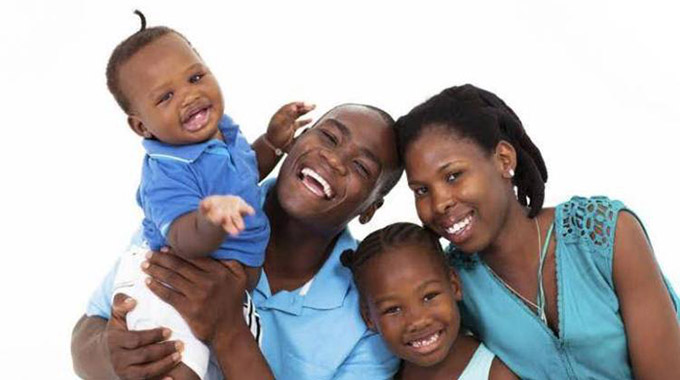
Roselyne Sachiti
Features, Health & Society Editor
Family means everything. In the African society, Zimbabwe in particular, families, not individuals, are what keep society strong.
According to a paper titled, “Extended families: here and there” by the Historical Society of Pennsylvania, most African people live in households that include not only the nuclear family (mother, father, children), but also members of their extended family (grandparents, aunts, uncles, cousins, and others).
“Family members act as both an economic and emotional network and provide individuals with a sense of who they are and where they belong,” notes the paper.
Some Zimbabweans are living and working in foreign land, far from their nuclear and extended families.
Here, some replace their absent extended family with “fictive kin” — members of the same ethnic or national community who play the role that family would at home.
The coming of Covid-19, resulting in lockdowns in Zimbabwe and other countries has resulted in nuclear, extended and fictive kin families going for over seven weeks to months without physical interactions.
Staying at home means no weekend visits to grandparents, no lunch meetings with a sister, brother, cousin aunt, uncle etc, and for those in foreign countries, no social gatherings with fictive kin.
WhatsApp groups, video calls, Skype calls and zoom meetings have taken over physical and face to face interactions and gatherings with family.
The Herald spoke to various Zimbabweans at home and in South Africa, who shared their experiences as the world commemorated the International Day of Families observed yesterday.
Cato (39) of Harare has two important people in his life, his mother and girlfriend, who both stay in the capital, but in different residential areas.
“I call my mother and my girlfriend multiple times every day,” he says. “I also chat with the two on WhatsApp.
“With the rest of my extended family, we mostly communicate through WhatsApp, be it chat or calling. We have family and extended family WhatsApp groups where we check on each other,” he says.
He has only met his mother twice in town, but haven’t seen his girlfriend since the lockdown began seven weeks ago.
“It’s been very hard. I miss my girlfriend a lot. The phone calls, chats, and video calls do not make up for not seeing each other in person.”
After the lockdown, Cato adds, “my girlfriend and I will pick up from where we left off before lockdown. I know seeing each other after so long is going to be very exciting and maybe overwhelming.”
To Cato, family is everything and way before Covid-19 and the lockdown, he made sure those he loves the most knew how much he values them.
Memory is a Zimbabwean woman living and working in South Africa, hundreds of kilometres from most of her family.
Before the lockdown in that country and in Zimbabwe, it was easy to move back and forth to visit family, attend funerals and all milestone family events.
But with the coming of Covid-19, which resulted in lockdowns, she can no longer do that, replacing the physical interactions with zoom meetings, WhatsApp calls and also normal calls which she says are expensive.
The most difficult time, she says, is missing the meetings because of power outages and also not being able to join in.
“Funerals remain the most painful moment,” she says. “Imagine you are all alone and the news of death comes. And there is no shoulder to lean on.”
When one is hospitalised, Zimbabweans are known to visit each other, taking turns to do so during hospital visiting hours.
Even family members who are not in good talking terms take time to visit each other in such times, for this is what family does, and is expected to do. But with Covid-19, hospitals have limited visits to only one person, and in some cases no visitors at all.
Memory says the period when a relative is taken to the hospital and relatives are not allowed to go with him or her has been equally stressful.
“No hospital visits. Just waiting for any news either bad or good. Family is important. When we say ‘I don’t care about anyone’ we will be lying to ourselves,” she adds.
Martin Moyo, also based in South Africa, agrees that Covid-19 and lockdowns have had a huge impact on the health of families.
“There is a lady who gave birth last week Tuesday,” he says. “She had low blood pressure and started swelling after delivery. The baby developed jaundice and they only got discharged yesterday.
“For the whole week, no person could visit her. The husband, who could have been allowed to visit, is locked down in the Democratic Republic of Congo, where he works in a mine.”
According to Moyo, lockdowns also impact on the family fabric, especially during bereavement, having witnessed this when a friend passed on in Johannesburg early April.
“It took two weeks for them to be allowed to move the body to Zimbabwe,” he says. “His wife, mother and children were not allowed to cross the border into Zimbabwe to accompany the copse for burial in Gweru. They returned to Johannesburg.”
Brighton Chimusaru of Harare says the world is in an abnormal situation and at times, emotionally draining and traumatic for families.
“It’s really bad, but we have to be strong, there’s need to find someone to talk to, voice or video call,” he says. “,One can easily get into serious depression.”
Irene Nyanyiwa of Harare, says all she can do for now is only look at photos of other family members and when they have money, does WhatsApp video calling.
“It is hard,” she says. “That bond that comes with a handshake or hug is long gone. It is difficult to say: “how are you?” from a distance to a person you have not seen in a month.”
Angela Mahureva of Harare misses work, as she also regards her workmates as family.
“We spend most of our time at work,” she says. “I miss running around and working with my superiors. We have been doing WhatsApp and video calls with my immediate family. It is not the same.”
Angela says she has been under lockdown with her son and this has given them time to bond.
“I realised that my child is grown through my conversations with him,” she says. “I miss going to church, I miss walking freely without wearing a mask.”
She also misses wearing her stilettos, and sometimes wears them around the house.
While it has been a hard time for many families, some are lucky and have the rare opportunity to meet and share quality time that many currently crave.
Kuda stays close to her sister and has been able to visit her.
“My sister and I are neighbours, I stay in Tynwald and she stays in Marlborough,” she says. “We see each other and two weeks ago we attended a funeral in our rural home. On April 2, she brought a birthday cake for my eldest daughter and my kids are at her house these days.”
Since the lockdown began in Zimbabwe, George of Harare has only managed to visit his mother.
“She stays with my sister and I have been going to give her groceries and her monthly medication,” he says. “I have been going alone and she misses my kids, her grandchildren, who love playing with her dogs and goats. My kids miss going to the shops, only one or two people go.”
To communicate with other family members, George has been using phone calls and WhatsApp.
“Data is expensive,” he says. “You just sacrifice what you have in order to connect with loved ones. Some of us have been working from home. Internet connection is very expensive, as well as line studding.”
Church is his other family and he misses singing in the choir.
“We sometimes try to sing on Whatsapp groups, but we are now tired,” he says. “Converging for praise and worship is important, but Facebook is helping. I also miss drinking with friends and socialising. I am now used to drinking at home.”
In 1993, the United Nations General Assembly decided on a resolution (A/RES/47/237) that May 15 each year, must be observed as the International Day of Families.
This day, according to the UN, provides an opportunity to promote awareness of issues relating to families and to increase the knowledge of the social, economic and demographic processes affecting families.
The 2020 theme is: “Families in Development: Copenhagen & Beijing + 25”.
According to the UN, this year’s 25th anniversary of Copenhagen Declaration and Beijing Platform for Action, comes at a time of one of the most challenging global health and social crises.
“The 2020 Covid-19 pandemic brings into sharp focus the importance of investing in social policies protecting the most vulnerable individuals and families,” said the UN in a statement. “It is the families who bear the brunt of the crisis, sheltering their members from harm, caring for out-of-school children and, at the same time, continuing their work responsibilities.”
The UN further said families have become the hub of intergenerational interactions that support each other in this crisis.
“Under economic duress poverty deepens,” said the UN. “In times of uncertainty stress increases — often resulting in growing violence against women and children. That is why the support for vulnerable families — those who have lost their income, those in inadequate housing, those with young children, older persons and persons with disabilities — is imperative now more than ever.”
The UN adds that as the world struggles to respond to the Covid-19 crisis, there is a real opportunity to rethink and transform how economies and societies function to foster greater equality for all.
“In doing so, it is clear that gender equality will not be achievable without greater equality in families, and that on this, as so much else, the Beijing Platform for Action continues to provide a visionary roadmap of where we need to go.”
Feedback: [email protected]. [email protected]. Twitter @RoselyneSachiti



 Online Reporter