admin
admin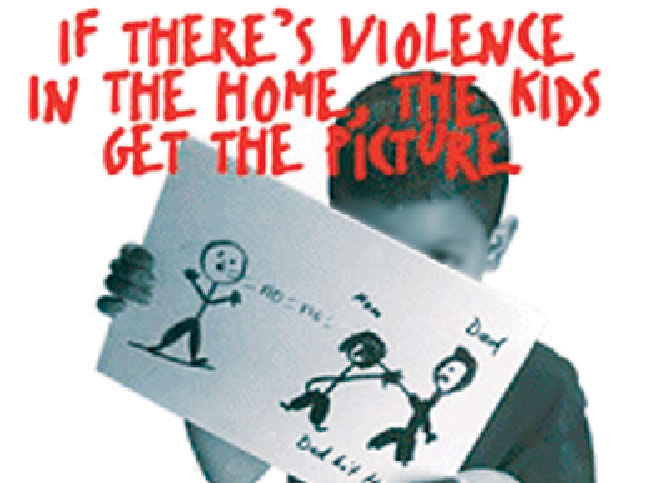
 Sukulwenkosi Dube Features Correspondent
IT started off as a simple argument between her mother and step-father over the source of a new pair of shoes. Little Keisha Gumbo watched helplessly as her mother, Ntombi Gumbo, 26, and stepfather, Themba Ndlovu, 28, quarrelled.
The quarrel, which occurred in October, degenerated into an exchange of harsh words before turning into a physical fight.
Ndlovu was accusing Keisha’s mother of cheating on him and bringing home a pair of shoes that he alleged had been bought by her lover.
At the age of six, little Keisha from Bulilima could not comprehend what was going on. Neither could she escape the violence that ensued.
The girl — an ECD pupil — was taken aback when her step-father suddenly armed himself with an axe and attacked her mother, killing her on the spot. Ndlovu then turned the axe on the six-year-old girl and left her for dead.
He went on to hang himself behind his in-laws’ home, leaving the Bulilima community with a lot of unanswered questions.
Keisha*, who was admitted at Plumtree District Hospital for a week, is still asking her grandparents the whereabouts of her mother.
She is still traumatised and perplexed by her stepfather’s actions as she fails to fathom or embrace her mother’s death.
A home as an environment is critical in the growing up of a child. It is where the child’s character is moulded and given direction.
But when the home becomes a battlefield characterised by endless bickering and fights, the child’s world is turned upside down.
Conflicts between couples leave physical and emotional scars on children.
Some of the conflicts are so extreme that they result in death or permanent injuries. Children become orphans as both parents can die during such gender-based conflicts.
Child psychologist Reverend Muiti Sibanda, who is also a pastor with the Evangelical Lutheran Church in Zimbabwe, said exposing a child to a violent environment cripples its development.
“There are cases where children live with parents that are always engaging in fights or conflicts. The conflicts might be physical, verbal or emotional. In the physical scenario, there is use of violence where one partner beats up the other or both parents fight.
“Verbal conflicts occur when the parents exchange harsh words and hurl insults at one another. In the case of emotional conflicts, the parents won’t be on talking terms. Although there’s no physical violence there is a lot of tension between the couple and normally children sense this tension,” said Sibanda.
He said in most cases conflicts between parents were of a physical nature. Most such cases result in families becoming dysfunctional.
Conflicting parents in some cases neglect their children as their attention is directed towards solving problems or creating problems instead of catering for the needs of children, Sibanda noted.
He said it was crucial for parents to work closely together in raising their children.
Sibanda said once domestic violence intensified, children often turned to support or sympathise with the victimised parent.
Research show that most perpetrators of domestic violence were men while women, and at times children, were the victims.
“In cases of violence, if the mother is the victim the children see her as their only parent and they relate only with her. They distance themselves from the parent who is the perpetrator. The parents eventually fail to take an active part in raising the children and a gap is formed which later affects the children,” said Sibanda.
He said conflicts were a common encounter among couples but parents had to resolve them amicably in a manner that would not taunt their children.
“A child is socialised, meaning that the perceptions of how a man or woman behaves or does are derived from what a child sees around her, be it at home or in the community.
“The everyday life accumilates in the mind of the child and that is why some boys who are raised by abusive fathers turn out to be abusive men in adult life. That abusive language which parents use is later adopted by the children. They don’t need to be taught all these filthy traits but they adopt them naturally eventually,” Sibanda said.
Sibanda noted that children reacted differently to the effects of parental violence.
Director of a Bulawayo-based child protection organisation, Restoration of Hope, Clive Simango, said children became affected emotionally, physically, mentally and socially because of conflicting parents.
He said often children became disconnected with their parents as well as society and their peers. Simango said fear accumulated in such children and eventually they became withdrawn.
Simango said this docile personality sometimes affected the performance of some children in school.
“If the violence is perpetrated by the father then the girl child later views all men as abusers. This also affects them at a later stage when they start their own families as they lose trust in all male figures in their lives.
“Even as they grow, the children develop an unhealthy fear of the father and he is viewed as a monster. If parents are often engaging in fights the children also end up being neglected and deprived of the necessary attention and love which they’re entitled to when growing up,” said Simango.
He said some children end up blaming themselves as the cause of the violence which exists between their parents.
Simango’s organisation, Restoration of Hope, in 2008 once dealt with a case of a child from Old Pumula Suburb who tried to commit suicide after blaming herself for the tension between her parents.
He said some incidents of conflict resulted in divorce which meant that children were forced to be raised by a single parent who in most cases is the mother.
Simango said that day to day experience of observing parents as they quarrelled affected the child emotionally, mentally and psychologically.
“A child is affected psychologically and socially if the community gets to know that the parents are constantly in conflict. In cases where the conflict ends in tragedy a child will live to be reminded by peers of the incident that would have transpired,” he said.
Simango said the violence trend between parents, if not addressed, is passed onto the children.
Experts say the trauma caused by domestic violence can be addressed by possible intervention measures.
A health professional with a mental health and psychiatric qualification, Sandisiwe Mahlangu, said the effects of violence between parents on children were often overlooked.
She said as a result, children were excluded in the process of intervention.
Mahlangu said focus was usually directed towards counselling conflicting parties who, in most cases, are the parents.
“Often, parents are usually the people who seek counselling services. They’re told to reconcile but they forget to include the child in the process of reconciliation. Rather they’re left to deal with the consequences which can manifest in a later stage of life,” she said.
Mahlangu said children experiencing conflicts often developed effects such as fear, anxiety disorder and post-traumatic stress disorder. She said such children lacked happiness in their lives and would develop the urge to revenge the victimisation of the “weaker” parent.
She said the violent scenes and encounters registered in the minds of the children and frequent flashbacks were a possible threat that could cause post-traumatic disorder.
“If the child isn’t of sound mental state or if the mental state is disturbed then a child will not develop properly. The mind will be crowded by disturbing thoughts and experiences,” she said.
Mahlangu said neglecting the possible effects meant neglecting the child’s mental health.
She said it was alarming that establishment of institutions for counselling traumatised children were not prioritised in the country compared to those of adults.
Mahlangu said institutions such as clinics, youth centres and schools had to be the first port of call where children can access counselling services. She said there was a need for trained personnel in these institutions which children could turn to and confide in.
Mahlangu said primary treatment of these traumatising experiences should be urgently sought soon after the incident.
“Children who’re exposed to violence need intervention. Tertiary treatment is when the mental state of the victimised children had been compromised. Children don’t have to suffer in silence where assistance is possible,” she said.



 Online Reporter