
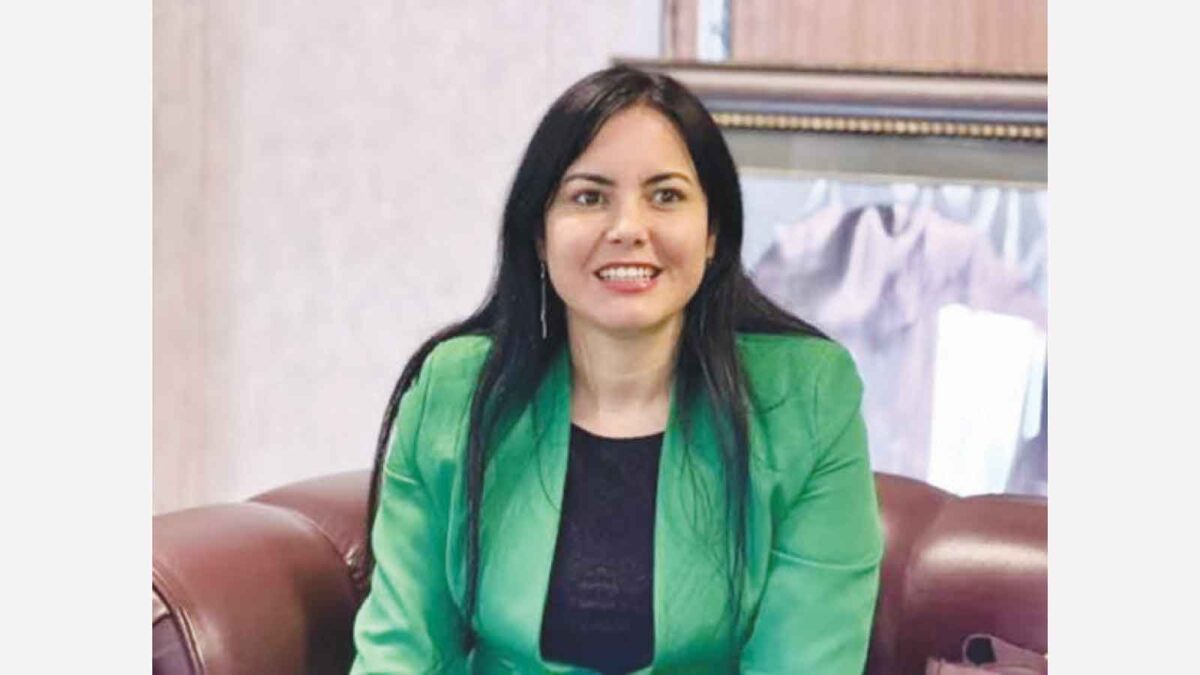
Susellys Perez Mesa-Cuban Ambassador
We have probably all heard about the blockade that the US has maintained against Cuba for over 60 years.
Perhaps you are also aware of the undeniable humanitarian consequences for the people of this beautiful Caribbean island, which this superpower’s policy has officially imposed on them since the triumph of the Revolution in 1959.
But whatever you may have read or the information you have received may not have been enough to grasp the full extent of the damage it has caused, especially in 2026, following the US executive orders issued from January 29, the first of which, number 14380, allows this government to impose additional trade tariffs on imports of products from countries supplying oil to Cuba.
Having declared Cuba to be “an extraordinary and unusual threat” to US security, without even presenting any valid or substantiated evidence, this has, in practical terms, resulted in a total energy blockade.
As a result, in the more than 10 months that have passed, Cuba has not received a single shipment of the necessary fuel, despite having the legal framework, valid bilateral agreements and the resources to do so. There was just one exception at the end of March, in the form of humanitarian aid from Russia.
The January executive order was followed on May 1st by Executive Order 14404, which imposes secondary sanctions on those who have or have had relations with Cuba. This reinforces the open and direct application of the extraterritorial nature of US coercive measures, something that reaches extremes truly never before seen in that country’s legislation. It even stipulates that there is no need to notify those affected.
The inclusion of Cuba on the spurious list of state sponsors of terrorism during President Trump’s first administration, and its 243 measures against Cuba – including new campaigns and initiatives targeting tourism to the island, international medical cooperation and a ruthless media war – have also been followed by new sanctions, imposed almost weekly so far this year, against Cuban entities and individuals.
Let us imagine for a minute what it means for daily life in any country to be without fuel. Let us consider its role in meeting the population’s basic needs and its many uses in today’s world.
Evidence of this collective punishment against Cubans includes the more than 100,000 pending surgeries, a doubling of the infant mortality rate, and more than 118 000 cancer patients – including 1 200 children – who are unable to receive first-line treatment and are forced to resort to second and third-line alternative treatments, as well as more than 7 000 containers stranded in other countries because shipping companies decided to breach their contracts out of fear of the announced sanctions; instead of unloading them in Cuba, they left them in other countries in the region, thereby depriving private companies, hospitals, factories and, ultimately, the population, of healthcare, food, energy and goods in general.
This behaviour also violates the Declaration on Latin America and the Caribbean as a Zone of Peace and confirms that it is that country’s government that threatens security, stability, and peace in the region and throughout the world.
And all this would not be so striking were it not for the fact that it is completely illegal, contrary to international law, and in breach of the principles and purposes of the United Nations Charter.
Unfortunately, these have become recurring phrases that do not inspire, as they should, a commitment to defending these principles and translating them into concrete action; yet we cannot cease to denounce this and to seek ways to resolve this attack against a sovereign country.
Let us not normalise the US’ hostility towards Cuba, nor the maximum pressure being exerted against its people.
To defend Cuba today is to defend the basic norms of coexistence between sovereign nations; it is to defend one’s own inalienable right — that of every country, every businessperson, every organisation and every citizen — to do business, to engage in trade, to travel, to invest and to develop cooperation projects.
Fundamental questions arise, such as: what right does that government have to do this? How is it possible for a nation to seek to impose its will on other nations by force, without any legal or moral basis, or recognised international mandate to do so? What has become of respect for the truth, public opinion and the ethical standards of a State? Will any government in the world be permitted to engage in this behaviour – involving blackmail, threats and direct pressure – against another? Is this the legacy and example we wish to leave to future generations?
In turn, Cuba has reiterated its willingness to engage in a serious and responsible dialogue with the US, based on international law, sovereign equality, respect and mutual benefit, non-interference in internal affairs, and unconditional respect for the independence and sovereignty of States. It is also emphasised that Cuba will make no concessions of any kind, nor will it renounce its principles, and will defend them at whatever cost is necessary.
Cuba has not been alone in its international condemnation of this behaviour and is grateful to all the governments, parliaments, political parties, organisations and principled citizens around the world, including Zimbabwe, who are calling for the lifting of the blockade.
However, given the gravity of the matter and the new dimensions it has taken on as a result of the scandalous violations and utter disregard on the part of the current US administration, greater activism and specific support are required to uphold reason, the norms of coexistence between nations, the basic principles governing trade and navigation, as well as the oft-repeated and vital defence of sovereignty, the self-determination of peoples, territorial integrity and their independence.
On October 27 and 28, Cuba will present its traditional draft resolution to the United Nations General Assembly for the 34th time, with the aim of once again calling for an end to such an inhumane policy. This has historically enjoyed the support of the vast majority of the international community, on occasions leaving just two countries (including US) isolated in their obstinacy to maintain this crime. We are confident that this support will continue this year, as a demonstration of commitment to justice, peace and respect for international law.
We cannot look the other way because #CubaIsNotAThreat, whereas the US blockade certainly is; because if we do, there would be more and more head turns that would have to be repeated; because, step by step, we too become complicit in such injustices; and because, at any moment, sadly, anyone could fall victim to such actions.
As stated by the Minister of Foreign Affairs of Cuba, Mr Bruno Rodríguez Parrilla, before the National Assembly of People’s Power of Cuba on July 29, 2026:
“Silence, indifference, or narrow, selfish interests would place all of humanity in danger. Any State could be the next one if broad international concerted action does not halt this barbarism.”
Cuba will overcome because such evil cannot be sustained, because its people are determined to defend their economic and social project freely and sovereignly, and because the international community will not allow the sinister interests and hegemonic ambitions of the US empire to prevail over the example and resistance of the island of solidarity.