admin
admin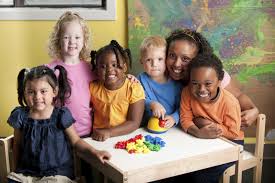
By the time children start pre-school, they have already had a variety of experiences and have developed in a number of ways. To build upon the learning that has taken place in the home and its immediate environment, pre-school staff should provide children with a rich variety of challenging play activities and other experiences in a stimulating environment.
The focus should be to allow children to learn at their own pace, gain a positive image of themselves as learners, be able to cope with uncertainty and to learn through trial and error.
- Most young children come to pre-school as active, experienced and enthusiastic learners.
- They are interested in themselves and their environment and like to explore, investigate and
- be creative. They have a natural curiosity and sense of wonder and amazement.
- They like to establish good relationships with adults and peers and enjoy communicating with them. They are developing confidence, self-esteem and self-control. They often choose to work in groups and some may show signs of leadership.
- At other times, they may choose to play alone.
- They are developing concentration and a range of skills and competencies such as observing, making decisions, problem solving and communicating and can, with the support and guidance of adults, further enhance their own learning.
- They enjoy stories, rhymes and music.
- They enjoy physical play and are becoming physically independent.
- But what are the needs of the pre-school child for him or her to prosper at such an early age.
Young children require:
- A safe and stimulating supervised environment where they can feel happy and secure;
- Opportunities to investigate, satisfy their curiosity, explore the environment inside and outside the playroom, extend their sense of wonder, experience success and develop a positive attitude towards learning;
- Appropriate periods of time for learning through sustained involvement in play;
- Interaction with sensitive and understanding adults who promote their sense of well-being and extend their learning and development.
- Adults who will treat them as individuals, support them and sensitively participate in their play.
- Given these needs, it follows that young children require a curriculum that:
- Provides equality of opportunity; promotes their physical, social, emotional, creative and intellectual development; and ensures that they feel included, secure and valued.
- Is planned, purposeful, flexible and allows them to follow their own interests and develop at their own pace;
- Is enjoyable and motivates, challenges and stimulates them by building on their natural curiosity and desire to experiment.
- Promotes active learning and helps them begin to develop the skills and dispositions that they will need to be life-long learners.
- Is broad and balanced, building on their previous learning and allowing them to make choices and decisions.
- Provides them with opportunities, through play and other experiences, to develop the learning associated with the arts.
- Language development.
- Early Mathematical experiences.
- Personal, social and emotional development.
- Physical development and movement.
- The World around us
- Pre-schools guidance



 Online Reporter