admin
admin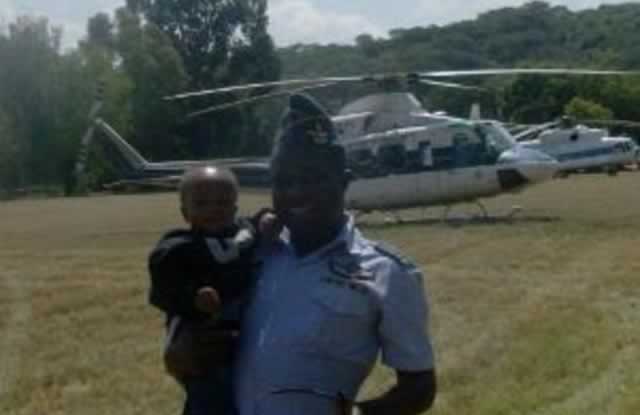
Sydney Kawadza Senior Features Writer
“You are always safe in a helicopter than in a pressurised cabin.”
These are the words I will always remember when I first met the late Squadron Leader Taurai Jombo.
The day will always be firmly etched in my mind because it was also the first time I boarded a helicopter. Squadron Leader Jombo had noticed my uneasiness when I was about to board a first flying machine in my life and wanted to ease the tension.
It is also quiet ironic that the “pressurised cabin” of a plane took such a young life that had promised so much that even the country’s authorities had rested their trust on this fledging career to train other pilots.
The news on September 4 that two pilots had died in a plane crash ahead of the Big African Air Show at Charles Prince Airport raised a lot of interest in many people but I had no clue whatsoever that Squadron Leader Jombo was among the victims. For me the camp was always in danger if a plane fell off the sky or failed to land or take off at the airport.
Squadron Leader Jombo and his colleague Air Lieutenant Evidence Edzai Begede died on the spot.
While I quickly raised concern about the safety of residents moulding bricks and staying in a squatter camp at the former Willdale Bricks moulding site and next to the Prince Charles Airport, I never expected the news that was to follow, the death of one who, despite the vast difference in our field of operations, was brother and colleague.
I was shocked when a colleague, Farai Kuvirimirwa, phoned me to tell me that one of the pilots who had died in the accident was Taurai Jombo.
The news was so devastating that people I was working with on that particular day could not understand the emotion that engulfed me then.
But it was the irony that a person who had made me feel so comfortable when I first boarded a chopper was no more.
It was the summer of 2008 when my journalism career was on the ascendancy that I was assigned to cover Government’s High-Level Resource Mobilisation Committee headed by Public Service Commission chairman Mr Mariyawanda Nzuwa.
The team had amongst its ranks top security chiefs Zimbabwe Defence Forces Commander General Constantine Chiwenga, ZRP Commissioner General Augustine Chihuri, Air Force of Zimbabwe commander Air Marshal Perence Shiri and Major General Douglas Nyikayaramba.
There were also the Permanent Secretaries, among them Mr George Charamba, Mr Ngoni Masoka, Mrs Pretty Sunguro and many others.
While it was part of the plans that some of the security “chefs” would concentrate on their provinces, that is their provinces of origin, we always tagged along with General Chiwenga and Major General Nyikayaramba as they were directly linked to the programme that was running under “Operation Maguta/Inala”.
After the successful launch of the programme in Mashonaland East, one day my news editor told me to report to ZRP Morris Depot grounds for a trip to Manicaland.
I was not sure what mode of transport we were going to use.
On the day in question I was dropped by a driver at the depot grounds and met Tendai Munengwa who was also assigned to cover the programme and we became a team that eventually travelled as far as New York covering the United Nations Summit.
However, on that day I also met Taurayi Jombo, an easygoing character who caught my attention as soon as I got to the helicopter to deposit my bags while waiting for the senior Government and army officials to arrive.
That was my first-ever flight in a helicopter.
There is always something funny when you are doing something for the first time and it was not a different day when Squadron Leader Jombo greeted me and noticed that I was sweating in my hands. He took it upon himself to help reduce the fear by explaining advantages of using helicopter over a conventional plane.
From then we became friends. I still remember his rugged and loud voice when he was laughing at me for having a hang-over, suspected, when I was about to fly with the high-ranked military, security and Government officials.
He however had a lesson for me.
“The good thing about helicopter against pressurised cabin planes (our conventional and commercial planes) is the safety. If anything happens when you are flying in a helicopter, the pilot will just look for safe place to land but when you are 30 000 feet above sea level you would surely die,” he said.
I can never forget those words as they continued to ring in my eyes every time I took to the air in the subsequent journeys I took across Africa, Europe and the USA.
I always saw the “dark man”, I used to call him Munhumutema for his complexion, but he was always smiling.
For many who saw, especially us ordinary Zimbabweans, saw a carefree pilot who was easy to associate with.
That maiden helicopter flight was an experience.
I always wondered how these pilots were always on point when the travel. Squaron Leader Jombo was there to show me how they calculated their flight schedule and how the prepared for a flight.
Unfortunately, I have never been a numbers person and the diagrams and lines these pilots have to go through before the flight was as confusing and up to now I would not imagine trying it out. We struck a good relationship during the flight and when we got to Buhera for the launch of Operation Maguta, I was already friends with Taurai Jombo.
We later flew to Marange and then Mutare for the overnight stay and like the friends we were meant to be.
That maiden flight would be the beginning of a friendship that blossomed over the years as kept in touch especially when he was still based at the Manyame Air Base.
I also met Squadron Leader Ruwende (my apologies if his rank has changed) during these flights across the country.
On that mission we went to Gokwe, Gwanda, Lupane, and Tsholotsho among several other areas we visited during the programme launch
However, Jombo became a close friend as he frequently visited me at Herald House where we would go for an occasional drink.
He would later be transferred to Thornhill Airbase in Gweru but we always were in touch especially when he told me that his wife was studying Media and Society Studies at the Midlands State University and would be seeking an attachment position at The Herald.
I promised to do my best. I would always forget about that task and Squadron Leader Jombo would phone on endless periods asking me if her application had succeeded.
The last time I met him in Harare was when we bumped into each other at the Centenary Footbridge near the Town House. I panicked since I had failed to honour my promise to my friend but instead, he was as loud as he usually was laughing at me for chickening out instead of helping him.
He even invited me for a beer but unfortunately I was rushing to work and he was on his way to Gweru.
I also got to know that he was now training other pilots at Thornhill Base and that explained why he was “missing in action” even during official Government programmes.
I was however happy that Jombo had been promoted.
The promotion also indicated that Squadron Leader Jombo was a patriot who could not be lured to abandon the force for the lucrative commercial markets that had drawn many pilots and aircraft engineers from the AFZ.
I have no doubt that many officers from the AFZ had benefited from Squadron Leader Jombo’s leadership qualities and the fact that unconfirmed reports indicated that he was helping his colleague master moves to be executed during the airfare shows that he had become one of the best pilots not only at the Air Force of Zimbabwe but the whole country.
It was also his passion to see his wife Rumbidzai get the best of education and mentoring in journalism, hence his wish that she joins the Zimpapers stable.
I was really impressed by the rise in ranks that my friend and homeboy was achieving in his profession but like all good things, his life came to an abrupt end in tragic circumstances.
However, Squadron Leader Taurayi Jombo lived his life to the full, always sharing that loud and rugged laugh and never missing a chance to associate with colleagues whether at work or in the community.
Go thee well son of the soil.
Feedback: [email protected]


 Online Reporter