Online Reporter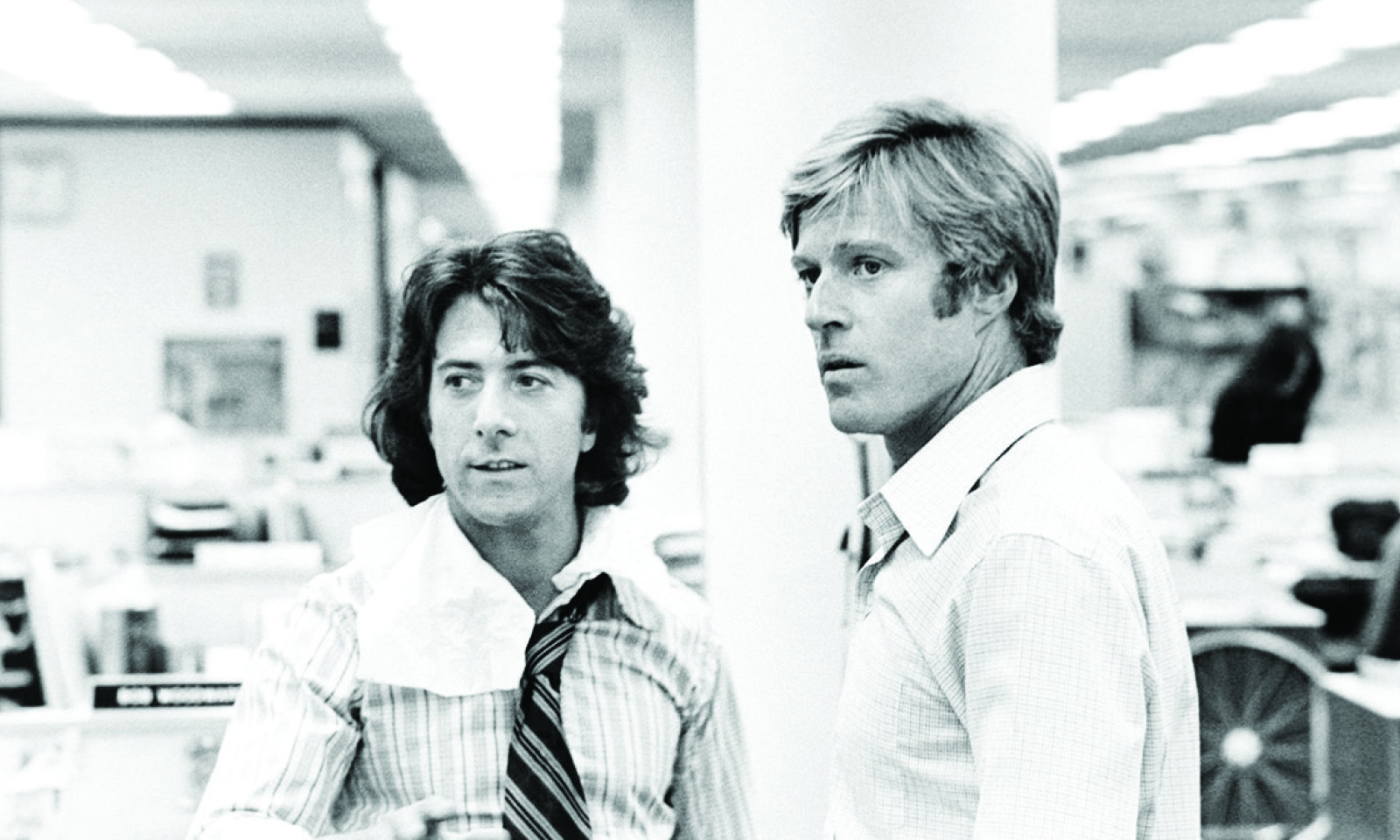
LOS ANGELES. —For a long stretch of its opening act, All the President’s Men – the canonical paranoid thriller from 1976 -isn’t just about the brewing Watergate scandal, or about the battle between a cagey political machine and an enterprising newspaper.
It’s also about Robert Redford, who died this week at the age of 89, at work.
A group of burglars is arrested while attempting a break-in at the Democratic National Committee headquarters, and a reporter, Bob Woodward (Redford), gets a call from his editor, who tells him to start asking questions.
He begins pestering attorneys, listening in at court hearings, and making phone calls – potential leads; strangers who may know something; names jotted down, circled, and scribbled out haphazardly on his yellow legal pad.
He, in contrast to his jittery eventual partner, Carl Bernstein (Dustin Hoffman), is unassuming and discreet.
Both are intuitive, masterful reporters, but it’s Woodward who embodies the story that Redford, who bought the rights to Woodward and Bernstein’s book shortly after its publication, wanted to tell from the beginning: about a stalwart citizen’s gradual, painful loss of faith in his country’s institutions.
“He’s a humper!” his editor says when the story goes national and is almost taken out of Woodward’s hands – meaning that he’s a hungry, untested reporter with the inner drive of a private eye, yet every bit the diligent WASP and businesslike Republican that his buttoned-up demeanor and windswept hair imply.
All the President’s Men is a journalism movie, not a gritty crime noir, but Redford’s Woodward is as consummately professional as one of the existentialist safe-crackers in a cool, collected Jean-Pierre Melville thriller.
Despite his immense fame, Redford, one of the defining American actors of both his and subsequent generations, feels almost undercelebrated in this regard.
He had a habit of making the job look too easy, and his nuances were often most apparent in contrast to multiple eras of co-stars – A-list actors like Hoffman, Natalie Wood, Paul Newman, Jane Fonda, and Barbra Streisand, then Meryl Streep, Michelle Pfeiffer, and even a fledgling Andrew Garfield – or the setting, like the expansive wilderness of the 1972 western Jeremiah Johnson.
Redford’s talent could seem invisible until the right conditions made it heroically apparent.
His craft was not predicated on reminding us, through strain and largesse, of a master at work; his mastery could be found in the fact that we so often seemed to miss it.
Redford’s life began all over the place. He was born in California, and often traveled to Texas as a child; he went to Colorado for college (and was kicked out), then spent a brief stint in Europe studying art before he landed in New York with the intention of becoming an artist.
Instead he became an actor, a path that—as he described it over the years—was almost accidental.
The career itself was not.
Thanks to a fortunate bit of casting, alongside Newman, in a little movie called Butch Cassidy and the Sundance Kid, Redford became inseparable from the New Hollywood movement of the 1960s, and mainstream Hollywood after that.
It wouldn’t work as well if you couldn’t look at the guy and instantly know who he is and where, in the national mythos, he belongs.
That groundedness was nevertheless rife with surprises.
One of Redford’s last screen roles, which presaged his retirement from acting in 2018, was as the career criminal Forrest Tucker in David Lowery’s The Old Man & The Gun.
In that movie, he played a bank robber and escaped convict so likable that the people he robbed couldn’t help but report him to the police with smiles on their faces.
Tucker was a counterintuitive criminal who was motivated not by money but, even more richly, by the pure, joyous thrill of getting away with something.
It was a fitting capstone for an actor who got away with sleights of hand for his entire career, sneaking into our lives and onto our screens with understated grace, and slipping away just as quietly as he came—here one second, gone the next.— The Atlantic