

 admin
admin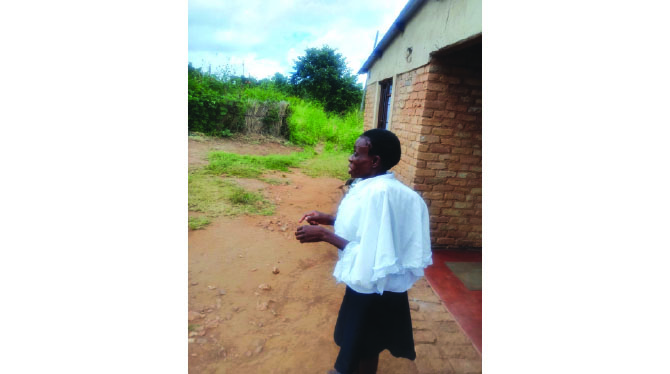
Sifelani Tsiko-Agric, Environment & Innovations Editor
Dadirai Gondo (52) of Makombe village in Ward 21 of Guruve district has a hunched back as her spine is curved outwards more than it should.
This excessive curvature affects her posture and makes standing or doing hard work difficult.
Tilling the land or carrying buckets of water is difficult for Gondo. All this has left her at risk of under-nutrition due to food insecurity, feebleness and abandonment.
Disabled people in most rural areas in Zimbabwe still struggle to get attention.
Half the time, Gondo is entirely alone at her home where she looks after three orphans – Jimmy (30) with mental health problems, Funny (38) unemployed and with drug addiction problems and Ocean (13).
She looks after these children which were left by her late sister. Resilience is written all over her face.
No matter her condition, Gondo has to forage for food every day and fetch water and firewood for cooking just to survive.
Her sister’s children hardly assist and are always away from home.
“I regularly suffer from chest pains. I cannot till the land much or carry heavy containers. I need more than US$20 per month for my medication,” she said.
“My bones are always painful. I cannot lift heavy items. I have to forage for food from neighbours to survive. At times I receive some handouts from NGOs. It is not easy but I have to survive.”
Gondo always relies on neighbours or friends to get around her village. Without their support, her world is closed.
“We as disabled people are suffering,” she said. “Some disabled people here in our ward have no family members to care for them. They are forced to stay indoors with nothing much to eat.
“Our community forgets that we exist. I have not heard anyone discussing our plight here in Guruve. But the coming of Lower Guruve Development Association changed everything for me.”
The implementation of the ‘Prevention of Covid-19 infection among vulnerable women and girls in drought-affected districts (Guruve and Mbire) of Mashonaland Central in Zimbabwe’ programme in her ward, was a game changer for people living with disability.
Without the programme, she and many other disabled people could not have readily accessed Covid 19 treatments.
This could have led to unnecessary loss of lives and outright rejection Covid-19 testing and vaccination measures in Mbire and Guruve.
The roll out of the project by LGDA and UN Women with the support from the Japanese Embassy helped to increase Covid-19 testing and vaccination, and the availability of prevention and infection control supplies for people living with disability.
Disability rights activists in Zimbabwe say persons with disabilities were among the hardest hit by Covid – 19 due to lack of access to health care and education.
“Covid-19 further worsened the plight of people with disabilities who live under very difficult circumstances. They often lack access to public health information and face barriers to implement basic hygiene measures,” said Beauty Musemwa, LGDA communications and advocacy officer.
“It is very difficult for Dadirai and many others who are disabled to access pit latrines and other health facilities. To make matters worse, basic hygiene measures such as handwashing, sinks or water pumps are not easily accessible to people with disabilities.”
Gondo said the intervention by LGDA and UN Women helped her and others to cushion the effects of the pandemic on people with disabilities.
“This programme was so important for me,” she said. “Firstly, I managed to get information about how you get Covid and how we can prevent it. Before them, I did know much about the disease. After training and listening to the Covid-19 messages by LGDA, I learnt a lot.
“It removed fear of vaccines. I was vaccinated with all three doses. I got my first jab in Mvurwi in 2021, my second and third in 2022 with the support of LGDA.”
She said the programme was very useful as they were trained to make soap and run projects.
“I was included in the Tasimudzwa Group soap making project. There were 13 of us and I was among a few disabled individuals. We managed to produce 200 litres of multi-purpose soap and we made between US$700 and US$800,” Gondo said.
“It was a lot. We shared the money and I used about US$50 to buy my medication. Right now, I can make soap on my own. I can run a soap making business and I am able to train others. I only need ingredients to help train others and make soap.”
She said she encouraged other disabled people to be vaccinated.
“People at first were afraid to be vaccinated. Proper teaching by LGDA allayed our fears. I have encouraged other disabled people to be vaccinated,” she said.
“The problem of fear was real and we got assurance that vaccines were safe after learning a lot from the campaigns. We have to be vaccinated to stay healthy and safe.”
Gondo has assisted the orphans to be vaccinated.
“Vaccine fear is still a problem here but people with disabilities no longer fear much unlike before,” she said. “I have encouraged six more disabled people to be vaccinated. I am currently the secretary for the disability committee in our ward.”
The programme rolled mechanism to ensure disability inclusion in the Covid-19 response, including through the collection and disaggregation of data by disability.
Programme implementers translated Covid-19 messages into local languages and efforts were made to make communication materials accessible to those with hearing, visual and learning difficulties.
Over 150 000 people were reached out through road shows, fliers and other print materials (T-shirts, wrap cloths (Zambias), Bandanas), social media, school outreach campaigns and various activities to commemorate days such as the International Rural Women’s Day, International Youth Day and others among others.
The programme made sure that people like Gondo were no longer at the periphery in the district and national vaccination drive.
Zimbabwe has a disabled population of about 1,4 million and in various rural communities and some experienced challenges at the height of the pandemic.



 Online Reporter