Vusumuzi Dube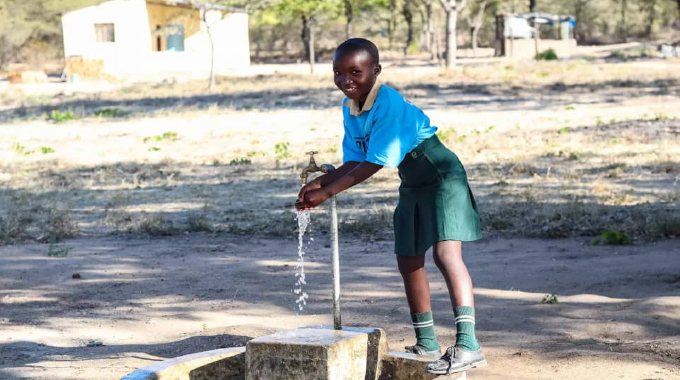
Theseus Shambare, [email protected]
AT first light, the land looks unforgiving.
The wind sweeps across Matabeleland South, lifting fine dust over plains that have long defined survival at the edge of the Kalahari Desert.
For decades, this province has been shaped by drought, distance and endurance.
But as Zimbabwe marks its 46th Independence anniversary, a new story is emerging — one in which Government-led infrastructure investments are reshaping rural livelihoods and strengthening resilience against climate change.
At the centre of this transformation is a rural development drive anchored on Village Business Units (VBUs), designed to turn rural communities into engines of production.
Across Matabeleland South, over 136 boreholes are being drilled under this programme, providing reliable water for irrigation, livestock and household use — a critical buffer against recurring droughts. In Maphisa, Matobo District — the focal point of this year’s Independence celebrations — 24 VBUs are under development, with 11 already completed.
The projects, implemented through Government agencies including the Zimbabwe National Water Authority (ZINWA) and supported by the Agricultural and Rural Development Authority (ARDA), integrate solar-powered boreholes, nutrition gardens, irrigation plots and livestock watering systems.
Key sites include Mahetshe Primary, Minda Primary and Tjewondo Secondary School, where communities are already producing vegetables such as rape, tomatoes and carrots for both consumption and sale.
From survival to production
In these communities, the shift is visible. Where villagers once depended on unreliable rainfall and walked long distances for water, Government-installed solarised boreholes are now powering gardens and small-scale irrigation schemes.
“We used to struggle for water, but now we can grow food and even sell,” said Ms Linda Moyo from Maphisa.
The VBUs are part of a wider Government strategy to climate-proof rural livelihoods and build rural industrialisation from the village level upwards.
Silalatshani: From collapse to revival
In Insiza District, Silalatshani Irrigation Scheme stands as one of the clearest examples of Government intervention restoring productivity in climate-stressed areas.
The scheme, which had deteriorated over years due to inconsistent water supply and infrastructure challenges, was resuscitated through Government rehabilitation works, including the restoration of irrigation infrastructure, water supply systems and support for farmer coordination structures.
The intervention brought the scheme back into full production, enabling farmers to resume year-round cultivation after years of dependency on rain-fed agriculture.
“We do not depend on rain anymore,” said farmer, Mr Absalom Tshuma.
“This irrigation system has sustained us. Before, we had nothing consistent. Now we harvest throughout the year.”
Across the 358-hectare scheme, over 800 households are now producing maize, sugar beans and horticultural crops, with incomes improving significantly as farmers shift from subsistence to commercial production.
Women and youth have also benefited through fish farming and irrigation-linked horticulture, with some households now running multiple income streams.
“It has changed everything for us,” said another farmer, Mrs Sifiso Nsingo.“We are no longer idle even in drought years.”
The scheme is increasingly viewed as a model of how Government-led rehabilitation of irrigation infrastructure can rebuild rural economies under climate stress.
The produce from Silalatshani Irrigation Scheme is sold in Filabusi, Gwanda and Bulawayo.
Mr Tshuma said he has been living off the irrigation scheme for decades.
“It was from this irrigation scheme that I saw myself affording school fees for my children, who are now adults. I have also witnessed many of my colleagues sending their children to universities with money they get from selling various crops produced here,” said Mr Tshuma.
Mrs Spiwe Ndlovu, whose role is to inspect and ensure that canals for the flooding irrigation are clean, said the scheme has transformed her life.
“Apart from enforcing the cleaning and maintenance of canals by members, I also grow sugar beans. I sell some of the produce at Silalatshani Business Centre and use some for home consumption,” she said.
The scheme boasts 13 different crops, including garlic, vegetables, sugar beans, tomatoes and maize.
Farmers have planted 250 hectares (ha) of sugar beans (since February 1), while green mealies are sitting on close to 100ha.
Recently, the Silalatshani Irrigation Scheme hosted the Department of Livestock and Fisheries Production, which assisted farmers to rehabilitate three fishponds that had been abandoned.
Under the Presidential Fisheries Scheme, the Government is on an accelerated aquaculture drive, with irrigation business units (IBUs) considered complete if they have at least one fishpond for fish production.
For Silalatshani, the Government handed over 5 000 sexed tilapia (bream) fingerlings and feed for the project.
“It is known that with the temperatures we experience here, fish production is ideal.
“This is offering us another opportunity to improve our nutrition with protein-rich meals while creating new cash inflows away from crops,” said Scheme Secretary Mr Jabulani Moyo.
To ensure sustainability and the agri-business idea, there is a dedicated Government business unit manager.
Lingwe: Water restoring dignity and education
In Lingwe under Chief Bidi, another Government intervention — the Lingwe Piped Water Scheme — has transformed daily life for entire communities.
The project, which introduced piped water systems and connected households to reliable supply points, has ended decades of reliance on unsafe and distant water sources.
“We used to walk up to eight kilometres to fetch water,” said Mrs Martha Banda.
“It was unsafe, especially for girls.”
Today, access to clean water has reduced waterborne diseases, improved hygiene and restored dignity, particularly for women and children.
“These systems have changed everything,” said Headman Midas Ndebele. We no longer fear water.”
The impact has extended into education.
At Tjingababili Primary School, also supported by improved water infrastructure, pupils now spend more time learning and tending school nutrition gardens instead of searching for water.
“We now have time to study,” said Grade Seven learner Awakhiwe Ndlovu.
School head Mr Christopher Mguni said the change has been dramatic.“Before, we recorded up to 80 absentees a day. Now attendance is stable,” he said.
“The garden is also supporting our school feeding programme.”
The piped water scheme projects in Lingwe are part of 17 piped water scheme projects in the province.
Expanding rural resilience
Elsewhere, Government-supported fish farming initiatives under the Presidential Fisheries Programme are complementing VBUs, with free pond construction and fingerling distribution supporting both households and schools.
These interventions are widening income streams in rural areas increasingly affected by climate variability.
In more fragile areas such as Madabi Village in Mangwe, Government, working with UNICEF, has introduced social protection programmes to cushion households affected by declining mopane worm harvests.
Cash transfers are enabling families to meet basic needs while gradually diversifying into small livestock production.
“This support helps us get through difficult months,” said one beneficiary.
Mr Isdo Madabi said he has used the support to invest in roadrunner production.
However, despite these gains, climate shocks remain unpredictable.
In Bulilima District, the 2025/2026 season brought excessive rains that destroyed crops after years of drought.
“This year we thought God had remembered us,” said Ms Lucia Dube.
“But the rains became too much.”
Through targeted Government investments in water infrastructure, irrigation rehabilitation, rural enterprises and social protection, communities are steadily shifting from survival to productivity.
As Zimbabwe celebrates Independence in the province, the meaning of the day is expanding beyond history.
It now reflects a broader national transformation — where independence is expressed through access to water, productive land, functioning schools and resilient rural economies.
And in that transformation, Matabeleland South is redefining what it means to be truly independent in a changing climate.



 Online Reporter