Vusumuzi Dube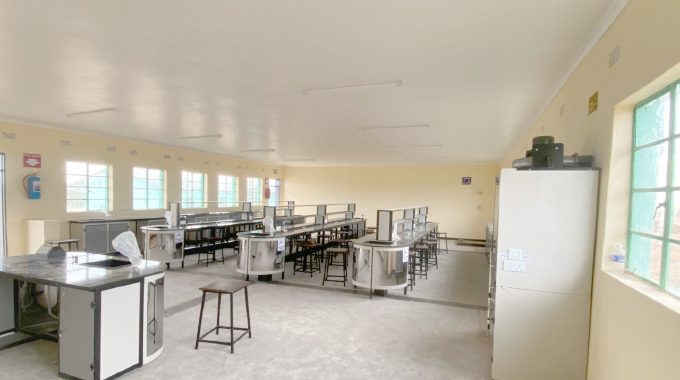
Mthabisi Tshuma in Maphisa
AT Mahetshe Secondary School in Maphisa, Matobo District, a new science laboratory now stands quietly but confidently, its presence signalling how national celebrations can leave behind something lasting.
Built and fully furnished as part of the gains from hosting the national Independence Day celebrations, the laboratory marks a turning point for learners who, for years, studied Science largely through imagination rather than equipment.
The Mahetshe facility is only one piece of a much larger picture. Across the province, 40 science laboratories are being constructed as part of Government driven legacy projects, each one deliberately placed so that no district is left behind. The laboratories have been evenly distributed across Matabeleland South’s seven districts, with a clear aim of giving rural learners real access to Science and Technology subjects that once felt distant and unreachable.
The initiative is expected to change academic pathways for many pupils from rural Matabeleland, increasing the number who qualify for Science based university programmes both locally and abroad. For years, educators and parents have voiced concern over the low enrolment of rural learners in STEM related courses, often linked not to ability, but to a lack of facilities and exposure. These laboratories seek to close that gap.
According to a report from the Rural Infrastructure Development Authority (RIDA), construction has progressed steadily across the province. All 39 laboratories have successfully passed the stages of trenching and footing, substructure, brickwork, backfilling and compaction, as well as slab level. At present, four schools have reached upper window level, five are at ring beam and gable stage, while 30 schools are undergoing roofing.
Among all these sites, Mahetshe Secondary School stands apart. Its science laboratory is the only one fully completed so far, with all necessary laboratory equipment already installed. For the school, this means that science lessons no longer need to stop at theory; practical learning has finally found a home.
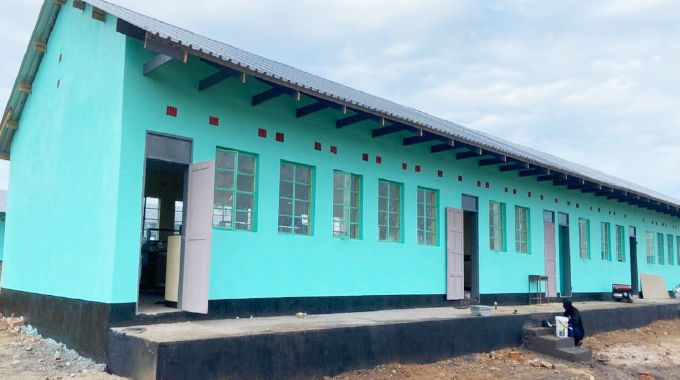
The spread of construction reflects the province’s diversity and scale. In Bulilima District, laboratories are rising at Nlongwe, Tjemahale, Gwambe and Mazwaligwe schools. Mangwe District projects include Plumtree High, Marula, Sanzukwi, Bango and Makorokoro. Umzingwane District emerges as one of the biggest beneficiaries, with seven schools — Irisvale, Shale, Bayethe, Mawabeni, Sihlengeni, Mbalabala and How Mine — all receiving laboratories.
In Insiza District, laboratories are under construction at Mkwabeni, Ndola, Avoca, Filabusi and Sibhatha, while Gwanda District has four schools included: Halisupi, Simbumbumbi, Maphane and Lushongwe. Matobo District itself has projects at Mqabuko, St Anna, Seula, Kafusi, White Water and Lubhango, and Beitbridge District completes the roll out with Nuli, Swereki, Siyoka, Chitulipasi, Malala, Malungudzi, Malikuwa, Tshamnanga and Matshiloni.
Speaking to Zimpapers in Maphisa on Thursday, RIDA Matabeleland South Provincial Director Mr Likhwalethu Ndlovu said the pace of work had been encouraging, particularly given the challenges of terrain and distance.
“Works are progressing well across the province and we are happy with how communities have stood up to ensure that the projects are completed. Due to inaccessible roads, we had delays but we hope that most of them will be complete when schools open,” said Mr Ndlovu.
For learners, the impact of the laboratory is already deeply personal. Njabulo Ncube, a Form Two pupil at Mahetshe Secondary School, spoke with quiet pride about what the new facility means for his future.
“I am happy that I will now be able to pursue my studies in Science, a dream that is coming to life. This is something that I have always wanted as I want to be a doctor,” said Njabulo.
In a community where ambition has often had to travel far to find opportunity, the laboratory brings that opportunity closer. For students like Njabulo, science no longer feels like something that belongs elsewhere — it is now part of their everyday classroom, waiting to be explored.


 Online Reporter