

 admin
admin

Dr Charles Jusa: Correspondent
A Great Britain was always considered a world power, with one of the largest empires on the planet throughout the 18th and 19th centuries. The British had large and many spheres of influence in countries such as India, Eastern Asia, Canada and even Australia.Driven by their hunger for world domination, spreading Christianity and gathering resources to fuel their growing empire, they trekked across the globe in search of new advances.
In 1888, Cecil Rhodes arrived in Zimbabwe with his British South Africa Company (BSAC) and quickly took steps to gain a grasp of control over the country. After these first steps of British takeover, Rhodes promoted the formation of British colonies in the region and religion formed a key part.
According to research, ‘‘Independent’’ denoting the church is used to indicate their independence from mission control.
The churches are largely referred to as African churches because they were founded in Africa by Africans and primarily for Africans.
The period from the nineteenth century to the present has been characterised by establishment and growth of the African strand of development of Christianity.
This phenomenon has given birth to indigenous churches and prayer groups in Africa. These groups have not only taken root but they have proliferated and shown phenomenal growth particularly in Sub-Saharan Africa.
It has been noted that the Southern, West and Central regions of Africa are the most fertile soil for the growth of these indigenous churches.
In Zimbabwe one of the earliest African traditional religious movements was the “Zionist movement”.
According to authorities, Zionism has been used primarily to describe the African churches, which are charismatic.
“Properly speaking, only some churches in Zimbabwe and South Africa, such as the Zion Christian Church of Bishop Mutendi, would deserve this appellation,” notes one text.
The Zionist movements are Pentecostal in nature, as they draw more freely from elements found in traditional religions and seek the fulfilling of “Zion” of their own.
Because of the political climate of South Africa and the strict control on residence, movement, labour and so on, the Zionist movements have millions of adherents who nurse the ambition to build “Zion” which is interpreted to mean “our home”.
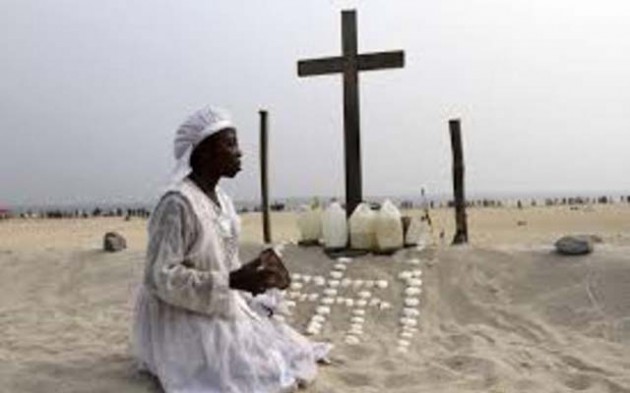
According the Religion in Zimbabwe journal, the Zion Christian Church was founded in the 1920s by Engenas Lekganyane of South Africa and Samuel Mutendi of Zimbabwe. It is now being run separately with Bishop Nehemiah Mutendi, son of Samuel Mutendi, heading the Zimbabwe chapter. As of 2000 there were 1 389 congregations and 166 667 members; perhaps 500 000 people were affiliated with the church. The Zimbabwe chapter now has congregations in Botswana, Lesotho, Mozambique, Namibia, South Africa, the United Kingdom, the United States and Zambia.
The Vapostori Church movement of Johanne Masowe and Marange represent another dimension of traditional churches in Zimbabwe.
Both of the major sects of Vapostori were founded in 1932 in eastern Zimbabwe by similar prophets, Johane Masowe (1915-1973) and Johane Marange (1912-1963) and both groups now extend to nearby countries.
The Marange group is estimated to be the largest AIC in Zimbabwe, vying with the Zion Christian Church and the Roman Catholic Church for the greatest number of affiliates in the country.
The African Apostolic Church was established in the 1950s by Ernest Paul Mwazha, after a series of revelations on the mountain of Guvambwa in Chikomba District. Mwazha continues to serve as the leader of this international, faith-healing church of apostolics and is now titled Archbishop.
In this mix one can add such sects as Mugodhi Apostolic Church which is active in Zimbabwe and South Africa; Independent African Church (Muchakata); Guta raMwari (1954), Guta RaJehovha (1954) and Christian Marching Church. The indigenous churches played a very crucial role supporting the national political and racial consciousness.
Church and politics in the Bible
What does the Bible say about politics? The Bible gives us two truths regarding our stance towards politics and government and influence of Christ can somehow be allied with government policy. The church must work hand in hand with the legitimate government.
Thus to say that preaching the gospel is our only business and that the church should not influence the society on politics is wrong. The politics of Jesus was life, hope and truth. It may come as a surprise to many, but Jesus Christ did not involve Himself with the politics of His days. Even though He was son of the living God, life hope and truth come with Jesus, that was His central theme according to John 10:10.
We hear Jesus encouraging people to pay tax to the Romans Government according to Mark 12: 17 and Jesus answering said unto them, Render to Caesar the things that are Caesar’s and to God the things that are God’s other scriptures are Matthew 20:28 Roman 13:7.
All over the world, the church is rolling up its sleeves to serve according to Matthew 20:28. Not only are Christians sharing the life changing message.
Being salt and light does not offer Christians mandate to seize political power. It is a challenge to all believers to bring society into light.
But to preach is a humble and holy task. Congregants arrive with the assumption that what is said come from the Bible.
Matthew reveals that, in his book Matthew 24: 24 for there shall arise false Christs, and false prophets, and shall show great signs and wonders, insomuch that, if it were possible, they shall deceive the very elect.
According to Paul in the Book of Romans 13:1-14 let every person be a subject to the governing authorities for there is no authority expect from God, and those that exist have been instituted by God.
Therefore whoever persists the authorities resist what God has appointed, and those who resist will incur judgment.
For rulers are not a terror to good conduct, but to bad.
Would you have no fear of the one who is in authority?
Then do what is good and you will receive His approval, for He is God’s servant for your good.
But if you do wrong be afraid, for He does not bear the sword in vain.
For He is the servant of God, any avenger who carries out God’s wrath on the wrong doer.
Therefore one must be in subjection, not only to avoid God’s wrath but also for the sale of conscience.
Paul postulates that in the Book of 1 Timothy 2: 1-2 first of all, then, I urge that supplications prayers, intercessions and thanks giving be made for all people, for Kings and all who are in High positions, that they may lead peaceful and quiet life, Godly and dignified in every way.
Paul further states that in book of Titus 3:1 Remind them to be submissive to rulers and authorities, to be obedience, to be read for every good work.
Also the book of Proverbs 28:2
When land transgresses, it has many rulers, but with a man of understanding and knowledge, it stability will long continue.
Dr Charles Jusa is an administrator at Rehoboth School of Ministries



 Online Reporter