Online Reporter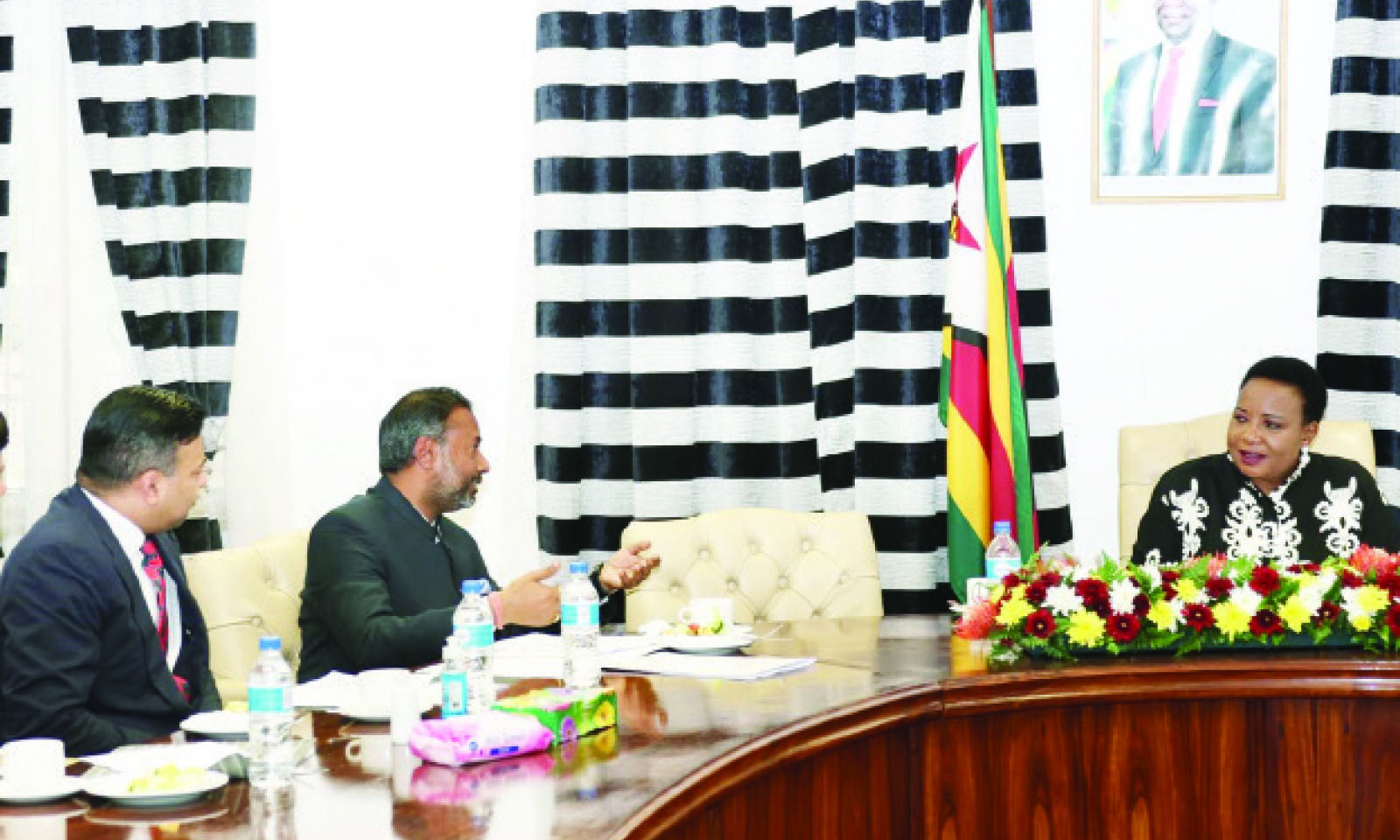
Blessings Chidakwa
Herald Reporter
FIRST Lady Dr Auxillia Mnangagwa has met with the Indian Ambassador to Zimbabwe, Mr Bramha Kumar, who expressed interest in collaborating with her across various sectors, including agriculture, health, education, women’s empowerment and the environment.
Impressed by Dr Mnangagwa’s initiatives through Economic Empowerment and Livelihoods, Women and Family Support, Health Advocacy, Cultural Preservation and Tourism, Youth Engagement, and Social Welfare, Ambassador Kumar paid a courtesy call on the First Lady at her offices to explore areas of cooperation.
First Lady’s engagements with embassies particularly with India have not only strengthened philanthropic collaborations, but also opened up new opportunities for economic partnerships, reflecting a shared commitment to development and goodwill between Zimbabwe and India.
Ambassador Kumar expressed his willingness to collaborate with Dr Mnangagwa on her empowerment projects.
“I will be very happy to attend all those programmes, should the opportunity arise. In the past, we used to send our officers as well. My predecessor also joined Her Excellency’s programmes. I am looking forward to joining those events where diplomats are invited,” he said.
“I highlighted various sectors such as healthcare, mining, agriculture, trade and commerce all of which have a growing need for women’s empowerment, child care and related areas. These matters are interconnected,” he said.
Ambassador Kumar said, like Zimbabwe, India is richly endowed with minerals, and he emphasised the need for exchange programmes focusing on training for mine workers.
Acknowledging Amai Mnangagwa’s notable efforts in advancing women’s involvement in agriculture, the Ambassador proposed exchange programmes between Indian and Zimbabwean women in the agricultural sector.
He revealed that India has identified two national agricultural institutions to facilitate scientific collaboration between the two nations.
In the education sector, Ambassador Kumar spoke of prospects to expand the India Technical and Economic Cooperation (ITEC) Programme, under which approximately 270 scholarships are offered to Zimbabwe annually.
“If the Government of Zimbabwe requires, we can increase that number to cover more fields such as policing, defence, customs, accounts, auditing all areas that enhance governance in Zimbabwe,” he said.
Ambassador Kumar also highlighted the importance of traditional knowledge systems, stating that India is a key player in this domain, particularly in traditional medicine.
“We are engaging directly with the Ministry of Health. We have finalised several aspects, such as capacity-building, frameworks for regulatory authorities and the recognition of the Indian pharmacopoeia. These developments will pave the way for further progress,” he said.
Ambassador Kumar said Zimbabwe-India relations would continue to strengthen through increased cooperation between the countries’ regulatory bodies.
“This will help us develop joint programmes that benefit the people of both nations, particularly in terms of prosperity and capacity building.”
The Ambassador also shared how India has successfully reduced human-wildlife conflict, aligning with the First Lady’s efforts in her role as Zimbabwe’s Environment Patron.
Dr Mnangagwa leads extensive awareness campaigns against human-wildlife conflict, including poaching.
Ambassador Kumar further emphasised the importance of establishing forests with indigenous trees, which ties in with Amai Mnangagwa’s reforestation drive as Environment Patron.
Dr Mnangagwa who warmly welcomed the Ambassador outlined various empowerment initiatives aimed at improving livelihoods such as her inclusive approach which targets the entire family.
As a champion of empowerment, the First Lady also invited the Ambassador to attend some of her programmes and witness first-hand the many initiatives she is spearheading.
As Zimbabwe’s Health Ambassador, Dr Mnangagwa underscored the importance of health sector exchange programmes which she said would greatly benefit rural communities and complement her medical outreach activities.
“What I have observed is that medicine in India is affordable and easily accessible. I wonder if you could consider establishing a pharmaceutical plant here. It would help ensure that essential medicines are readily available over the counter to our people,” she said.
Among some of the medical outreach initiatives being spearheaded by Dr Mnangagwa include free prostate, breast and cervical cancer screenings offered nationwide.
The First Lady who is the Environmental and Tourism patron noted that in sectors such as mining, she is advocating for environmental preservation.
“We need training for artisanal miners so they can gain the necessary expertise in resource extraction and environmental conservation. Many do not have the required equipment or knowledge.
“If they receive training and equipment, they know how to, also to preserve the environment,” she said.
The First Lady also highlighted positive outcomes from educational collaborations, citing the example of a Zimbabwean student supported by the Angel of Hope Foundation who is set to graduate from an Indian university in July.
“In education, we need tailored programmes to empower our people with the skills they require,” she said.
Dr Mnangagwa has maintained a close working relationship with India through various initiatives, notably, her visit in May 2022 which significantly strengthened Zimbabwe-India ties.
She was conferred with an Honorary Doctorate in Philosophy (Honoris Causa) by GD Goenka University in Gurugram, Haryana, in recognition of her philanthropic work through the Angel of Hope Foundation.
The foundation focuses on women’s empowerment, healthcare, and support for marginalised communities in Zimbabwe.
She became the first African to receive such an honour from the university, underscoring her global impact in humanitarian work.
The visit also led to meaningful collaborations, such as with Unipads India, which donated reusable sanitary kits, and with Dr Harjinder Kaur Talwar, who contributed 10 000 disposable sanitary pads all part of the First Lady’s menstrual hygiene programme aimed at supporting underprivileged women and girls in Zimbabwe.
In mental health and agriculture, engagements with Indian professionals led to training programmes and development projects such as banana cultivation to benefit Zimbabwean communities.
Environmental conservation efforts saw collaboration with EKI Energy Services to introduce eco-friendly stoves to rural communities in Zimbabwe, promoting sustainable energy and forest preservation.
On the diplomatic and economic front, Dr Mnangagwa’s delegation engaged with Indian business leaders and diplomats to explore investment opportunities in key sectors, including pharmaceuticals, textiles and information technology.