Online Reporter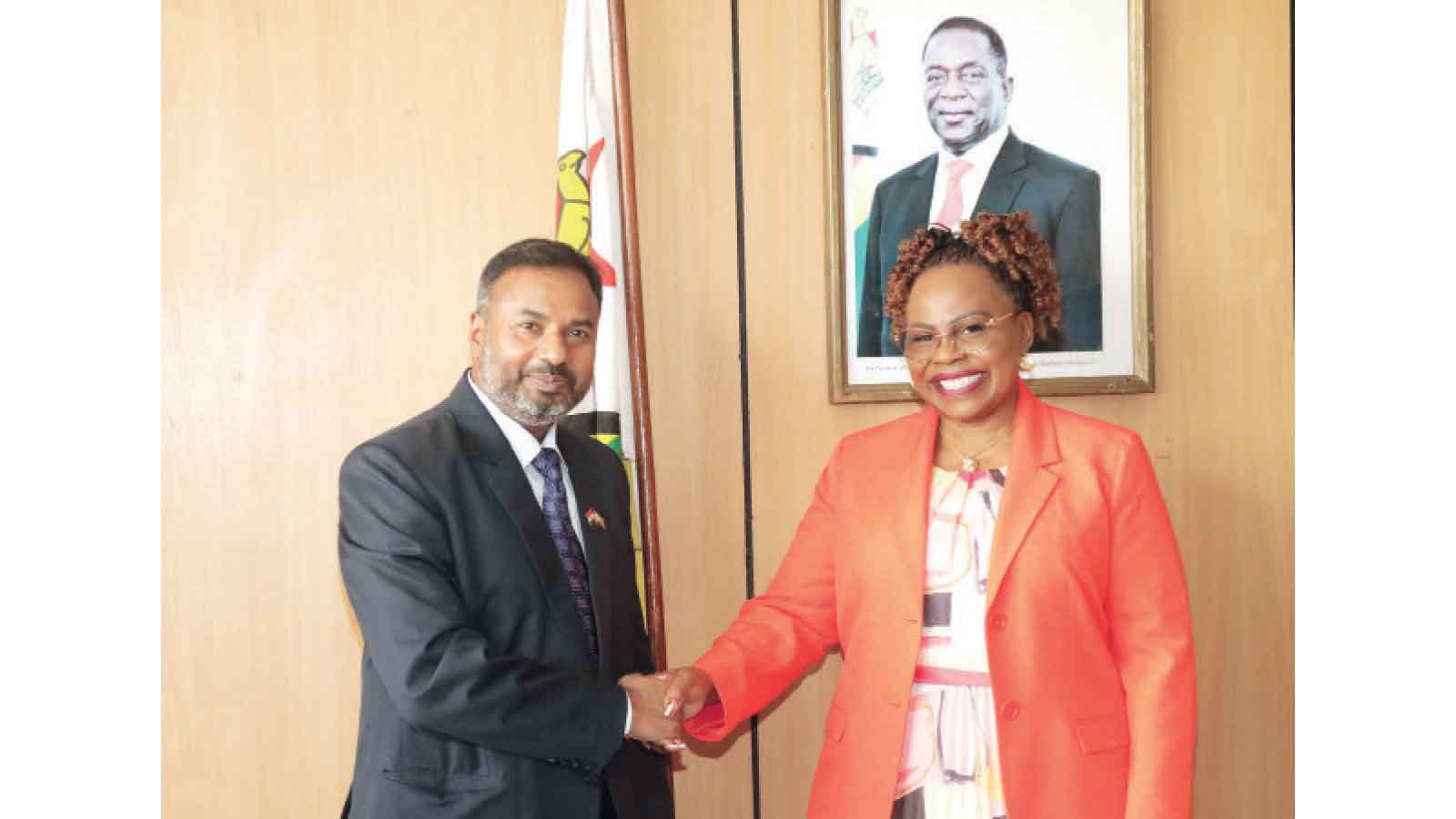
Trust Freddy
Herald Correspondent
INDIA and Zimbabwe have moved to consolidate their economic partnership, with renewed focus on integrating local small‑scale industries into global supply chains and reviving a key bilateral cooperation agreement.
The move follows a high‑level consultative meeting between Indian Ambassador to Zimbabwe, Mr Bramha Kumar, and Women Affairs, Community, Small and Medium Enterprises Development Minister, Senator Monica Mutsvangwa.
Speaking to the media after a closed‑door engagement yesterday, the two officials outlined a roadmap centred on leveraging India’s expertise in the Small and Medium Enterprise (SME) sector to drive Zimbabwe’s industrialisation and digital inclusion.
Ambassador Kumar said Zimbabwe’s economic strength, underpinned by its mineral and natural resource base, provides a solid foundation for manufacturing growth.
He stressed that increased large‑scale Indian investments should act as a catalyst for the growth of local Micro, Small and Medium Enterprises (MSMEs).
“Big companies drive the strength of MSMEs,” said Ambassador Kumar.
“We can develop a framework where those SMEs can mainstream into those investments. We also want to see how Zimbabwean SMEs can integrate with the Indian market because the Indian market is booming and growing, and we need more partners who can integrate with it.”
The proposed framework encourages joint ventures between Indian and Zimbabwean firms, with a focus on value addition.
Under this model, Zimbabwe would process raw materials locally and export finished products to the SADC region or back to India to meet rising demand.
“Indian companies can establish joint ventures with Zimbabwean firms, re‑export products, or Zimbabwe can import from India, add value locally and export to regional markets such as SADC, or even back to India,” said Ambassador Kumar.
“India is growing, and there is significant demand.”
He also identified agriculture and agro‑processing as promising sectors where Zimbabwe’s land resources could contribute to India’s food security through improved irrigation and enhanced market connectivity.
“Zimbabwe is a land‑rich country with a very favourable environment. With investment in irrigation and market linkages, Zimbabwe’s agro‑processing sector can integrate with India.
Given India’s large population, Zimbabwe can contribute meaningfully to India’s food security,” he said.
Minister Mutsvangwa said Zimbabwe was keen to learn from India’s SME model, where 72 percent of employment is driven by the MSME sector.
“India is a leader in supporting MSMEs,” she said.
“Our SMEs are developing at a very fast pace, and what we want to learn is how the Indian Government supports them, particularly in digital skills and digital financial inclusion.”
To strengthen local technical capacity, Minister Mutsvangwa proposed the establishment of a specialised training centre in Zimbabwe.
“We have discussed the provision of scholarships for ministry officials and skills training for our SMEs so they can learn from India,” she said.
“Given the appetite among SMEs to learn about value addition and beneficiation, establishing a school or career guidance centre locally could be beneficial, enabling them to understand how to add value to their products.”
She also confirmed that the Reserve Bank of Zimbabwe is already working with Indian authorities to ensure local entrepreneurs can conduct business seamlessly using modern digital platforms.
To formalise and advance these initiatives, Minister Mutsvangwa called for the revival and implementation of a Memorandum of Understanding (MoU) that was first drafted in 2019.
“We continue to move forward and would like to revive and implement the Memorandum of Understanding that we submitted in 2019,” she said.
“There is a lot we can benefit from, and we have also invited Indian companies that wish to partner with our SMEs in manufacturing, agriculture and other sectors.”