Online Reporter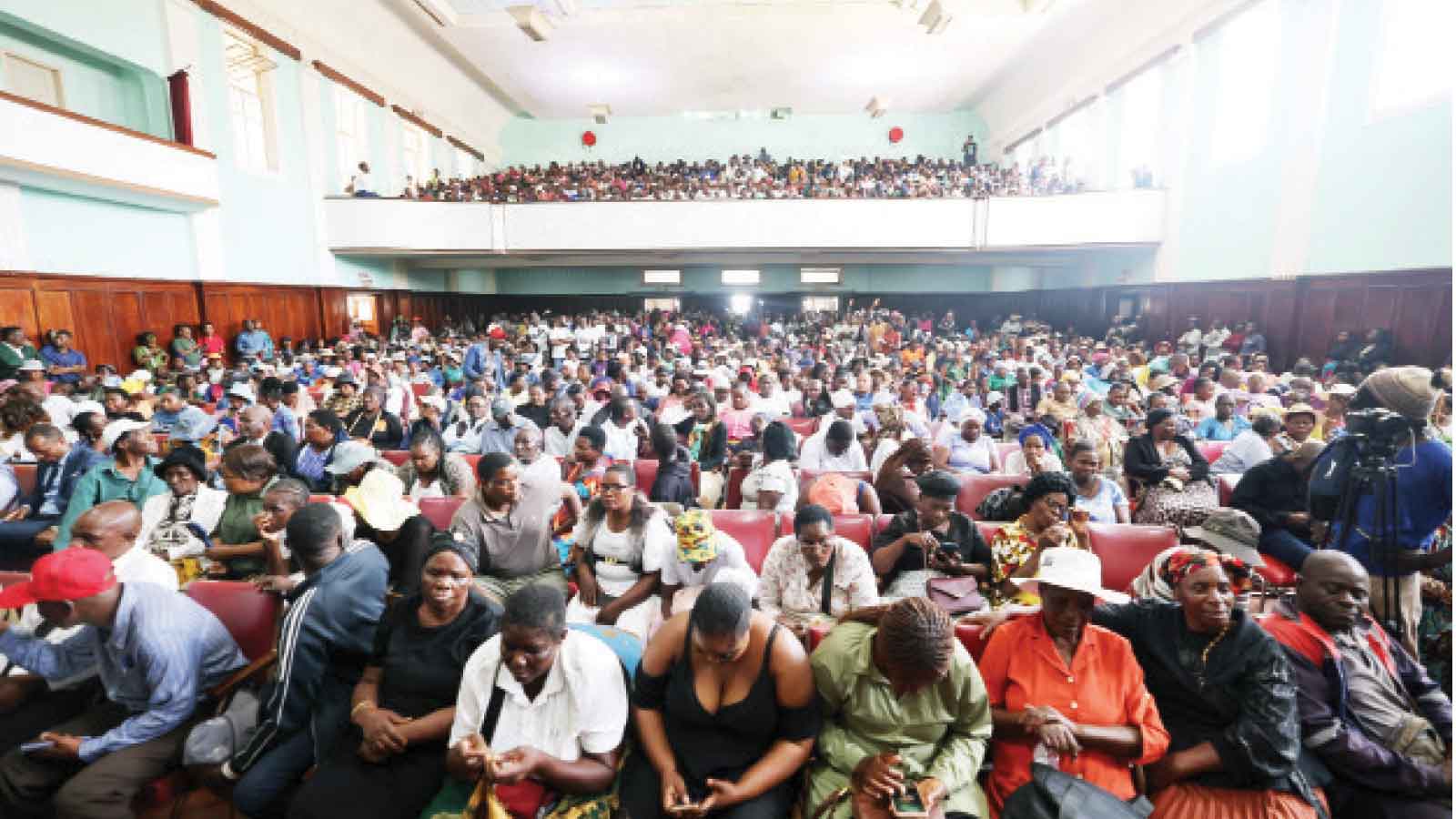
ZIMBABWE is currently witnessing a historic era of participatory democracy, where the Second Republic, under the visionary leadership of President Mnangagwa, has successfully bridged the gap between the governing and the governed.
This is most evident in the comparative success of two pivotal national processes: the nationwide public hearings for the Constitutional Amendment No. 3 Bill and the ongoing and the ongoing Gukurahundi Community Outreach Programme.
While one is legislative in nature and the other rooted in restorative justice, both processes reveal a striking convergence in public engagement, participation and national intent.
At the heart of these twin initiatives lies a common thread — the exercise of sovereign will by the people of Zimbabwe.
In both instances, citizens have turned out in their thousands, demonstrating a shared commitment to shaping the country’s governance architecture and confronting its historical realities.
The recently concluded four-day Constitutional Amendment No. 3 Bill public hearings, held from March 30 to April 2, offered a vivid illustration of this participatory ethos.
Across provinces, venues were filled to capacity, with citizens arriving early and waiting patiently for an opportunity to present their views.
The overwhelming majority expressed strong support for the proposed amendments, including provisions related to presidential term extensions, arguing that such measures would ensure policy continuity, stability and sustained developmental momentum.
This robust participation was not merely symbolic; it reflected a deeply ingrained appreciation of the link between governance and development.
For many contributors, the proposed amendments are not abstract legal adjustments but practical instruments designed to consolidate the gains of the Second Republic.
The calls for the swift passage of the Bill underscore a public desire for a governance framework that is responsive, stable, and aligned with long-term national aspirations.
In a parallel development, the Gukurahundi Outreach Programme has equally drawn unprecedented public engagement.
Traditional leaders
Spearheaded by traditional leaders across the Matabeleland region, the programme had recorded over 25 000 testimonies as of February this year, marking a monumental step towards national healing and reconciliation.
Launched officially by President Mnangagwa in July 2024, with hearings gaining full momentum in June last year, the outreach initiative represents a deliberate shift towards a home-grown solution to one of Zimbabwe’s most sensitive historical chapters.
By entrusting traditional leaders with the responsibility of conducting the hearings, the Government has anchored the process within community structures that command legitimacy, trust, and cultural resonance.
The scale and depth of participation in the Gukurahundi hearings mirror the enthusiasm witnessed during the Constitutional Amendment Bill consultations.
Communities have once again demonstrated their willingness to engage, to speak, and to contribute to processes that shape their collective future.
Importantly, the outreach programme is not merely about recounting past grievances; it is about forging a path towards closure, unity, and national cohesion.
A comparative analysis of these two processes reveals important insights into the evolving dynamics of public engagement in Zimbabwe.
Firstly, both initiatives have embraced inclusivity as a guiding principle.
Whether in legislative reform or conflict resolution, there has been a conscious effort to ensure that every voice matters.
The indication that mechanisms are being put in place to ensure all affected individuals have the opportunity to be heard further reinforces this commitment.
Secondly, the use of decentralised, community-based platforms has proven highly effective.
In the case of the Constitutional Amendment hearings, bringing the process closer to the people enhanced accessibility and participation.
Similarly, the Gukurahundi Outreach Programme’s reliance on traditional leaders has ensured that the process is not only accessible but also culturally grounded.
Thirdly, and perhaps most significantly, both processes highlight a growing public confidence in national institutions and leadership.
The willingness of citizens to engage in large numbers, to articulate their views, and to place their trust in these processes speaks volumes about the prevailing political climate under the Second Republic.
President Mnangagwa’s administration has consistently emphasised the importance of dialogue, inclusivity, and unity in nation-building.
The success of both the Constitutional Amendment Bill hearings and the Gukurahundi outreach programme can be seen as a validation of this approach.
By creating platforms for engagement and empowering communities to participate, the Government is fostering a sense of ownership and shared responsibility among citizens.
Moreover, these processes underscore the broader developmental philosophy of the Second Republic.
Governance reforms and national healing are not treated as isolated undertakings but as complementary pillars of a holistic nation-building agenda.
The pursuit of constitutional refinement goes hand in hand with efforts to address historical grievances, creating a balanced approach that recognises both the future and the past.
Public backing
The enthusiastic public backing for the Constitutional Amendment Bill, particularly the provisions aimed at ensuring leadership continuity, must also be understood within this broader context.
For many Zimbabweans, continuity is synonymous with stability, and stability is a prerequisite for development.
The visible progress in infrastructure, economic reforms, and social services under the current administration has reinforced this perception, making the case for policy consistency even more compelling.
Similarly, the Gukurahundi outreach programme is not only about closure but also about laying a firm foundation for sustainable development in affected regions.
Healing historical wounds is essential for unlocking the full potential of communities, fostering trust, and promoting inclusive growth.
It is also instructive to note that both processes have unfolded peacefully and in an orderly manner.
The disciplined conduct of participants, coupled with the structured nature of the hearings, reflects a mature and responsible citizenry.
This orderly engagement further strengthens the credibility of the outcomes and enhances the legitimacy of the processes.
As Zimbabwe continues on its developmental trajectory, the lessons from these twin engagements are clear.
Meaningful progress is rooted in inclusive dialogue, community participation, and a shared vision for the future.
The tale of these two hearings is, therefore, not just a story of public consultations; it is a testament to a nation actively shaping its destiny.
In the final analysis, the convergence of these processes points to a deeper transformation within Zimbabwe’s political landscape.
The citizen is no longer a passive observer but an active participant in governance and national healing.
This shift towards participatory democracy, underpinned by strong leadership and clear vision, is a hallmark of the Second Republic.
As the country moves forward, the momentum generated by these engagements must be sustained.
The voices captured during the Constitutional Amendment hearings and the testimonies recorded under the Gukurahundi outreach programme should translate into tangible outcomes that reflect the aspirations of the people.
Ultimately, the success of these initiatives reinforces a fundamental truth: that Zimbabwe’s greatest strength lies in the collective will of its people.
When given the platform to engage, Zimbabweans have demonstrated their readiness to contribute, to reconcile, and to build a united and prosperous nation.
The tale of these two hearings is, therefore, a powerful narrative of engagement, unity and progress — a narrative that continues to unfold as Zimbabwe charts its course towards a brighter future