

 admin
admin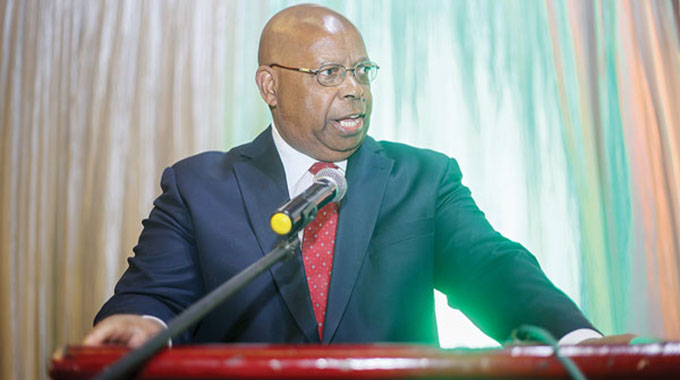
Farirai Machivenyika
Senior Reporter
Indigenous languages are pivotal in defining Africans’ humanity and cultural heritage, Speaker of the National Assembly Advocate Jacob Mudenda said yesterday.
Speaking at the Midlands State University during celebrations of the National Languages Week held in the context of commemorating also the International Mother Languages Day, he said: “Indeed, our languages are the epicentre of defining our humanity, personhood and our celebrated cultural heritage.
“That is why several international, continental and regional protocols and agreements affirm the sacrosanct status of indigenous languages,” he said.
Some of the protocols and agreements he cited include the United Nations Declaration on the Rights of Indigenous Peoples, the UNESCO Universal Declaration on Cultural Diversity which espouses the respect for multilingualism and ethnolinguistic pluralism, and the UNDP on Indigenous Peoples Policy among others.
He added that to buttress the UN protocols, in 1997, Zimbabwe hosted the UNESCO Conference in collaboration with the Intergovernmental Conference on Language Policies in Africa (ICLPA), which resulted in the Harare Declaration.
The declaration affirms that: each country should formulate an inclusive language policy; guidelines for language policy formulation should be sanctioned by legislative action for ease of legal enforceability; every country’s policy framework should be flexible enough to allow each community to use its language side-by-side with other languages while at the same time giving provision for multilingualism; and that a language policy formulating and monitoring body or institution should be established within each country.
“Irrefutably, there is an inextricable link between our African languages and the sustainable food security, cultural and socio-economic development for the Africa we want,” he said.”In this regard, Africa must extol the linguistic usage and application of our African languages because they are the life blood of communicating information and ideas as well as being the vector that defines African humanity and its cultural heritage in the humanity and its cultural heritage in the matrix of sustainable food sovereignty in the quest for Africa’s socio-economic development as ensconced on the cultural lived experience of Africans.
“Today, global economies are knowledge driven. The driver of that knowledge is language. It is, therefore, axiomatic that African languages be employed in advancing new technologies, mechanisation and appropriate farming practices which enhance production and productivity in order to achieve food security in Africa anchored on the people’s respected customs and beliefs regarding the spirituality of land tenure, the African cultures’ reverence of land husbandry.”
Advocate Mudenda said the rights could only be appreciated if the Constitutions were written in native languages adding that it was for that reason that Government deemed it proper to translate the Constitution into all official languages, including the 14 indigenous languages, courtesy of the MSU National Language Institute.



 Online Reporter