Chronicle Editor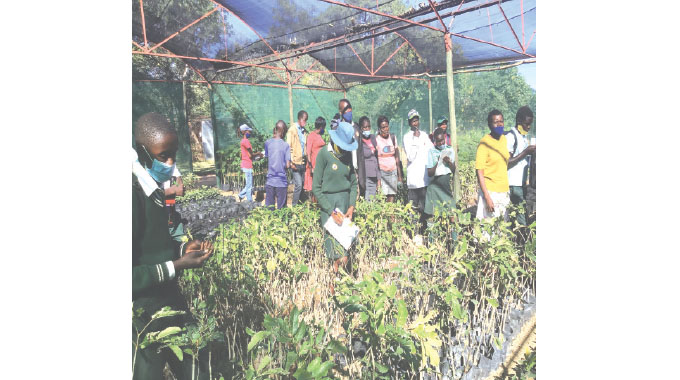
Mahlabezulu Zulu
INDIGENOUS trees play a vital role in our lives.
Some of them can be processed for medicinal purposes or grown as part of agro-forestry practices because of their benefits to the soil as well as to us. Trees are also habitats for some insects like bees and mopani worms (amacimbi) which are a delicacy. Depending on the characteristics and texture of the wood, timber from some of the trees is used for construction especially pole and dagga houses in most communal areas.
Trees are part of nature — it is sometimes noble to ask ourselves questions like; are we living in harmony with this part of wildlife, which has less interaction with us probably causing conflict with human beings? In our communities are we realising that some tree species are fast disappearing? While some people in our communities are concerned about their survival, others have a different perception as far as their survival is concerned and some indicators of disappearance of certain tree species in some communities has become empirical.
Anyone observant about wildlife, trees to be specific, will agree that you can notice the dwindling in numbers of some tree species mostly used in the community.
As my career is based on wildlife conservation, one community leader from Cross Dete, Hwange District asked this question during our discussion on the plight of our natural resources.
Mr Michael Ncube, asked, “From the other parts of our district you usually visit, are there any Large False Mopane Mtshibi trees? These are becoming extinct because of high demand. Here we have a lot of sjambok tree (isihaqa) especially in Lupote and Jwape area.”
As a conservationist, I was happy to be asked this question by Mr Ncube and his comment later.
It was an eye-opener as well as an indicator that Large False Mopane Gibortia Colesperam (umtshibi tree) is now rare in our communities because of its multiple uses. It is good to pay attention to such indicators we ‘‘pick’’ from our conversations about the disappearance of certain tree species from our communities.
If one takes a walk through the bushes in most of our communities, one will surely realise that some tree species have more axe bruises or scars as compared to others, or more stumps of the same tree species which resulted from its cutting down is an indicator that the use of that tree is more prevalent within that community hence the need to conserve it.
Those in the wildlife conservation arena will agree with me that disappearance of certain tree species starts at community level and spreads to neighbouring communities like a contagious disease as community members scramble for the same valuable tree as it is fast disappearing and eventually leading it to be an endangered specie.
Like wild animals, a tree specie can be classified as an endangered specie after a thorough research and assessment and is deduced that only a few of those are left in the wild. Trees like pepper bark (warbugia salutaris, muranga) has been put in this category because of its unique growth environment, that is, an ecotone, and its multi-purpose use as medicine and so on.
If we pay attention to such indicators, we would come up with a very vibrant and effective reafforestation programme to replace the most valuable tree species which are fast disappearing. Despite the importance of these trees to us, less care and concern has been focused on saving this important natural resource. Some trees have lived up to 65 years but have met their fate when bees are sighted flying around a hole in their trunk, leading to someone seeing a “good harvest” of honey from there. He then chops down the tree only to get a ‘‘cupful of honey’’. The chopped tree will be left, since the wood part might be of no economic value.
It’s good that Zimbabwe has a national event which addresses deforestation — The National Tree Planting Day which is held on the first Saturday of December each year. It’s good that reafforestation and afforestation activities take place during this important event. For a successful National Tree Planting Day one will always seek answers to questions like:
How many trees planted survive up to the following year? Are we not planting tree seedlings in the same planting stations at certain sites every year, making this a mere fashion statement since only less than a quarter of tree seedlings survive? Considering the adverse impact of climate change, is the first Saturday of each December still applicable to be the National Tree Planting Day? I’m basing my last question on the fact that most tree seedlings planted on this national event are taken to rely on natural rains on their initial stages of establishment, but because of the rainfall pattern changes caused by climate change most tree seedlings planted on the day and are not watered thereafter have failed.
I would advocate that consideration be made on the tree species to be planted on National Tree Planting Day. For example, if it’s assessed that Tamarindi Tamarindus Indica (ubusika) tree numbers have dwindled in Siasundu in Binga because of human interference, more of the tree seedlings should be planted in that communal area during this national event. This would apply to other localities across the country as well.
Also critical is the need to provide communities with sound tree growing and caring education programmes and concerted effort by different stakeholders to change the mindset towards conservation and preservation of natural resources-trees — through a well designed conservation education programme. In this way, a 65-year-old tree can be saved from dying over only a cupful of honey!
*Mahlabezulu Zulu is a conservationist who has worked for various wildlife research, and conservation organizations in Hwange National Park and Fuller Forestry in Victoria Falls. He can be contacted on 0713269827/0776196171 or [email protected]


 Online Reporter