admin
admin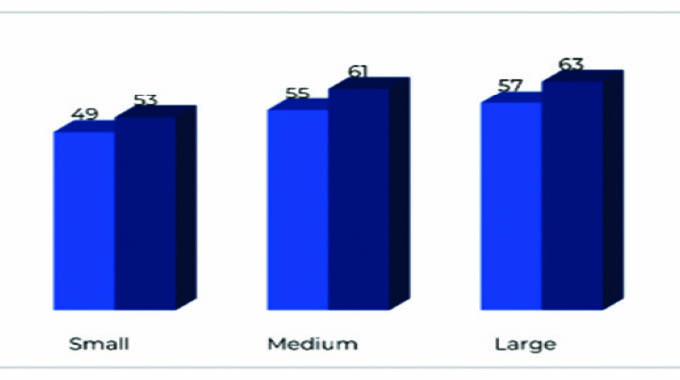
Tapiwanashe Mangwiro
Senior Business Reporter
The manufacturing sector is expected to register significant recovery, with capacity utilisation projected to grow from an average of 52,1 percent in 2023 to over 55 percent by 2025, according to Industry and Commerce Minister Mangaliso Ndlovu.
The projected rebound comes after the Government rolled out several targeted interventions to improve industrial performance and reduce dependence on imports.
Key measures expected to drive this growth include a retooling funding facility, stable macroeconomic climate, reforms to enhance the ease of doing business, and an efficient willing buyer-willing seller foreign exchange market.
These initiatives are expected to boost production, improve competitiveness, and ease the country’s import bill, particularly for groceries.
Minister Ndlovu recently expressed confidence in the Government’s strategy.
“The Government is reaffirming commitment to support local industry and this is emanating from our thrust to consolidate the current gains and we shall do more to enhance growth riding on current strides and taking stock of progress through monitoring and evaluation,” he said.
According to the 2023 manufacturing capacity utilisation survey results, on average, output generally remained the same, as it took a slight decrease of about 0,1 percent compared to 2023.
However, a breakdown by sub-sector shows that there were mixed developments, with some registering growth while others registered a decline in output.
Some sub-sectors registered an average decline in output in 2023 compared to 2022, with the furniture, paper and leather sub-sectors registering the largest decline in output at 11 percent, 8 percent and about 6,5 percent, respectively.
Challenges cited by respondents include high production costs, making them uncompetitive, including high cost of production driven by electricity charges and availability, taxation, high labour and compliance costs.
Industrial players also cited inability to raise adequate financing for investment and working capital required to compete, use of aged equipment and technology due to lack of capital, lack of relevant information technology skills needed to reduce operation costs, unfavourable regulatory environment that is restrictive and cumbersome, unavailability of forex and credit terms at competitive rates as well as challenging general state of the economic environment as compared to regional countries like South Africa.
Economist Dr Prosper Chitambara believes these reforms are a step in the right direction but warns that consistent implementation will be critical.
“While the Government has put forward commendable policies, the success of these measures depends on how effectively they are executed.
“Manufacturing is a backbone of economic growth, and its recovery could have ripple effects across other sectors,” the minister noted.
The expected growth in manufacturing capacity comes on the back of improved energy availability, a critical enabler for industrial production.
According to recent statistics from the energy sector, the electricity supply has stabilised, with a 15 percent increase in output compared to last year. This improvement has already benefited manufacturing, which erratic power supplies have historically plagued.
Tinevimbo Shava, an economist, highlighted the importance of these developments.
“Energy stability, combined with access to affordable financing, is creating a conducive environment for manufacturers to scale up production.
“We are seeing more companies taking advantage of the retooling facility to modernise operations, which will boost output and competitiveness,” he said.
The anticipated growth in manufacturing is expected to yield broader economic benefits.
By increasing production, the sector could significantly reduce the country’s reliance on imported goods, saving much-needed foreign currency and creating jobs.
“A thriving manufacturing sector doesn’t just contribute to GDP; it creates a multiplier effect across the economy,” added Dr Chitambara.
As Zimbabwe targets a 55 percent capacity utilisation rate by 2025, stakeholders are optimistic about the sector’s potential to drive economic growth.
However, sustained momentum will require ongoing collaboration between the government, private sector and financial institutions.
With the right support, manufacturing could once again become a cornerstone of the nation’s economy.



 Online Reporter