Online Reporter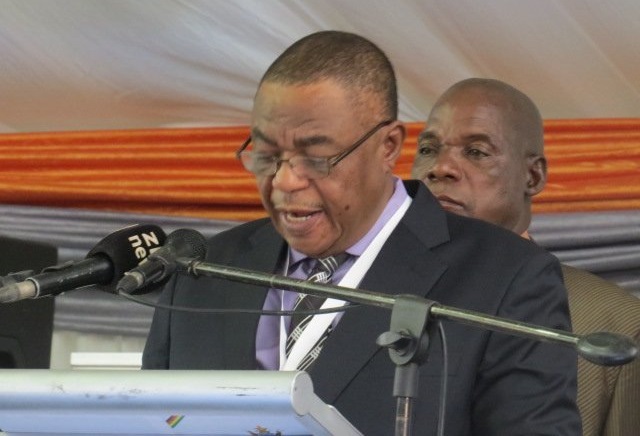
Nqobile Bhebhe, Zimpapers Business Hub
ZIMBABWE’S push for economic transformation is firmly rooted in the establishment of a robust industrial base, one that fosters sustainable and inclusive growth, Vice-President Constantino Chiwenga said yesterday.
Addressing delegates at the Zimbabwe International Trade Fair (ZITF) 2025 International Business Conference (IBC), held under the theme “Revitalising Industrialisation for Zimbabwe’s Economic Resurgence”, VP Chiwenga underscored the central role of industrialisation in achieving the country’s vision of becoming an upper-middle-income economy by 2030.
“Our collective ambition to transform the economy hinges on building a resilient and diversified industrial base. History has shown that no nation has achieved high-income status without first establishing a strong, competitive manufacturing sector,” he said.
The Vice-President said the Second Republic had made notable progress in promoting industrialisation through the National Development Strategy 1 (NDS1), which has significantly contributed to economic recovery and macroeconomic stability.

“As we now transition into the implementation of National Development Strategy 2 (NDS2), our focus must decisively shift from low-value, low-technology manufacturing to high-value, technology-intensive, and knowledge-driven production systems,” he said.
This strategic shift is being guided by key policy documents, including the Zimbabwe National Industrial Development Policy (ZNIDP) 2024-2030 and the Zimbabwe Industrialisation and Resilience Growth Plan (ZIRGP).
The ZIRGP (2024-2025) acts as a transitional framework aligning industrial policy with NDS2 (2026-2030), following the conclusion of the National Industrial Development Policy (2019-2023) in December last year.
Designed to address the immediate challenges facing the manufacturing and commercial sectors, the plan lays the groundwork for accelerated industrial growth in line with Zimbabwe’s Vision 2030 goals. “These frameworks provide a clear roadmap for enhancing value addition, increasing industrial output, and strengthening cross-sectoral linkages,” said VP Chiwenga.
The IBC provides a platform for Government leaders, policymakers, and industry experts to engage in high-level dialogue on economic priorities, with a strong focus on industrialisation as a driver of growth and competitiveness.

VP Chiwenga highlighted President Mnangagwa’s call for a whole-of-government and multi-sectoral approach, urging collaboration across government departments, industry, and academia.
“This integrated approach is essential for overcoming current economic challenges and fostering sustainable industrial growth,” he noted.
He also stressed the importance of innovation and called on the private sector to deepen partnerships with academic and research institutions to commercialise science-based solutions.
“Zimbabwe must learn from economies that have advanced through robust partnerships between universities and industry. In today’s fast-evolving global landscape, the demand for home-grown solutions has never been more urgent,” he said.
To this end, the Government has prioritised re-industrialisation by strengthening key value chains in manufacturing, mining, agriculture, and infrastructure.

“In the manufacturing sector, average capacity utilisation has increased to 50 percent, up from 36 percent in 2019.
While this is a significant improvement, Government remains committed to advancing policies that support import substitution, research and development, commercialisation of research outputs, local content development, and the suppression of counterfeit goods.
“These policies aim to deepen value chain integration and enhance industrial output. Furthermore, the establishment of a revolving industrial development fund will provide essential support to distressed companies. This initiative is expected to catalyse investment in sectors such as agro-processing, steel manufacturing, and pharmaceuticals,” said VP Chiwenga.
Infrastructure, especially energy, remains a cornerstone of Zimbabwe’s industrial strategy, he said. The Government is actively diversifying the national energy mix by integrating solar, wind, gas, nuclear, and waste-to-energy solutions alongside hydro and thermal sources. VP Chiwenga said Independent Power Producers (IPPs), including captive power projects by mining firms, would play a pivotal role in improving energy security, with several projects expected to come online in the second quarter of the year.
He cited major developments such as the 20MW water heat recovery cogeneration power plant by Dinson Iron and Steel in Manhize, and a 240MW thermal power project powered by coke oven gas by Hwange Zhong Zhing Heli.
“We also commend the recently commissioned Palm River Metallurgy Company in Beitbridge, which stands as a model of sustainable mining practices, low greenhouse gas emissions, minimal waste production, and energy self-sufficiency through recycling,” he said.
VP Chiwenga encouraged other energy sector stakeholders to adopt similar technologies to strengthen energy security and support economic growth.
He also commended the efforts of industrial players and highlighted the importance of aligning Zimbabwe’s industrialisation ambitions with the African Continental Free Trade Area (AfCFTA).
“By scaling up industrial capacity, Zimbabwe can position itself as a key player in the continental value chain, enhance global competitiveness, and drive inclusive economic growth,” he said.