admin
admin
Michael Makuza, Business Reporter
GOVERNMENT has urged local businesses to work together and invest in improving their production efficiencies to reduce harmful gaseous emissions as part of measures to enhance national climate change mitigation and adaptation.
This comes after climate experts and lobby organizations have stated that climate change can be mitigated by pushing for a competitive environment whereby companies embrace innovation to produce environmentally friendly products.
The Deputy Director of Climate Change Management in the Ministry of Environment, Climate, Tourism and Hospitality Industry, Mr Lovemore Dhoba, said local industries should improve their production lines to ensure efficiencies in lowering carbon emissions.
“Industries must improve production lines to ensure efficiencies in lowering down carbon emissions, adopt energy use efficient policies and strategies, invest in water use efficiency and also utilise green energy like solar and biogas,” said Mr Dhoba in response to written questions.
“There is also a need for external support especially from developed countries to piggyback industry in its shift towards cleaner production lines.”
Zimbabwe has implemented several measures to mitigate climate change effects and is committed to seeing greenhouse gas emissions curbed to 44,7 million tonnes of carbon dioxide by 2030.
Already the Government is implementing various programmes that include extensive dam construction projects towards climate change adaptation and mitigation for sustainable food and nutrition security. Further, Zimbabwe is expanding the production and use of renewable energy.
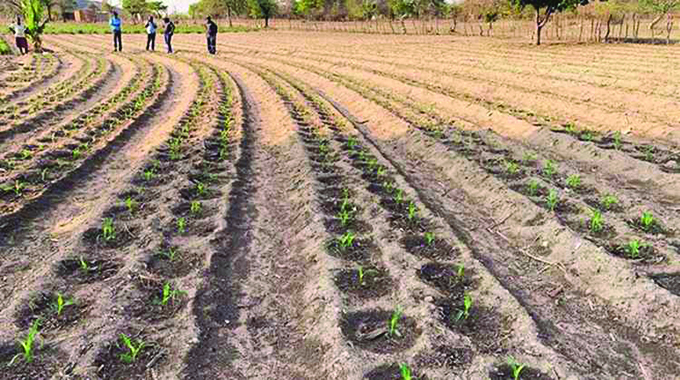
The country has also adopted climate-smart agriculture through the implementation of the Pfumvudza/Intwasa programme, which has been widely embraced by small-scale farmers.
Industries can also utilise solar energy, which is touted as one of the most effective clean energies and works well in reducing carbon usage while cutting energy bills.
The use of solar energy has the potential to turn the country’s electricity shortage into an opportunity to modernise the power sector and build a low-carbon economy that will fuel growth for decades to come.
Progressive development in using solar energy calls for investment in solar farms and other relatively clean energy initiatives so that it becomes a shared vision and a beginning in building a low-carbon economy, experts say.
Mr Dhoba said the Government, through its Revised Nationally Determined Contribution, has a lined-up programme to build the capacity of industry and other sectors in climate change mitigation.
He said the Revised Nationally Determined Contributions are set to increase knowledge and awareness of climate change across sectors.



 Online Reporter