dyton mupawaenda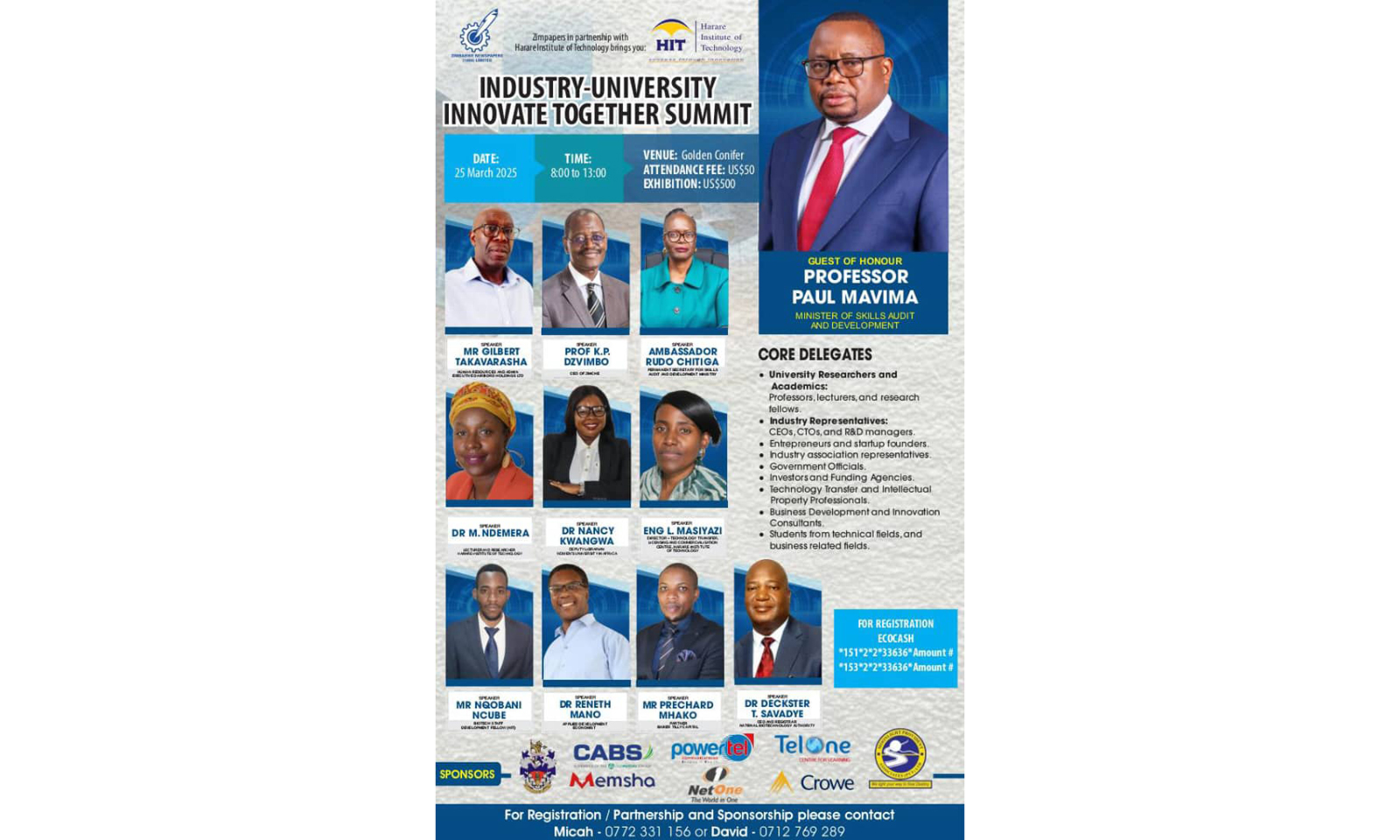
Today Zimpapers has brought industry players, thought leaders and higher learning institutions under one room to facilitate a discussion around innovation.
As the morning sun ushers in the new day, we kick off the Industry-University Innovate Together Summit.
The conference is running under the theme ‘Bridging the innovation gap: A realistic assessment and a collaborative blueprint for Zimbabwe’s Future’.
Our Reporter Anesu January is at Golden Conifer in Harare and will provide live updates of the proceedings.
Great attendance for summit
The conference room is packed with academia and industry players, and among them we have:
Guest of honour Professor Paul Mavima, Minister of Skills Audit and Development

Professor Paul Mavima, Minister of Skills Audit and Development (right)
Ambassador Rudo Chituga, Permanent Secretary in the Ministry of Skills Audit and Development
Professor Fanuel Tagwira, Permanent Secretary in the Ministry of Higher and Tertiary Education
Gilbert Takavarasha the Human Resources and Admin Executive at Dairibord Holdings Limited
Engineer Masiyazi from the Harare Institute of Technology
Warm welcome for guests
The Zimpapers Business Editor Herbert Zharare welcomed guests at the summit.

Zimpapers Business Editor Herbert Zharare
He said the Industry-University Innovate Together Summit is going to bridge the innovation gap through ideas that will be exchanged during the event.
Keys speakers include guest of honour, the Minister of Skills Audit and Development, Professor Paul Mavhima, Ambassador Rudo Chitiga, Permanent Secretary in the Ministry of Skills Audit and Development, Mr Gilbert Takavarasha from Dairibord Holdings Limited and Professor
Kuzvinetsa Patrick Dzvimbo, the chief executive officer of the Zimbabwe Council for Higher Education (ZIMCHE), among others.
Prof Mavima calls for collaboration
The Minister of Skills Audit and Development, Professor Paul Mavima, who is the guest of honour at the summit, has challenged the private sector and tertiary institutions to collaborate in crafting education and skills training curricula to produce graduates that conform to industry expectations.

Minister Mavima
‘Invest in research’
Speaking at the same occasion, Permanent Secretary in the Ministry of Skills Audit and Development, Ambassador Rudo Chitiga said tertiary institutions and industry need to invest in research and development.
“There is a need for agility in changing curriculum. We also need constant dialogue between stakeholders,” she said.
Skills Ministry’s ten-point plan for skills development
“As a ministry, we have a ten-point plan for skills development,” said Ambassador Chitiga.
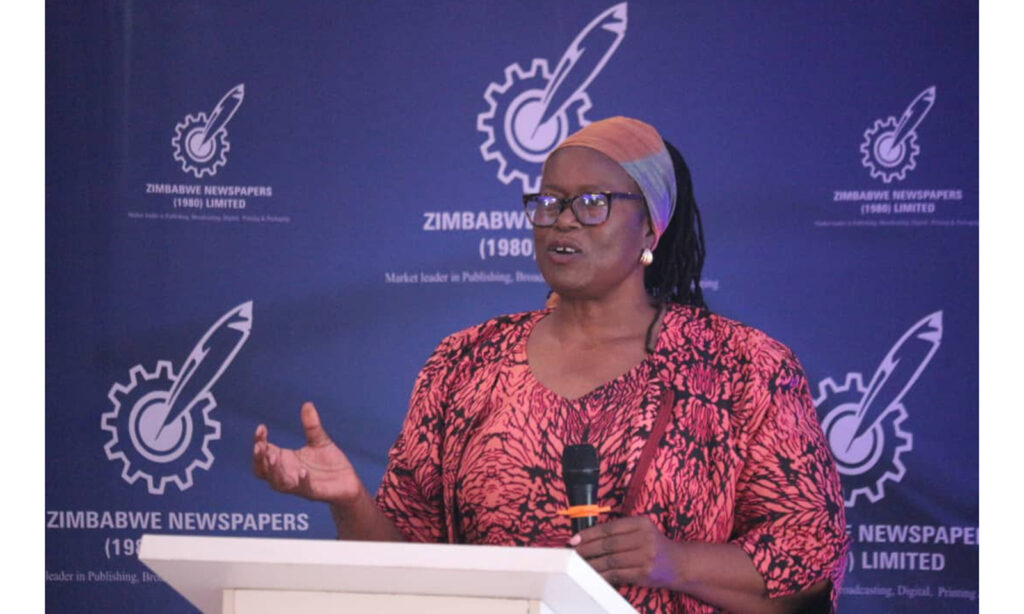
Permanent Secretary in the Ministry of Skills Audit and Development, Ambassador Rudo Chitiga
These are:
Institutionalised platforms for skills development
Responsiveness of curricula to dynamic industrial skills needs
Collaboration in research and development
Mordenisation of skills training institutions
Private sector resource mobilisation for skills development
Standardisation of industrial attachment and internships (working through learning)
Reskilling of trainers in learning institutions
Promote centres of excellence
Co-development of curricula/degree modules
Invest in employability skills and lifelong learning
She concluded by saying, “As a ministry, it is our co-business to see the industry collaborating with academia in enabling skills to our students.”

Delegates follow proceedings at the summit.
‘Production and efficiency key in manufacturing sector’
Mr Tonderai Mujoma, who is representing the human resources and administration executive of Dairibord Holdings Limited, Mr Gilbert Takavarasha, said boosting production and efficiency in the manufacturing sector is key to making the industry grow.

Mr Tonderai Mujoma
“As the industry, we expect students to embrace Artificial Intelligence. They should be able to navigate the Zimbabwean environment and have innovation and entrepreneurship capabilities.
“Our graduates should be ready to lead teams and ensure good performance,” he said.

Delegates taking notes.
‘Start-ups drive innovation’
Mr Prechard Mhako from Baker Tilly Capital, a partner for the Summit, spoke of the role of start-ups in driving innovation.
He said the key principle is to strengthen open collaboration and cross-pollination.

Mr Prechard Mhako
“We need to create ecosystems that help us improve innovation and a better way of solving problems.
“There is need for partnerships to help build collaborations that help in building supportive ecosystems.”
HIT takes pride in innovations
Harare Institute of Technology (HIT) representative, Engineer Lodrina Masiyazi said the institution’s mandate is to develop, incubate, transfer, and commercialise technology for Zimbabwe’s rapid industrialisation.
“As an institution, we use a model called BOOTSTRAPPING, where we say let’s work with the resources we have,” she said.

Engineer Masiyazi
“This model has helped the institution to be innovative, and we have been doing well, and our youngest innovator was only 14 years old.
Engineer Masiyazi said as an institution, they want their students to feel that they are more than a university, adding that they are staying ahead of the times through innovation.
She went on to highlight their innovations.
HIT offers industry-based degrees.
They are also planning to expand beyond the country’s borders.
‘Zimbabwe can take a leaf from other nations’
Dr Melody Ndemera from the Harare Institute of Technology spoke on successful international university-industry partnerships.
She said universities are the catalyst for the development of local innovation ecosystems, through collaboration and partnerships with the Government and public sector.

Dr Ndemera
“In the United States of America, the academia, the private sector, and the government have collaborated to create innovation places and initiatives like the Silicon Valley and Kendal Square, where many people are coming up with innovative ideas,” she said.
“Tata Motors and Indian Institute of Technology in Bombay, India, have collaborated in a partnership, which encourages innovation among students.”
Integrated framework required
Dr Nancy Kwangwa, a representative from the Women’s University in Africa, spoke about an integrated framework for effective knowledge transfer.
She said she is grateful to Zimpapers Group for coming up with this event, which helps in communicating with the public sector and the Government on the transfer framework.

Dr Kwangwa
Dr Kwangwa said that the university-industry knowledge transfer framework helps in collaborative quantity research, innovation, and the country’s development.
“We need transfer mechanism metrics that help to measure the performance of our interactions with the public sector and the Government to have better results,” she said.
A student’s view on fostering collaboration
Mr Nqobani Ncube, one of those attending, gave a student’s view on the strategies of fostering collaboration.
He said there is need for international business practices in fostering technology transfer policies.

Mr Nqobani Ncube
“We need investors and Small to Medium Enterprises (SMEs) to approach our innovation hubs to help build and improve products and services,” he said.
He said industry is relying on imported innovations when they can partner with academia and promote the generation of great ideas locally.
“The Government has to help foster collaboration between industry and academia. This will ensure consistent funding to innovative ideas,” he said.



 Online Reporter