Online Reporter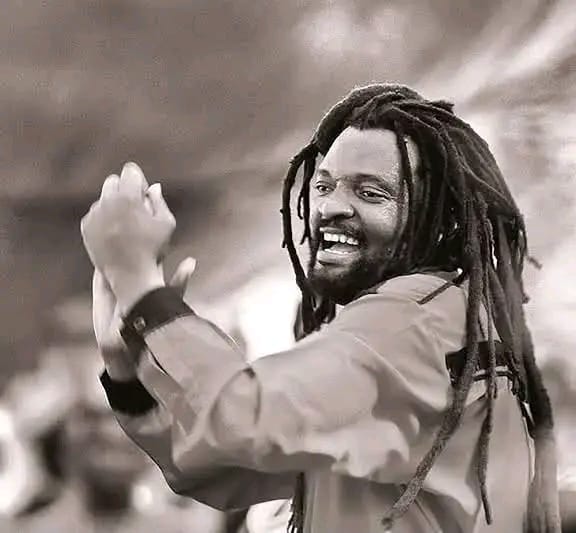
Nodumo Moyo [email protected]
THE enduring legacy of legendary South African reggae icon Lucky Philip Dube has taken on a new dimension with the official opening of the Lucky Dube School of Performing Arts in his hometown of Ermelo, Mpumalanga, on Monday – a fitting tribute that coincided with what would have been his 62nd birthday.

The specialised institution, officially handed over by Mpumalanga Member of the Executive Council (MEC) for Education Cathy Dlamini, has been established by the Mpumalanga Department of Education to nurture the next generation of creative talent while honouring one of Africa’s greatest musical exports.
Named after the internationally acclaimed musician, who was born in Ermelo on August 3, 1964, the school is expected to become a centre of excellence for performing arts education, equipping learners with skills in music, dance, drama and technical disciplines such as sound engineering, stage lighting and event production.
The initiative forms part of the province’s broader strategy to strengthen arts education and create sustainable career pathways within South Africa’s growing creative and cultural industries.

Speaking during the handover ceremony, Dlamini said the institution would play a key role in identifying and developing young artistic talent.
“The Lucky Dube School for Performing Arts will be one of the schools dedicated to unearth, nurture and leverage the talents of our learners more professionally in line with the emerging world trends in music and arts,” she said.
The school stands as a lasting tribute to a musician whose influence transcended borders. Rising from humble beginnings in Ermelo, Dube became one of Africa’s most celebrated reggae artists, releasing 22 albums during a career spanning more than two decades.

His powerful catalogue, featuring classics such as Prisoner, Different Colours/One People, Remember Me, House of Exile and It’s Not Easy, tackled themes of racism, poverty, inequality, justice, peace and human rights, earning him an international following and cementing his place among the continent’s greatest musical storytellers.
Dube also enjoyed an immense following in Zimbabwe, where his music became a staple on radio stations and at live performances. He performed in the country on several occasions, drawing thousands of fans, while his socially conscious message inspired generations of Zimbabwean reggae musicians and music lovers. Nearly two decades after his death, his songs continue to receive widespread airplay and remain as relevant today as when they were first released.
His musical legacy has continued through the Lucky Dube Band, led by his son, Thokozani “TK” Dube, who has taken his father’s music to audiences across the globe. In recent months, the band has performed in Seychelles, headlining concerts on the islands of Mahé and Praslin, reaffirming the timeless appeal of Lucky Dube’s music and message.
Although Dube’s life was tragically cut short in October 2007 when he was killed during a hijacking in Johannesburg at the age of 43, his influence has continued to grow. His songs remain symbols of hope, unity and social justice for audiences across Africa and beyond.