Online Reporter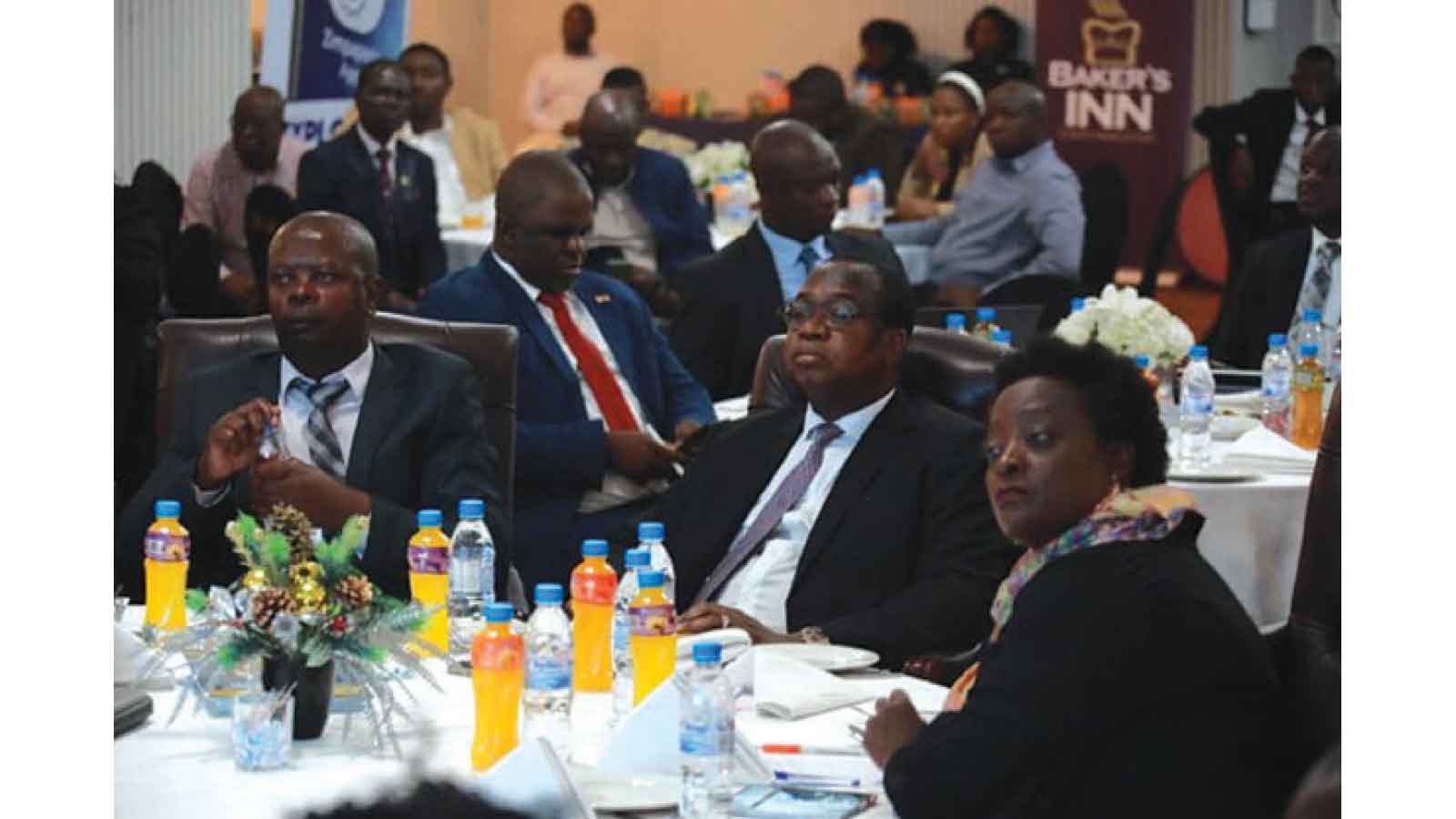
Judith Phiri
Zimpapers Business Hub
INDUSTRY players have called on the Government to allocate more funding towards the manufacturing sector, taking into account the current state of industry and the programmes needed for the sector, as well as industrial expansion.
Zimbabwe’s manufacturing sector is experiencing a significant resurgence, becoming the largest contributor to the gross domestic product (GDP) in 2024 (15,3 percent), driven by Government policies, value addition, and new investments. Though it still faces challenges like energy costs, financing, and declining capacity utilisation in some areas.
Speaking at the oversubscribed 2026 National Budget Breakfast Meeting in Bulawayo on Monday, industrialist Dr Busisa Moyo, who is also the United Refineries Limited (URL) managing director as well as chairman for ZIDA and ZITF Company, said based on the 2026 Budget, allocation to industry seems very small.
“Allocation to industry seems very small given where we are and the programmes needed for the manufacturing sector and for industrial expansion. We encourage a much healthier figure in future budgets. From the budget one can see manufacturing growth slowing down slightly; the quality of manufacturing-led growth is important.
Neighbouring countries are putting a lot of emphasis on industry and we certainly do not want to be left behind,” said Dr Moyo.
On lending to the manufacturing sector, he said domestic credit to the private sector in India was plus 50 percent of GDP, while in Zimbabwe it was a circa five to eight percent (US$2,5 billion).
Dr Moyo said the foreign direct investment (FDI) was at US$3,2 billion according to ZIDA, and they were still financing at total of circa 12 to 15 percent of private sector needs. He added that for higher GDP growth, incentives, FDI, and private sector credit of US$12,5–15 billion will be needed to see double-digit GDP and capture the investment backlog.
He added: “We can see the growth of the manufacturing sector is not really the one pulling our economy up like mining and agriculture, among others, are doing. We have joined the six percent club, a noteworthy achievement for economic growth which is not a walk in the park. I believe our manufacturing sector should be the one leading growth.”
Dr Moyo said primary production was very variable as the standard deviation of variability of earnings from primary production was very high.
He said focused banking on manufacturing and industry will be important going forward, with appropriately crafted funding with the right tenor, structure, and at the right cost.
“Collateral covenants to be on equipment, as well as pension fund and Government support through the Industrial Development Corporation of Zimbabwe (IDC) or other means, may be key.
“On rekindling industrialisation in Zimbabwe, there should be industrialisation for provision of basics (food, clothing, shelter) (market-based) and value addition to primary production output (resource-based).“As well as capitalising on markets such as the African Continental Free Trade Area (AfCFTA), China, Europe, and the Americas.
We need to also tackle the legacy of well-situated factories (brownfield). Our policy mix has to continue to look at how to incentivise these areas and build on our current advantages to re-industrialise,” he said.
In an interview on the sidelines of the event, Confederation of Zimbabwe Industries (CZI) Matabeleland Chapter president, Mr Stephen Ncube, said as industrialists they see potential in engagement with fiscal authorities.
“We need to air out our expectations as industry, so this event provided businesses, investors, and analysts with a critical platform to gain deeper insights into policy measures contained in the 2026 National Budget.
“We are happy that the manufacturing sector is growing by 4,2 percent, but there is potential to grow it more with more incentives for the sector. Agriculture and mining are doing well, so we wish for the same thing to be done also for manufacturing,” he said.
He, however, said for industry in Bulawayo there were legacy issues that were affecting business growth. Mr Ncube said the geo-economy of Bulawayo had issues affecting industry that needed to be addressed in the budget as well.
“This will assist in terms of resuscitating industry and promoting investment into the city. We have seen quite a lot of development happening in other cities. It is within our expectation that the same can be done here in Bulawayo.”
Bulawayo-based economist and academic, Mr Stevenson Dlamini, said a study was critical to determine the clogs or cobs that were impeding the growth of the manufacturing sector, which was primarily housed in Bulawayo.
“The aim of the study will be to determine all the cost barriers which are impeding the growth and re-industrialisation of Bulawayo. The successful completion of that study will determine the ease of doing business reforms that will specifically be relevant to the needs of the industry and unlock the value that is currently locked up.”
The 2026 Post-Budget Breakfast Meeting hosted by Zimpapers, the country’s largest integrated media group, in collaboration with the Confederation of Zimbabwe Industries (CZI), drew leading business and financial sector voices to unpack the implications of the 2026 National Budget.
The high-level engagement comes a few weeks after Prof Ncube presented the 2026 National Budget, themed: “Enhancing Drivers of Economic Growth and Transformation Towards Vision 2030.”