admin
admin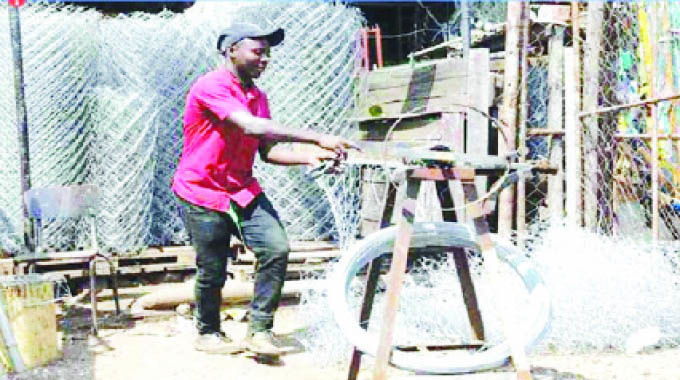
Nqobile Bhebhe recently in Victoria Falls
THE informalisation of the economy cost Zimbabwe at least US$1,15 billion in potential fiscal revenue between 2020 and 2023, a research paper has shown.
This comes at a time when industry experts have bemoaned the widening levels of informality across business sectors, which is threatening to choke the manufacturing industry.
While the Government has come up with measures to promote formalisation of businesses, thousands of entrepreneurs operate in the informal economy, which now employs the majority of the people.
The trend is not unique to Zimbabwe as it cuts across Africa and beyond, in the process eroding the revenue base for governments as most informal economy players are not tax compliant.
This comes as the Zimbabwe National Statistics Agency (ZimStat) will soon begin the listing process for the 2025 Economic Census next week, a precursor to the main data collection phase.
Listing of establishments is being done in preparation for the economic census data collection exercise, which is expected to commence in April 2025 to June 2026.
The economic census marks a significant milestone for Zimbabwe, providing a much-needed data-driven perspective on the nation’s economic health.
The census will provide a comprehensive snapshot of the entire business landscape, including formal and informal sectors.
RELATED STORIES
The high level of informalisation has resulted in the size of Zimbabwe’s economy being understated while making it difficult to account for activities of all economic agents for tax purposes.
Most captains of industry and commerce are of the view that the rise of the informal sector while creating opportunity for ordinary people, is a threat to the established productive sector players and the growth of the country’s economy at large.
Presenting a research paper at the third edition of the Zimbabwe Economic Development Conference (ZEDCON) in Victoria Falls this week, titled “The fiscal costs of monetary and exchange rate distortions in Zimbabwe,” University of Zimbabwe researcher Mr Curren Pindiriri said: “The analysis suggests that informalisation resulted in a loss of at least US$1,15 billion between 2020 and 2023.”
Exchange rate distortions, especially before the introduction of the new precious minerals and foreign currency-backed Zimbabwe Gold, also negatively impacted the economy.
Mr Pindiriri noted that Zimbabwe has been faced with high inflation and exchange rate premiums.
“Inflation has also continued to trouble the country: year-on-year inflation has surpassed 700 percent by the end of 2023
“By April 2024, the official exchange rate had depreciated by more than 95 percent since December 2023, the parallel market gap was over 50 percent,” Mr Pindiriri added.
“High inflation and exchange rate premiums have a real cost on tax collection, which are often overlooked.”
The paper was authored by Pindiriri, Victor Steenbergen (World Bank), Jimmy Psillos (CZI) and Marko Kwaramba.



 Online Reporter